I thought I'd share a milestone and ask those who've already made this transition.
Earlier this year I jokingly started calling it "Premature FIRE."
I left my corporate job after more than 13 years, about 2–3 years earlier than originally planned.
We're a family of five living on a rural property in Denmark. Our life revolves around the kids, outdoor life, sports, and an endless list of projects around the property. We're not particularly consumption-oriented, and honestly that's probably what made this possible.
For years I've run a small consulting business alongside my full-time job. I'm keeping that going for a few hours each week, and it now covers most of our ongoing living expenses.
That allows our investment portfolio to keep compounding without needing regular withdrawals.
So I guess this is pretty much textbook Barista FIRE.
The numbers (DKK)
I'm 40 years old, and our balance sheet looks roughly like this:
- Invested portfolio: ~2.7M DKK (~US$390k)
- Retirement accounts: ~3.4M DKK (~US$490k, locked until retirement age)
- Debt-free home: ~1.8M DKK (~US$260k)
The plan is intentionally simple: let the consulting income cover most annual expenses, avoid selling investments for as long as practical, and let compounding continue doing the heavy lifting.
I've stress-tested the numbers from several angles and feel comfortable with the plan.
Eleven and a half years of tracking
I've tracked every DKK we've earned and spent since January 2015, so I figured I'd share a few charts for anyone who appreciates data.
Chart 1 – Monthly cash flow
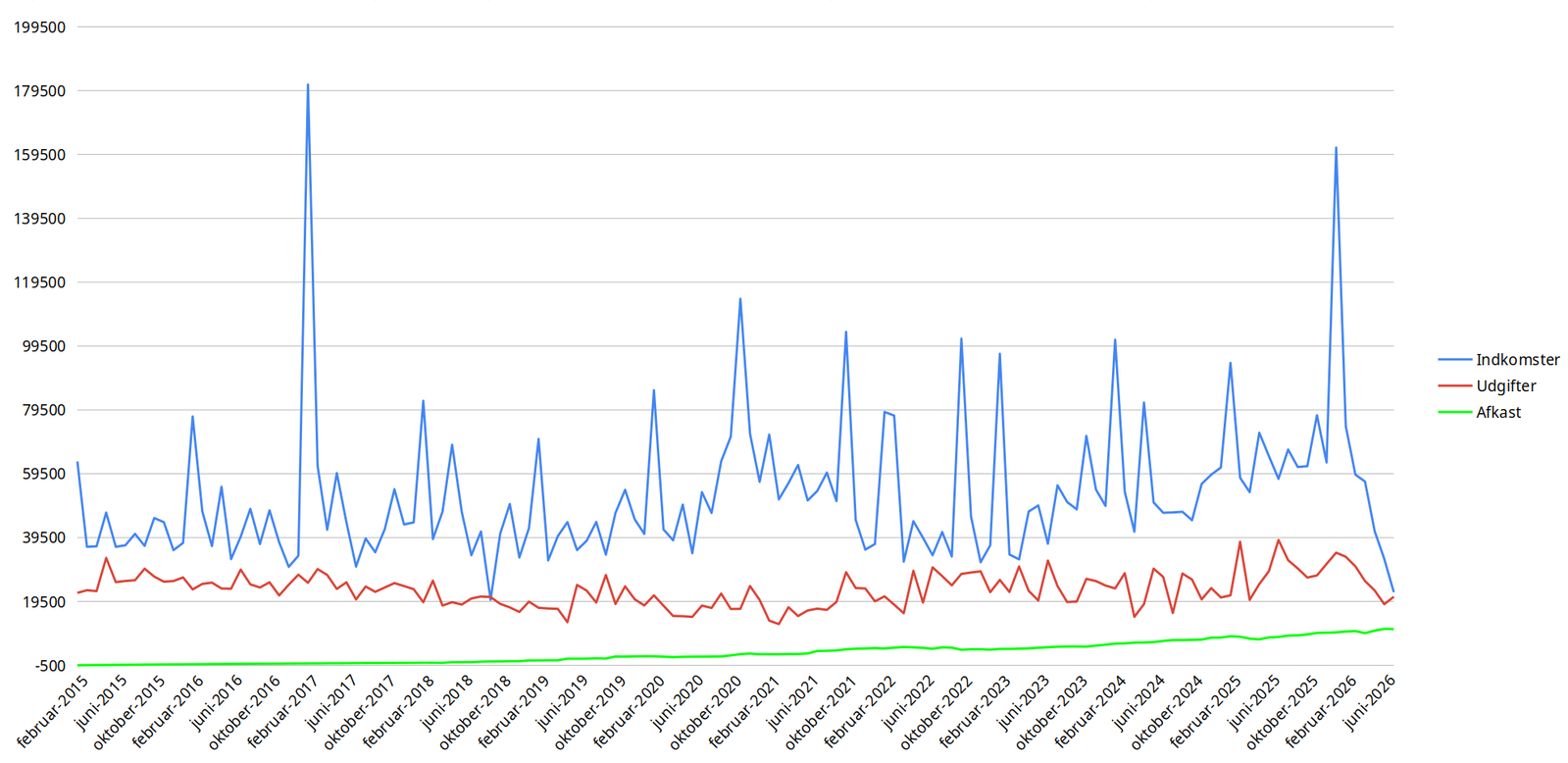
- Blue = after-tax income
- Red = expenses (excluding vacations)
- Green = projected portfolio growth (7% annual assumption)
A few things stand out:
- Paying off our mortgage in 2017/18 reduced our fixed monthly expenses by roughly 5,000 DKK.
- COVID almost eliminated vacation and leisure spending in 2020.
- Since 2021 our expenses have gradually increased as our three kids have grown older—more groceries, more sports, and more clothes.
Chart 2 – Annual spending by category
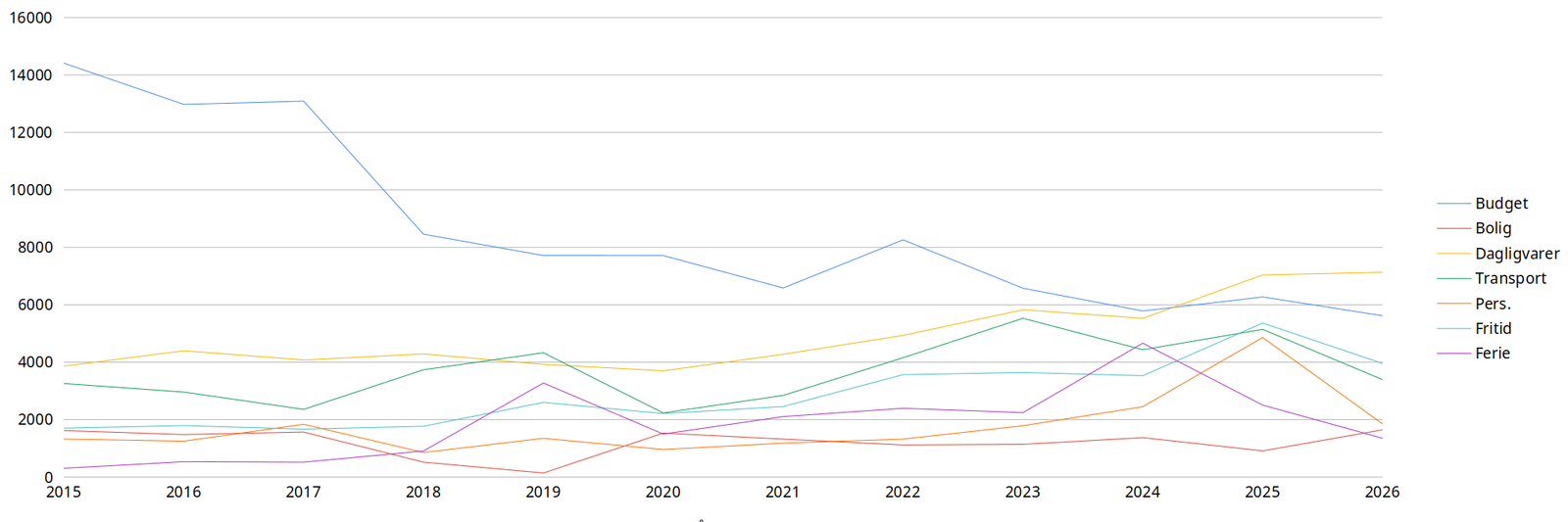
This shows how our spending has evolved across housing, groceries, transportation, personal expenses, leisure, vacations, and fixed recurring costs.
Chart 3 – Fixed recurring expenses
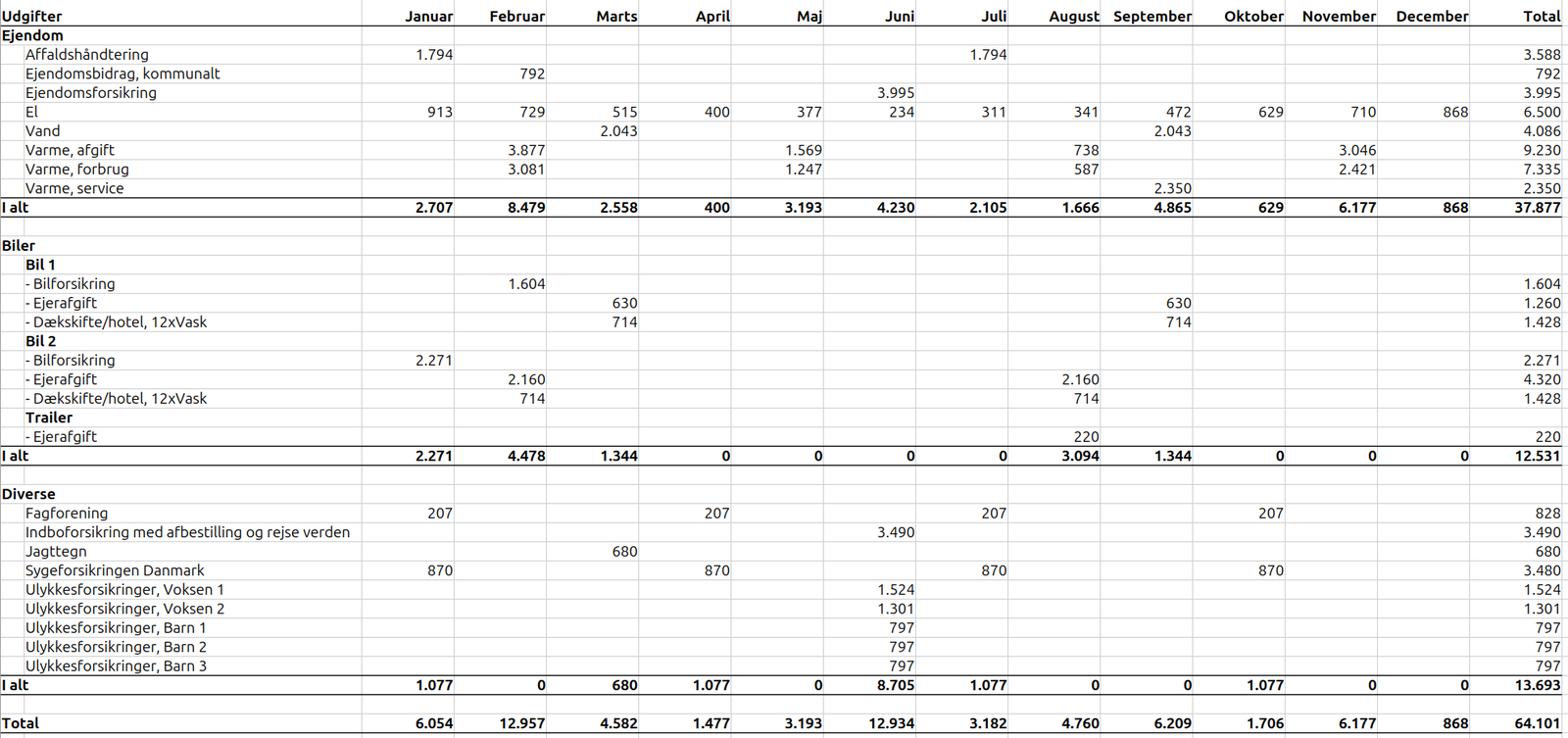
Our recurring fixed costs are now about 64,000 DKK per year (roughly US$9,000).
They were somewhat higher before leaving work due to private health insurance and a few work-related expenses.
Chart 4 – The transition
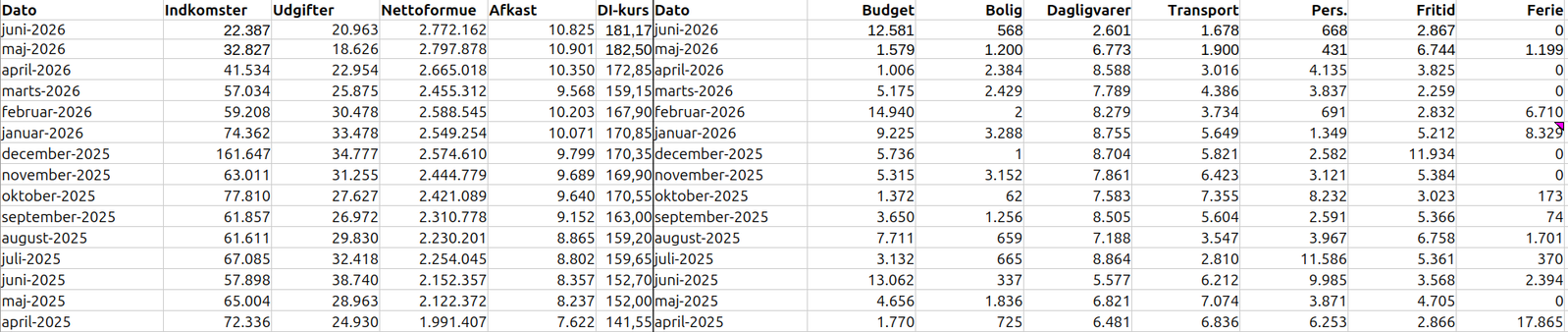
The recent monthly data shows the shift from full-time employment (through March) into Barista FIRE.
Financial independence turned out to be the easy part. Learning how to live with it is proving to be much harder.
Financially, the transition has been almost... boring.
Psychologically, it's been much harder than I expected.
For more than a decade I was used to solving problems, making decisions, and constantly putting out fires.
Now I sometimes catch myself waiting for the next crisis, only to realize there isn't one.
Learning that it's perfectly okay to have an afternoon where nothing urgent happens has been surprisingly difficult.
Apparently the nervous system doesn't retire the same day your job does.
And then there's the spreadsheet.
I still catch myself tweaking assumptions, optimizing forecasts, and trying to improve a plan that probably doesn't need improving anymore.
After spending years optimizing every detail, it's surprisingly difficult to accept that my biggest contribution now might simply be... leaving it alone.
The first few months have been great otherwise. We took a family trip somewhere warm, and I've nearly finished one of the biggest renovation projects on our property.
Three months in, I'm realizing that becoming financially independent and emotionally adjusting to it are two completely different milestones.
My question
For those who've already made the leap:
How long did it take before your mind caught up with your financial situation?
Did you intentionally replace work with volunteering, hobbies, side projects, or new routines?
Or did the feeling simply fade with time?
I'd genuinely love to hear how others experienced this part of the journey.
P.S. If anyone enjoys spreadsheets as much as I apparently do, I'm happy to answer questions about the tracking system or the data behind the charts.