

Key Takeaways
- The best car insurance company depends on your driving record, vehicle, location, and coverage needs
- Comparing quotes from at least 3-4 insurers is the best way to find a competitive rate
- Bundling auto with home or renters insurance typically saves 10-20% on both policies
- Your driving record, credit score, and ZIP code are the biggest factors affecting your premium
Car Insurance at a Glance
Key numbers and strategies.
How to Find the Best Car Insurance
The best car insurance balances adequate coverage with competitive pricing. Every driver's situation is different — your age, driving record, vehicle, and location all influence which company offers the best rate.
The most reliable approach is to compare quotes from at least 3-4 insurers with identical coverage levels. Many drivers save hundreds per year simply by shopping around rather than auto-renewing.
Where Is Your Money Going?
Our free Expense Audit tool breaks down your spending by category and reveals exactly where you can save more. Create a free account to start.
- Category-by-category spending breakdown with visual charts
- Savings potential analysis — see where you can cut without pain
- Track spending month over month and celebrate wins
Free forever — no credit card required
Monthly Spending
$4,180
Potential savings: $620/mo identified
Spending by Category
$4,180
Spending
$620
Can Save
$7,440
Per Year
Preview — create free account to use
Top Car Insurance Companies
Leading car insurance providers include:
- GEICO — Often the cheapest for clean driving records, strong online experience
- State Farm — Largest insurer, strong agent network, excellent bundle discounts
- Progressive — Competitive for drivers with accidents or violations, Name Your Price tool
- USAA — Best rates and service for military families
- Allstate — Strong coverage options, good accident forgiveness programs
Regional insurers in your state may also offer competitive rates.
Car Insurance Coverage Types
Understanding your coverage options helps you make smart decisions:
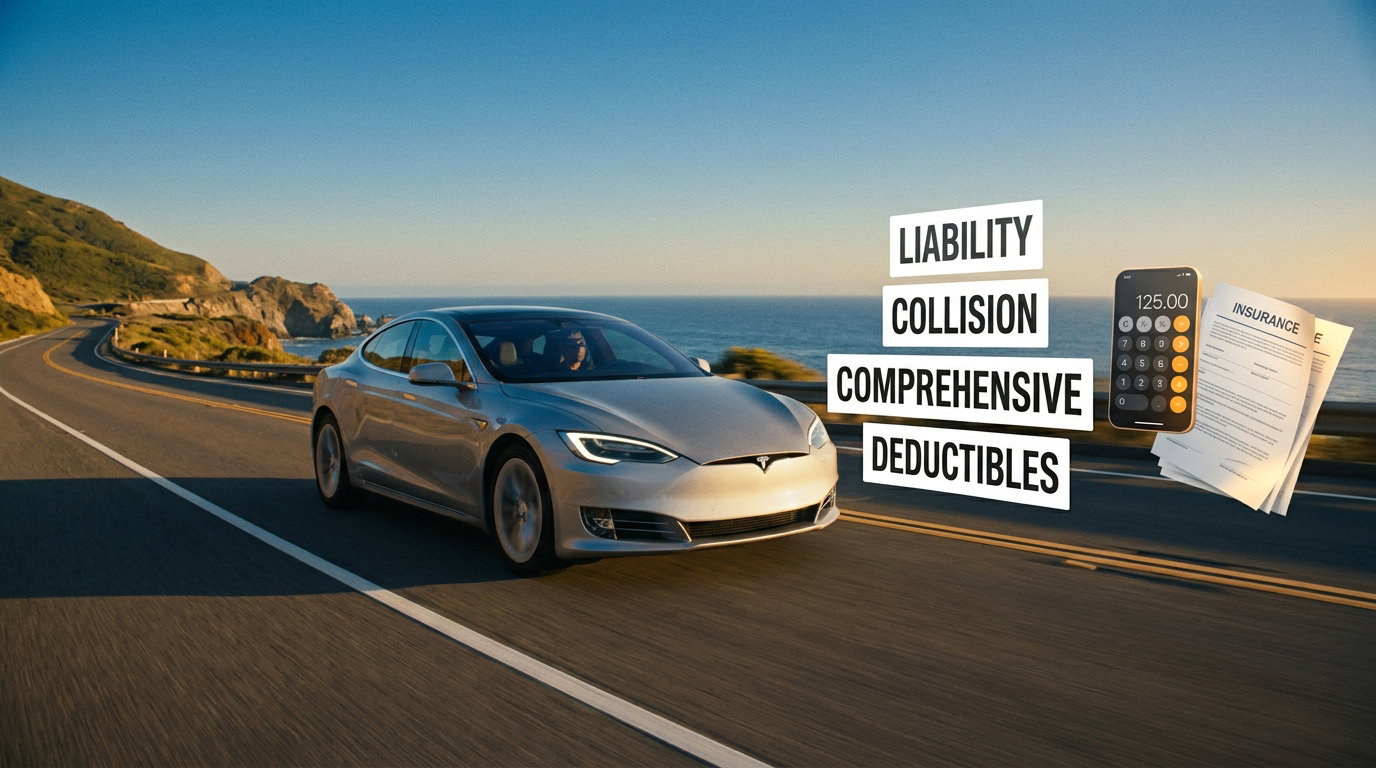
- Liability — Required by law. Covers damage you cause to others.
- Collision — Covers your vehicle in an accident regardless of fault.
- Comprehensive — Covers theft, weather, vandalism, and animal strikes.
- Uninsured/Underinsured Motorist — Protects you if the other driver has no insurance.
- Medical Payments / PIP — Covers medical bills regardless of fault.
The FI approach: carry liability above state minimums, add collision/comprehensive for newer vehicles, and consider dropping collision on older vehicles worth less than 10x your annual collision premium.
Find your FI number in 60 seconds
Free calculator shows when you could reach financial independence — plus a savings rate tracker, expense audit, and more.
How to Get the Best Car Insurance
Know your current policy details
Review your current coverage levels, deductibles, and premium. This is your baseline for comparison.
Get quotes from 3-4+ companies
Compare both national carriers and regional insurers. Use identical coverage and deductibles for apples-to-apples comparison.
Check for all discounts
Ask about bundling, safe driver, good student, anti-theft, low-mileage, and defensive driving discounts.
Right-size your coverage
Make sure liability limits match your net worth exposure. Consider an umbrella policy for additional protection.
Review at every renewal
Set a reminder to compare quotes every 6-12 months. Your rate can change even without claims.
Start Your FI Journey Today
Free calculators, a personalized FI roadmap, and a community of 25K+ on the same journey.
Create a free account to get started
Pros & Cons of Higher Deductibles on Car Insurance
- Raising your deductible from $500 to $1,000 typically cuts your premium by 15-20%, saving $200-$400/year.
- Going to a $2,500 deductible saves even more — 25-40% on collision and comprehensive premiums combined.
- Fewer small claims on your record means you avoid surcharges and keep your rates lower long-term.
- You need cash on hand to cover the deductible if you have an at-fault accident or a comprehensive claim.
- If your car is worth less than $5,000, the math may favor dropping collision/comprehensive entirely rather than paying any deductible.
- In states with high uninsured motorist rates (Florida, Mississippi), carrying higher UM coverage matters more than deductible optimization.
Build Your FI Plan
Map your path to financial independence with personalized calculators and milestone tracking.
- Save your progress
- Get personalized next steps
- Access calculators and resources
You're in!
Check your email to get started with your FI Plan.
How to Choose the Right Liability Limits
Liability coverage is the most important part of your car insurance policy, and it's where most people are dangerously underinsured. State minimums are almost always too low — a state that requires only 25/50/25 is leaving you exposed to a lawsuit the moment medical bills exceed $25,000 per person.
For anyone building toward financial independence, here's the guideline: carry at least 100/300/100 ($100K per person bodily injury, $300K per accident, $100K property damage). If your net worth exceeds $500,000, you should pair that with a $1-2 million umbrella policy that sits on top of your auto and home liability.
Why? Because liability claims can reach into your personal assets. If you cause an accident that injures someone seriously and your liability coverage maxes out at $50,000, the injured party can sue you for the difference. That means your investment accounts, your home equity, and your future earnings are all on the table. Spending an extra $100-$200/year for proper liability limits is one of the best risk-adjusted investments you'll ever make.
When to Drop Collision and Comprehensive Coverage
If you own your car outright — no loan, no lease — you have the option to drop collision and comprehensive coverage. The question is whether the premium you're paying is worth the payout you'd receive.
Here's the math: look up your car's current value on Kelley Blue Book or NADA. Now check what you're paying annually for collision + comprehensive. If your annual premium is more than 10% of your car's value, it's time to self-insure. For example, if your car is worth $4,000 and you're paying $600/year for collision + comprehensive, you're paying 15% of the car's value every year to insure it. In less than 7 years, you'll have paid more in premiums than the car is worth.
The FI rule of thumb: Drop collision when your car's value falls below $5,000, or when your annual collision + comprehensive premium exceeds 10% of the car's value. Put the premium savings into your investment accounts instead — at a 7% average return, $600/year becomes $8,500 over 10 years.
Find Your FI Number
See where you stand and model your path to financial independence with our free calculator.

You're in!
Check your email to get started with your FI Number.
Discounts Most Drivers Miss
Car insurance carriers offer dozens of discounts, but they rarely volunteer them — you have to ask. Here are the ones that save the most and are most commonly overlooked:
- Pay-in-full discount (5-10%): Paying your 6-month or annual premium upfront instead of monthly avoids installment fees and earns a discount.
- Low mileage discount (5-15%): If you drive under 7,500 miles/year, many carriers offer significant savings. Work-from-home professionals and FI retirees benefit most.
- Good credit discount (up to 25%): In most states, your credit-based insurance score is the second-biggest rating factor after driving record. Building toward FI means your credit is likely excellent — make sure your insurer knows it.
- Defensive driving course (5-10%): A 4-6 hour online course can cut your premium for 3 years.
- Professional/alumni associations: Engineers, teachers, military, and certain alumni groups get group rates through specific carriers.
Car Insurance FAQ
The cheapest company varies by driver. GEICO and Progressive are often competitive for clean records. Erie and USAA offer excellent value in their service areas. The only way to know is to compare quotes.
At minimum, carry your state's required liability coverage. Most financial experts recommend at least 100/300/100 liability limits. Add collision and comprehensive for newer or financed vehicles.
Yes, in most states. Insurers use credit-based insurance scores to predict risk. Maintaining good credit can significantly lower your premium.
Yes. Many drivers save 20-40% by comparing quotes and switching. There is no penalty for switching, and your new insurer handles most of the paperwork.
The Bottom Line
The best car insurance is the policy that gives you adequate coverage at a competitive price from a company with strong claims service. Compare quotes from multiple insurers, bundle policies, optimize your deductible, and review annually.


