Five-Minute Win: Check for Uninvested Cash
Log into your brokerage account and look for any cash that’s just sitting there.
Investing often has an easy-to-miss two-step:
-
Transfer money into the brokerage account.
-
Actually invest the money.
It’s surprisingly easy to complete step one and forget step two, leaving money sitting in a settlement or cash account when you intended to have it invested.
The same thing can happen with dividends or other distributions if you don’t have automatic reinvestment turned on. A little cash lands in the account, then another little bit, and eventually you realize you’ve had money sitting on the sidelines for months.
So take five minutes today. Open your brokerage account, find the cash balance, and make sure every dollar is doing what you intended it to do.
Your Paid-Off House Isn't Free
I keep seeing a version of this in FIRE discussions: “Once the mortgage is paid off, my housing is basically free.”
It really isn’t.
Imagine you own a $400,000 house outright. There’s no mortgage payment, which is fantastic. But you still have $400,000 of your net worth tied up in the house.
That money has an opportunity cost.
If the alternative is investing that $400,000 and earning an average 8% return over time, that's $32,000 a year of potential investment return you're giving up by keeping the capital in your house.
Now add the expenses that actually come out of your bank account. Maybe you pay $4,000 a year in property taxes and $1,500 in homeowners insurance. Then there's maintenance and repairs, replacing appliances and eventually roofs and HVAC systems, plus all the little things like pest control, landscaping and irrigation.
It doesn't take much to get the annual economic cost of owning that “free” $400,000 house well over $40,000.
Now compare that with renting a place for $3,000 a month, which most people would recoil at as being “too expensive” and “throwing money away.”
It's really easy to look at that and say, “Why would I spend $36,000 a year on rent when I could live in my paid-off house for free?”
But that comparison leaves out the $400,000 tied up in the house.
If you sell the house and invest the $400,000, you now have $400,000 of productive capital. And your $36,000 in rent also buys you something else: you've transferred a lot of the financial risk of homeownership to someone else.
If the air conditioner dies, the roof needs replacing or you discover a major foundation problem, those aren't surprise five-figure additions to your annual spending.
None of this means renting is better than owning. There are enormous benefits to owning a home, and there’s real value in permanence, control and having a place that is yours.
But “paid off” and “free” are two very different things.
So, the real question is: What is this housing choice actually costing me, including the opportunity cost on the capital I have tied up in it?
A Few Things...
One of my favorite parts of writing this newsletter is spending the week with my eyes and ears open for things I think are worth sharing with you. It might be an idea from a conversation, something I read or listened to, a useful tool, or just something from my own life. Here are a few things from this week...
Adulting 101
My friend Pete Hardesty, a longtime member of the ChooseFI community, recently gave me copies of the two Adulting 101 books he co-wrote with Josh Burnette to give to Anna as she headed off to college.
The books are essentially a practical guide to adulthood: things like getting a job, handling money, renting an apartment, buying insurance, communicating professionally, building healthy habits and navigating relationships.
So if you have someone in your life heading off to college or setting out on their own, these strike me as a pretty thoughtful gift. Pete gave me both for Anna, and I’m very glad he did.
Healthy Minds Program
Dr. Richard Davidson was recently on Rhonda Patrick’s podcast talking about meditation and the science of well-being, and he mentioned something I somehow hadn’t come across before: his completely free meditation app, Healthy Minds Program.
The app has a meditation roadmap with a series of short teachings and guided meditations designed to teach you the actual skills of meditation, plus free daily meditations once you’ve worked through the basics.
I’ve meditated for years, so I wasn’t necessarily looking for a beginner meditation app, but I started using this recently and I’m really impressed. It feels much more like learning a skill than simply picking a relaxing meditation from a library.
If you’ve wanted to learn how to meditate, or just want a little more structure around an existing practice, I highly recommend checking it out.
Just Start the Timer
Procrastination isn't something I struggle with regularly. I'm normally pretty good about getting through the things on my to-do list.
But every once in a while, there's something I just keep pushing into the future. And usually there's some kind of internal resistance that makes the task feel much bigger than it probably is.
This past week, I finally decided to tackle something I'd been low-key stressing about for three months.
I turned on the stopwatch on my phone and basically said to myself, "I'm getting this done. I'm curious how long it's actually going to take."
15 minutes and 10 seconds.
That was it. Three months of occasionally thinking about this stupid task, and 15 minutes later it was gone.
Part of me felt pretty silly. But for whatever reason, starting that timer was enough to get me moving.
Back to Coaching Volleyball
I started coaching volleyball again!
A few years ago, I coached my daughter Molly's YMCA team, and it was legitimately one of the most fun things I've done as an adult. I realized that I just love coaching and teaching kids how to learn.
I don't have a formal volleyball background, but I have pretty strong opinions on learning and how repetition feeds into that. I wanted the practices moving quickly and the kids touching the ball as many times as possible during that hour. I had people tell me it looked like I was running a volleyball clinic, which was pretty funny considering my entire volleyball résumé consisted of volunteering to coach a YMCA team.
And the coolest part was watching how much better the kids got in such a short YMCA season. They were having fun, getting a ridiculous number of reps, and improving dramatically.
This year, Molly's team was still looking for a coach with about a week to go before the season started, so I volunteered.
I can't tell you how excited I am to do this again.
You Don't Need All the Answers
A member of our community, Justin Hall, sent me an article recently about a concept I'd never heard of called “negative capability.” The basic idea is being able to sit with uncertainty without needing to immediately resolve it.
I realized I'm historically pretty bad at this.
For years, I assumed that if I just gathered enough information, eventually I'd know exactly what to do. Read one more book. Listen to one more podcast. Think about it for another week. At some point, surely the correct answer would become obvious.
Except the biggest decisions in life don't really work that way.
Should I change careers? Should I retire? Should I move? You can do all the research in the world and still never get to know how the other choice would have played out.
I've gotten much more comfortable making the best decision I can with the information I have and knowing that I can adjust as I learn more. Increasingly, I'd rather run a small experiment than spend another month trying to think my way to certainty.
If this idea resonates with you, I think you'll enjoy Justin's article.
Around ChooseFI
A few things happening around the ChooseFI community...
Community Wins
One of the most-loved parts of the newsletter is the ChooseFI Community Taking Action section, and it only continues to exist because you share your wins. Hit reply to this email and send in your win.
Local Groups
If you haven't already, take 30 seconds to join your local ChooseFI group. You'll automatically receive email notifications about meetups and events in your area, making it easy to connect with other people on the path to FI.
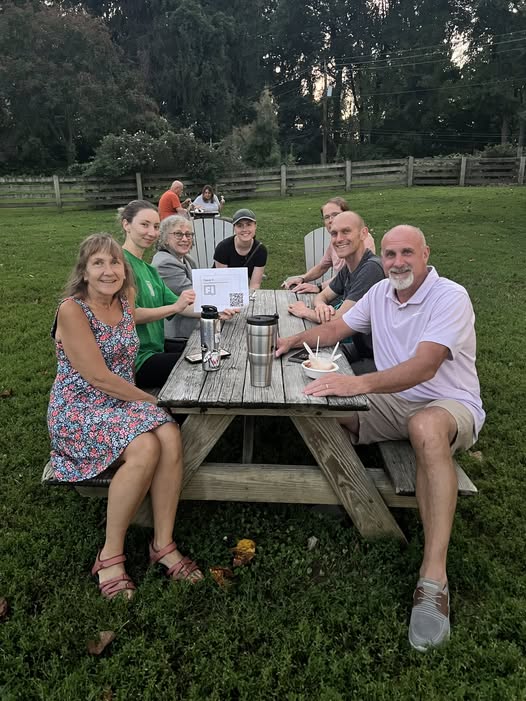
Dakota, one of our admins in Delaware, posted this recently about their summer meetups:
“Our August Summer Social Pop-Up was a true end of week treat!
This summer, we introduced a few pop-up events to keep our community connected and engaged throughout the busy season. From new faces to familiar ones, we’ve loved the conversations, connections, and community that have come together—and we couldn’t be more grateful to everyone who’s joined us and made these summer nights so special! ”
Continue the Conversation
Have thoughts or questions about this week's podcast? Join the discussion on Episode 617, where Dr. Bobby Dubois, Aubrey Williams, and I talk about how life expectancy should factor into your FI plan.
One of my biggest takeaways was realizing that most of us don't actually decide what age we're planning for. The retirement calculator does it for us, often assuming we'll live to 90, 95, or even 100. That assumption alone can dramatically change how much money you think you need to reach FI.
Travel Rewards
My Top Ten Recommended Travel Rewards Cards page is always up to date, including current welcome offers. If you're thinking about your next travel rewards card, that's the first place I'd look.
If you apply using our links, ChooseFI earns a commission at no additional cost to you. This is how we're able to keep the podcast and newsletter ad free. For nearly a decade, we've made the deliberate choice not to interrupt the podcast with traditional ad breaks, and I'd love to keep it that way. If you're going to apply for one of these cards anyway, using our link gets you the same offer, costs you nothing extra, and helps us keep ChooseFI ad free. We're incredibly grateful.