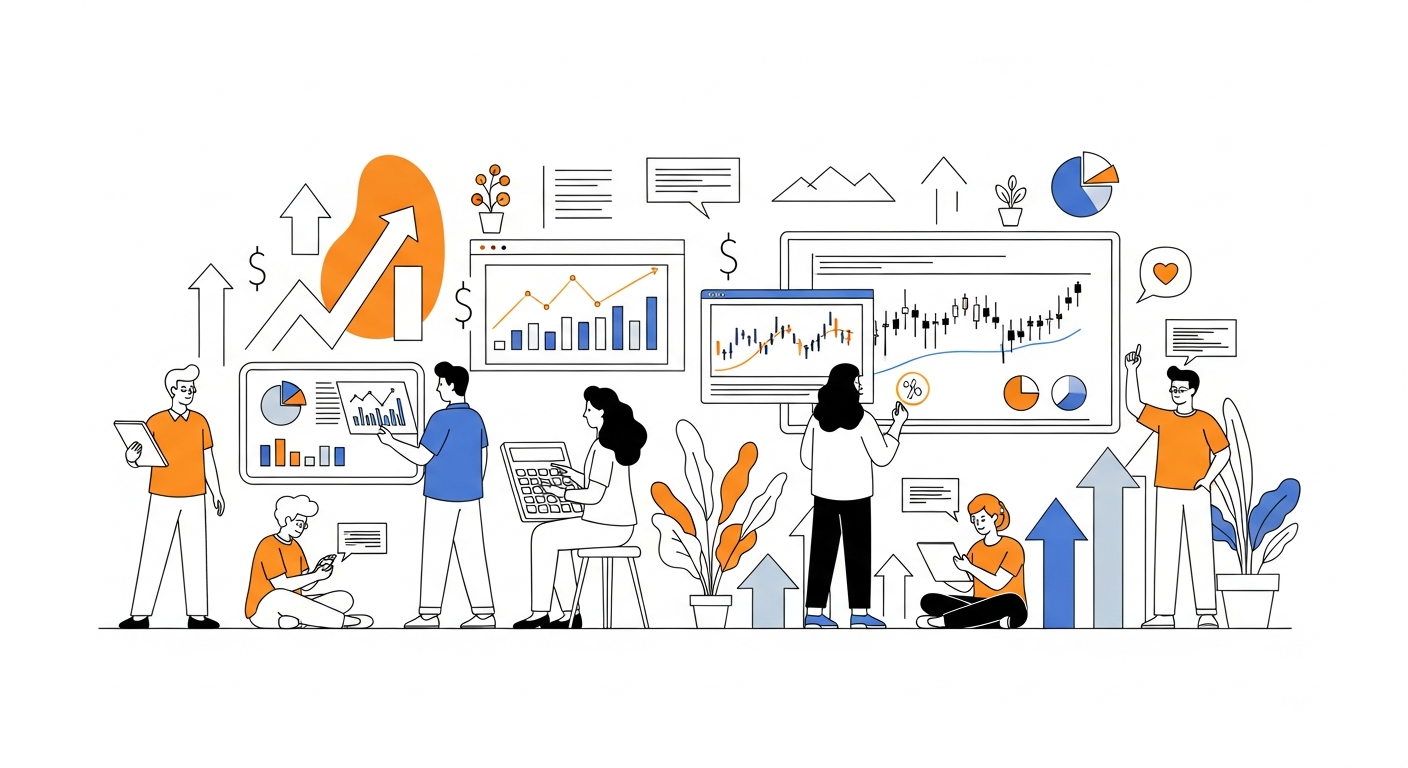
Many folks believe it's difficult--or completely impossible--to beat the market without help from a professional. Well, if you tuned into episode 75 of the Choose FI podcast, you'd know that's completely wrong. Brian Feroldi--a writer at Motley Fool--posits that individual investors can far surpass professional money managers. If you have the know-how, being an individual investor is far more advantageous than using a professional. Here are the advantages of being an individual investor--as told by Brian--and I'll also talk cover some important principles all individual investors should have.
Advantages of the individual investor
When you use a financial manager to handle your investments, there are several factors that make it nearly impossible to beat the market. But, according to Brian, these do not apply to individual investors. Individual Investors simply don’t operate under the same restraints that professional managers do, this gives them an advantage. Let's talk a little bit about those restraints.
Short-Term Vs. Long-Term Thinking (Long-Term Is Better)
Individual investors have one significant advantage over professional money managers: managers need to think and act with the short-term in mind, while individual investors can think and act with the long-term in mind. Brian gives a helpful example to demonstrate this advantage. He uses Priceline as an example (they own travel portals such as Priceline.com and Booking.com). In 2010, a volcano in Iceland, prompting Wall Street to freak out. They assumed Priceline would be seriously affected by the eruption due to limitations in travel, so shares dropped from over $200 to a little over $100 overnight. During this freak-out, Wall Street was only thinking about the immediate future of Priceline and how their clients would feel about investing in it. At the same time, Brian took into consideration the company as a whole and how it may perform over the long-term, not just in the immediate future. After deciding that the company still had a bright future, he decided to buy stock in Priceline Lo and behold, Priceline wasn't too affected by the eruption and at the time of writing Priceline shares are worth about $1,800.
Index Funds Are Low Cost; Managers Are Expensive
If you've listened to the Choose FI podcast or browsed the site, you'll know that most everyone agrees on the fact that low-cost index funds are the number one way to invest. You can easily invest in index funds on your own. Paying a money manager to handle these investments just limits your choices. Managers almost always stick with large, well-known companies. Those companies may not align with your investing goals, or there could be better returns elsewhere.
Related: When 2% Costs You Everything--How Investment Fees Cost You Your Freedom
Managers Are Out To Make Money
Model your path to retirement
See how your investment strategy compounds over time.
FI Calculator
Travel Tools
Podcast
Local Groups
Forums
Book Club
Value Matrix
Debt Payoff
Workout Logger
Events
FI Calculator
Travel Tools
Podcast
Local Groups
Forums
Book Club
Value Matrix
Debt Payoff
Workout Logger
Events
FI Calculator
Travel Tools
Podcast
Local Groups
Forums
Book Club
Value Matrix
Debt Payoff
Workout Logger
Events
FI Calculator
Travel Tools
Podcast
Local Groups
Forums
Book Club
Value Matrix
Debt Payoff
Workout Logger
Events
Free Coast FI Calculator
Find out if your investments can finish the job without another dollar saved.
No password needed. Free forever.
At the end of the day, managers are out to make money for themselves, not you. When you buy and sell stocks through a manager, you're paying to buy and sell, plus an additional fee for the manager themselves. And those fees aren't cheap. When you buy and sell on your own, you aren't spending unnecessary money on fees.
Principles Every Individual Investor Should Have
- Start with index funds, then slowly add stocks: Index funds are always where you should start. Once you feel comfortable investing in different securities, slowly start adding stocks.
- Own more than 15 stocks: In order to be diversified, Brian recommends owning more than 15 stocks. But don’t buy so many you can’t keep track of them. Brian owns 80 stocks, but he's an advanced investor.
- Keep an investing journal: Whenever you buy a stock, write why you’re investing in it. This makes it easy to decide down the road if the company still matches your goals. Brian keeps a big database of stocks that interest him. He ranks them by how interested he is in owning the stock for a few years to 10 years. Those he wants to invest in for the long-run are his first go-tos.
Why Sell A Stock?
We just said above that keeping an investing journal can help you decide when it's time to sell a stock. If the company no longer aligns with your original reasons for investing in them, it may be time to consider selling. In addition, if a company gets bought out by a larger company, you may not want to stick with them. Brian gave the example of Whole Foods who was recently bought by Amazon. Many investors don't like the idea of investing with Amazon.
A Few Things To Consider Before You Start Investing On Your Own
When you start on the path to individual investing, there are a couple of steps that Brian recommends you take.
Start By Looking At The Reputations Of Companies
Investing in companies that have a good reputation is vital. Look at the following criteria before you decide to invest with a company: - How have they done over the long-term?
- Do they have a strong brand?
- Does the company have a founder-led management team? (It should)
- Do they have the opportunity to grow?
Don't Be Afraid To Go With High-Performing Companies
According to Brian, "winners keep on winning." What he's saying is that high-performing companies almost always continue to perform well over a long period of time. So don't be afraid to go for well-known companies just because they're a little pricier. Chances are the investment will pay off.
Resources For Those Who Want To Be Individual Investors
- Motely Fool’s 5 Podcasts
- Individual investing books
- Other Podcasts
- Google (seriously, you'll be amazed at what you can find by simply typing "investing resources")
Related Articles
- M1 Finance Review--Completely Free Automated Investing
- How To Prepare For Drawdown During Early Retirement
- Stocks Vs. Mutual Funds Vs Index Funds Vs ETFS: A Full Comparison
