

Key Takeaways
- Validate your business idea before spending money — talk to 10 potential customers and get at least 3 to commit to paying before you build anything
- An LLC costs $50 to $500 depending on your state and protects your personal assets from business liability — file it before your first dollar of revenue
- Side business income is taxed differently than W-2 wages — set aside 25-30% of every dollar earned for federal and state income tax plus 15.3% self-employment tax
- Side business income can replace your job income over time, enabling early retirement years or even decades sooner than salary alone — this is the ultimate FI accelerator
What's your FI number? Calculate it in 60 seconds
The one number that changes everything
Side Business Reality Check
How Close Are You to Financial Independence?
Free calculators, a personalized FI roadmap, and a community of 25K+ on the same journey.
The number one reason side businesses fail is not lack of funding, bad timing, or tough competition — it is building something nobody wants to buy. Before you spend a dollar on a website, business cards, or inventory, you need to validate that real people will pay real money for what you are offering.
Validation does not require a perfect product. It requires proof of demand. Talk to 10 people who match your target customer. Describe what you plan to offer. Ask two questions: "Would you pay for this?" and "How much would you pay?" If 3 or more say yes with a specific dollar amount, you have a viable idea. If most say "that sounds cool" but hesitate on paying, you have a hobby.
The FI community has a particular advantage here. Many FI seekers have already cut their expenses to the point where a side business does not need to generate massive revenue to make a meaningful impact. Even $500 to $1,000 per month in side business income — invested consistently — can shave years off your FI timeline.
| Validation Method | Time Required | Cost | Signal Strength |
|---|---|---|---|
| Customer interviews (10 conversations) | 5-10 hours | Free | High — direct feedback |
| Pre-sale or waitlist landing page | 2-4 hours | $0-$50 | Very high — actual commitment |
| Minimum Viable Product (MVP) | 20-40 hours | $0-$200 | Highest — real revenue |
| Social media audience poll | 30 minutes | Free | Low — biased responses |
| Competitor analysis | 2-3 hours | Free | Moderate — proves market exists |
The First $1K Framework
Forget building a $1 million business. Your only goal is reaching $1,000 in total revenue as quickly as possible. That first $1,000 proves three things: people will pay you, you can deliver, and the business model works. Everything after $1,000 is optimization. The FI community calls this the "ramen profitable" stage — your business covers its own costs and generates even a small surplus. From there, you compound both your skills and your revenue.
Legal Structure: Sole Proprietorship vs LLC
One of the first decisions you face is how to structure your business legally. For most side businesses, the choice is between operating as a sole proprietorship (the default — no paperwork needed) or forming an LLC (Limited Liability Company). Here is the honest comparison.
A sole proprietorship is what you are by default when you start earning money on the side. There is no registration required at the federal level (though you may need a local business license). The income flows directly to your personal tax return on Schedule C. The downside: your personal assets — savings, home equity, investments — are not separated from business liabilities.
An LLC creates a legal separation between you and your business. If someone sues your business, your personal assets are generally protected. Formation costs range from $50 (states like Kentucky and Colorado) to $500 (California charges $800 per year just for the privilege of having an LLC). For most side businesses, an LLC is worth forming once you have paying customers.
| Factor | Sole Proprietorship | LLC |
|---|---|---|
| Formation cost | $0 | $50-$500 (varies by state) |
| Annual fees | $0-$50 (local license) | $0-$800 (California is highest) |
| Liability protection | None — personal assets exposed | Yes — personal assets shielded |
| Tax treatment | Schedule C on personal return | Same (single-member LLC) |
| Complexity | Minimal | Low — 1-2 hours of paperwork |
| Best for | Testing phase (pre-revenue) | Active business with revenue |
Tax Implications You Cannot Ignore
Side business income is taxed differently than your W-2 paycheck, and the surprises can be painful if you are not prepared.
Self-employment tax: You pay both the employee AND employer portions of Social Security and Medicare — a combined 15.3% on top of your income tax. On W-2 income, your employer covers half. On side business income, you cover it all.
Quarterly estimated taxes: The IRS expects you to pay taxes as you earn, not once a year in April. If you owe more than $1,000 in taxes from side business income, you need to file quarterly estimated payments (Form 1040-ES) by April 15, June 15, September 15, and January 15.
Deductions that reduce your tax bill: Home office (simplified method: $5/sq ft up to 300 sq ft = $1,500 deduction), internet (business percentage), equipment, software subscriptions, mileage (67 cents per mile), health insurance premiums (if self-employed), and retirement contributions (Solo 401k allows up to $72,000/year). These deductions are a significant FI advantage because they reduce both income tax AND self-employment tax.

Top Travel Card
Ready to unlock a world of free travel? Start with the Chase Sapphire Preferred® Card
$95 annual fee | Earn 75,000 bonus points
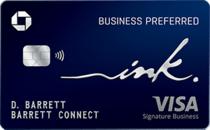
Best Card for Side Hustlers and Business Owners
Side hustlers! With the Ink Business Preferred® Credit Card you can earn free travel from your business expenses.
$95 annual fee | Earn 100,000 bonus points

Most Flexible Travel Card
The Capital One Venture Rewards Credit Card can be used to offset almost any travel expense.
$95 annual fee | Earn more than $1,000 in Travel Bonuses with a limited-time $300 Capital One Travel stays credit, plus earn 75,000 bonus miles once you spend $4,000 on purchases within the first 3 months of account opening—that's more than $1,000 in travel value
ChooseFI has partnered with CardRatings for our coverage of credit card products. ChooseFI and CardRatings may receive a commission from card issuers.
Time Management: Running a Business with a Full-Time Job
The biggest constraint for side business owners is not money — it is time. You have 168 hours per week. Your day job takes 40-50. Sleep takes 49-56. That leaves 62-79 hours for everything else: family, health, friends, and your business. The key is not finding more time. It is being ruthlessly strategic about the time you have.
The 5-5-2 Framework: Dedicate 5 hours per weeknight (after work), 5 hours on Saturday, and 2 hours on Sunday to your business during the launch phase. That is 12 hours per week — enough to build meaningful momentum without destroying your health or relationships. After launch, you can often reduce to 5-8 hours per week for maintenance.
Batch your work. Do not context-switch between your day job and side business throughout the day. Dedicate specific blocks of time to specific tasks: Monday and Wednesday evenings for content creation, Tuesday and Thursday for customer communication, Saturday morning for strategic work.
| Time Block | Hours/Week | Best Activities | Energy Level |
|---|---|---|---|
| Weekday mornings (before work) | 5-7 | Deep work: writing, coding, creating | Highest |
| Weekday evenings (after work) | 5-10 | Admin: emails, invoicing, social media | Moderate |
| Saturday morning | 3-5 | Strategic: planning, product development | High |
| Sunday evening | 1-2 | Weekly review and next-week planning | Low but focused |
When to Go Full-Time vs Keep It as a Side Business
The FI community offers a unique perspective on this question. Traditional business advice says to go full-time when your side income replaces your salary. The FI approach is more nuanced: your side business does not need to replace your income if your investments are covering the gap.
Consider going full-time when your side business income covers at least 75% of your essential expenses for 6 consecutive months, you have 12 months of expenses in cash reserves, your business is growing (not plateauing), and you have health insurance figured out independently of your employer.
But here is the FI twist: many people in the community deliberately keep their side business as a side business forever. A day job provides steady income, benefits, and 401(k) matching, while the side business provides additional investment capital. This "two-income engine" approach can cut your FI timeline dramatically. If your day job covers all expenses and your side business generates $2,000 per month in investable income, you add over $700,000 to your portfolio in 15 years at 7% returns.
The decision depends on your personal FI strategy. Some people want to build a business that replaces their job and provides fulfillment in early retirement. Others want to maximize total income during their accumulation phase and retire from everything. Both are valid paths — the important thing is making the choice intentionally with the math in front of you.
How Close Are You to Financial Independence?
Free calculators, a personalized FI roadmap, and a community of 25K+ on the same journey.
Launch Your Side Business in 5 Steps
From idea to first dollar with minimal risk.
Validate Your Idea with Real Customers
1-2 weeksTalk to 10 people who match your target customer profile. Describe your offer and ask if they would pay, and how much. Get at least 3 verbal commitments before building anything. If you cannot find 3 out of 10, pivot your idea.
Pro tip: Pre-sell before you build. Create a simple landing page describing your product or service and see if people will put down a deposit or join a waitlist.
Set Up Legal and Financial Infrastructure
2-3 hoursOpen a separate business bank account (free at most banks). File for an LLC in your state if you are ready for revenue. Get an EIN from the IRS (free, takes 5 minutes online). Set aside 30% of every dollar earned for taxes.
Pro tip: Do not commingle business and personal finances. A separate bank account makes tax time dramatically easier and protects your LLC liability shield.
Build Your Minimum Viable Product
1-4 weeksCreate the simplest version of your product or service that delivers value. A consultant needs a one-page website and a Calendly link. A product business needs one SKU, not twenty. A freelancer needs a portfolio with three examples. Launch ugly and improve based on real customer feedback.
Pro tip: Spend less than $200 on your MVP. If you need to spend more, you are overbuilding before you have proven demand.
Get Your First 3 Paying Customers
2-4 weeksYour first customers will come from your personal network, not from marketing. Tell everyone you know what you are building. Offer a founding-member discount in exchange for detailed feedback and a testimonial. The goal is revenue and learning, not profit.
Pro tip: Ask every customer two questions after delivery: "What was the best part?" and "What would you change?" These answers shape your product roadmap.
Systematize and Scale to $1K/Month
2-6 monthsOnce you have proven the model works, build systems so the business runs efficiently. Create templates, automate invoicing, document your processes. Find the acquisition channel that produces the best customers (referrals, content marketing, paid ads) and double down on it.
Pro tip: Track your effective hourly rate. If you earn $1,000 in a month and spend 20 hours, your rate is $50/hour. If you spend 80 hours, it is $12.50/hour — below minimum wage. Optimize for $/hour, not just total revenue.
Frequently Asked Questions
Check your employment contract and company handbook for non-compete clauses, moonlighting policies, and intellectual property agreements. Many employers have no policy against side businesses as long as they do not compete, use company resources, or interfere with your job performance. If your contract has restrictions, consult an employment attorney before launching. Transparency is usually the safest approach if your side business is in a completely different industry.
Most service-based side businesses can launch for under $200: a domain name ($12/year), basic website hosting ($5-$15/month), and a business bank account (free). Product businesses may need $500-$2,000 for initial inventory. The FI approach is to minimize upfront investment and validate before spending. If your idea requires $10,000+ to test, consider whether there is a simpler version you can launch first.
Businesses with flexible hours and no geographic constraints work best: freelance writing, web development, consulting in your area of expertise, online tutoring, bookkeeping, virtual assistance, and digital product creation (courses, templates, ebooks). The key criteria are: work can be done on your schedule, no physical storefront needed, and revenue can grow without proportional time investment.
Report all income on Schedule C of your personal tax return. Pay self-employment tax (15.3%) plus income tax on profits. File quarterly estimated taxes using Form 1040-ES if you expect to owe $1,000 or more. Deduct legitimate business expenses: home office, internet (business %), equipment, software, mileage, and health insurance premiums. Consider a Solo 401(k) to shelter up to $72,000/year from taxes — this is one of the most powerful FI tools available to self-employed individuals.
Start as a sole proprietor during the validation phase (no cost, no paperwork). Form an LLC once you have paying customers and revenue. An LLC protects your personal assets (home, savings, investments) from business lawsuits and debts. Formation costs range from $50-$500 depending on your state. California charges $800/year minimum, which may not be worth it until you are earning at least $10,000/year from the business.
Dramatically. If your day job covers all expenses at a 50% savings rate, you reach FI in about 17 years. Add $2,000/month in side business income invested entirely, and your effective savings rate jumps well above 60% — cutting your FI timeline to roughly 12-13 years. At $3,000/month side income, you could reach FI in under 10 years from starting. The key insight: side business income has nearly 100% savings rate because your day job already covers expenses.
The Bottom Line
Starting a side business while working full-time is one of the most powerful financial moves you can make on the path to FI. Validate your idea before spending money, set up basic legal and tax infrastructure, launch an MVP quickly, and focus relentlessly on reaching your first $1,000 in revenue. The beauty of the side business approach is that your day job covers all expenses while your business income goes directly toward building wealth. Even modest side income of $1,000 to $2,000 per month, invested consistently over 10-15 years, can add hundreds of thousands of dollars to your portfolio and cut years off your timeline to financial independence.
Startup Cost
<$200
$2K/mo Invested 15yr
$700K+
First Goal
$1K Revenue