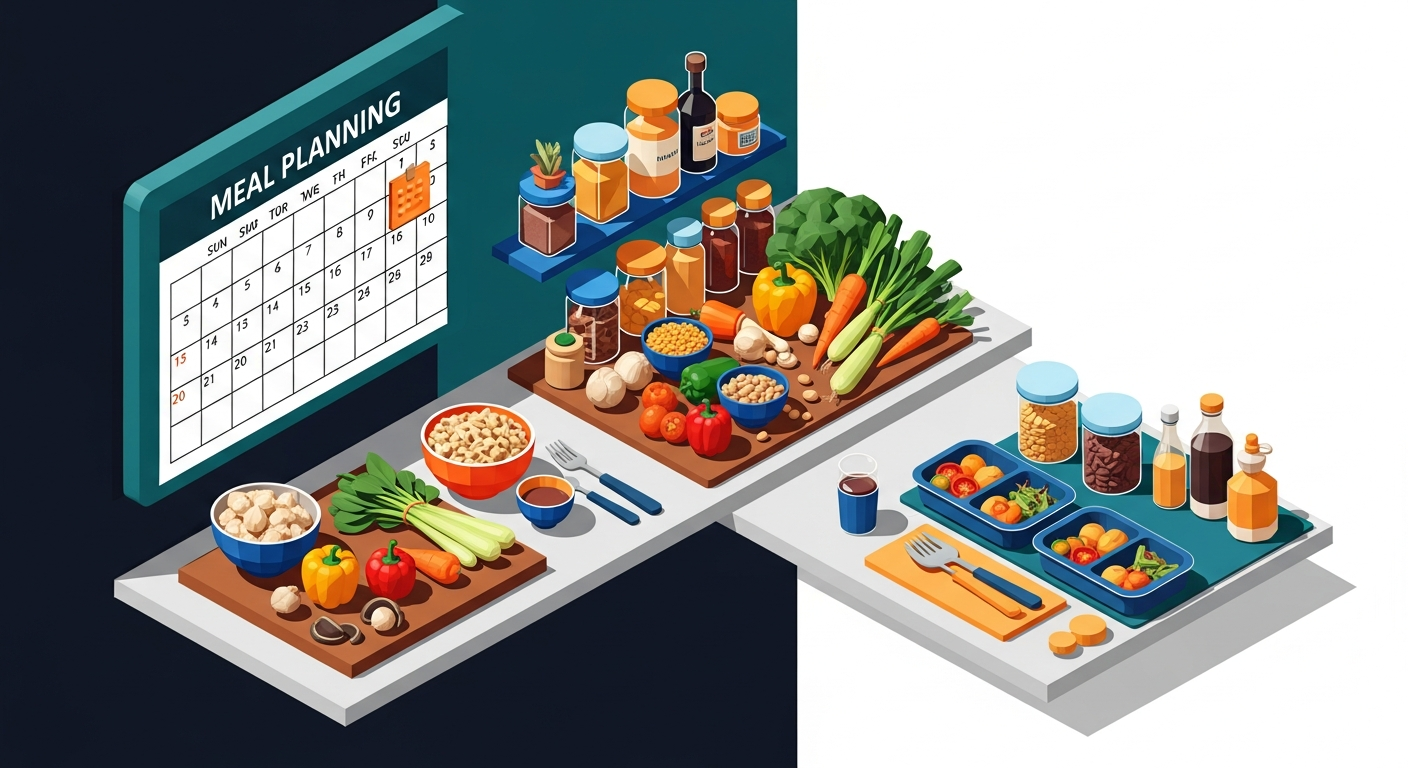
You’ve probably heard people talk about meal planning as a way to save money on groceries. It might even be on your “I should try that someday” list — but maybe you feel overwhelmed, confused, or just haven’t gotten around to it.
I’ve been there too. It took me a while to get into the groove, but once I realized that having a plan means spending less and eating better, I was hooked.
With a weekly or monthly plan, you stick to your shopping list, avoid impulse purchases, and dramatically cut food waste. Even better — meal planning saves time, lowers stress, and gives you more control over what goes on your plate.
Highlight: Meal planning saves time and money. You can use an app, Google Calendar, or a printable planner to make this part of your week easier and cheaper.
What Is Meal Planning (and Why Is It Important)?
Meal planning is simply deciding in advance what meals you’ll prepare for a set period — typically a week or month — and writing them down.
There’s no “right” or “wrong” way to do it. For some people, it’s about precise scheduling; for others, it’s about having a flexible rotation.
Benefits of meal planning:
- Reduces decision fatigue and stress
- Helps you stick to your grocery budget
- Keeps you from defaulting to takeout or drive-thru
- Adds variety to your meals
- Eliminates (or drastically reduces) food waste
- Makes it easier to eat healthier
Food waste is a huge motivator for me — Americans throw away tens of millions of tons of food every year. Planning means you’ll use up what’s in your pantry and fridge instead of letting it expire.
Every so often, I’ll build my meal plan entirely from what I already have. If you’ve ever stocked up on chicken breasts or ground beef during a sale, you know how easy it is to create meals from what’s on hand.
Related: 12 Ways To Save Money On Groceries
Find your hidden savings in 10 minutes
Our expense audit reveals exactly where your money goes — no budgeting required.
How to Create Your Weekly Meal Plan
Meal planning doesn’t have to be all-or-nothing. If it feels intimidating, start small — plan just one meal per day or pick three dinners for the week.
Personally, I only plan dinners because breakfast is the same most days and lunch is leftovers or a quick salad.
Here are a few beginner-friendly methods:
1. The Google Calendar Method
A ChooseFI Facebook group member came up with this clever system:
- Add your most common meals to Google Calendar as monthly recurring events.
- Link each event to the recipe and include the ingredient list.
- Adjust as needed for travel or seasonal changes.
- Share the calendar with family so everyone’s on the same page.
2. The Printable Meal Planner
ChooseFI’s free printable meal plan makes it simple to plan a week at a glance, with a dedicated space for your shopping list.
Download the free meal planning calendar here.
3. The Theme Night Method
Assign a broad category to each day of the week:
- Taco Tuesday
- Meatless Monday
- Fish Friday
- Rice Bowl Night
- Seasonal Produce Night
This keeps things flexible while giving you a structure to work from.
Best Meal Planning Apps
If you prefer digital tools, here are some top-rated apps:
- Mealime (Free) – Customize by likes/dislikes, food allergies; most recipes take <30 minutes.
- MealBoard ($3.99) – Search the web for recipes, plan meals on a calendar, generate grocery lists, track pantry inventory.
- Eat This Much (Free) – Generates meal plans and shopping lists based on your food preferences, calorie goals, and budget.
- Paprika ($4.99) – Highly customizable; lets you scale recipes, add photos, and organize grocery categories.
- Yummly (Free) – Massive recipe database with ratings, video tutorials, and personalized recommendations.
Related: How To Start Buying Your Groceries Online
What Makes a Good Meal Plan?
There’s no one-size-fits-all answer.
- If you like flexibility, use theme nights.
- If you’re highly organized, try Google Calendar or batch cooking.
Batch cooking means prepping ingredients, components, or full meals once or twice a week. For example:
- Pre-cut vegetables for several meals at once.
- Cook grains or proteins in bulk for the week ahead.
Also, organize your pantry and fridge so similar ingredients are stored together — all baking supplies on one shelf, grains together, etc. This makes it easier to see what you have and inspires new meal ideas.
FAQ: Meal Planning for Savings and Simplicity
Q: How does meal planning save money?By reducing impulse buys, preventing food waste, and allowing you to shop sales with a plan for using what you buy.
Q: What’s the easiest way to start meal planning?Plan 3–4 dinners for the week, use a printable template, or try a digital app like Mealime.
Q: How can I stick to a meal plan?Choose recipes you enjoy, keep it realistic, and allow for one “flex night” for takeout or leftovers.
Q: Does meal planning help with healthy eating?Yes — you’re less likely to rely on fast food or processed snacks when you have ready-to-make meals.
Q: Can meal planning work for irregular schedules?Absolutely. Use theme nights or batch cooking so you have ready-to-heat meals on busy days.
