Ep. 589
—
Identify Financial Leaks: And How to Build and Use A Value Matrix
Most people think they know where their money goes each month…
but when they actually run an expense audit, they find hundreds—sometimes thousands—of dollars quietly leaking out of their budget.
Most people think they know where their money goes each month…
but when they actually run an expense audit, they find hundreds—sometimes thousands—of dollars quietly leaking out of their budget.
Today we’re walking through how to run a simple expense audit, how to find those leaks, and how to use a “value matrix” to decide what’s worth keeping—and what’s quietly draining your life and your wallet.
Key Tactical Takeaways
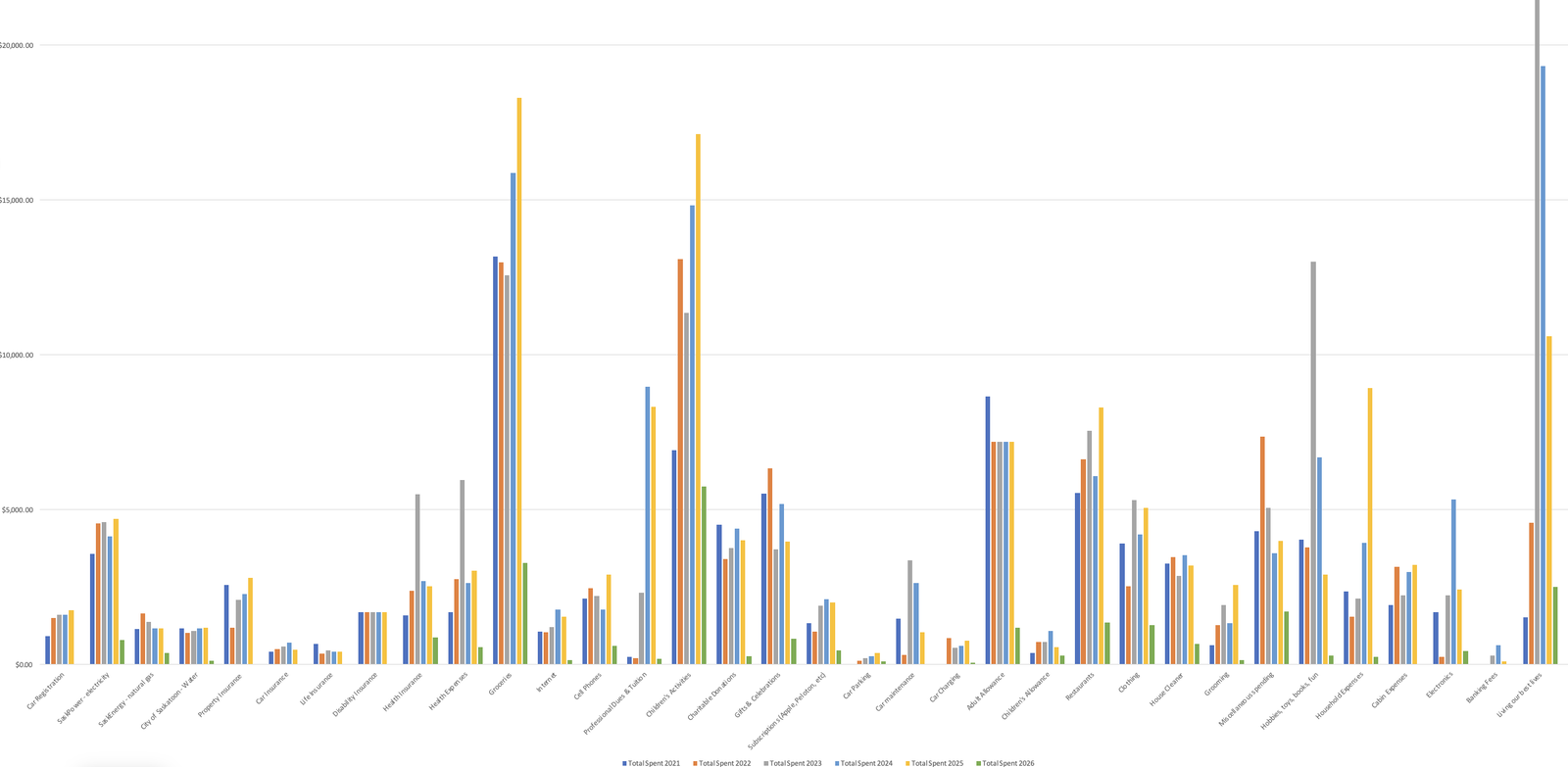
Conduct an Expense Audit: Review your expenses for February to March to identify spending leaks.
Utilize the Value Matrix: Categorize expenses into high/low joy and high/low cost to optimize spending.
Regular Check-ins: Establish a routine of auditing and reflecting on your spending habits to refine financial strategies over time.
Core Rules & Formulas
Rule/Formulas
Description
Expense Audit
Evaluate your spending regularly to identify leaks or unnecessary expenditures.
Value Matrix
A four-quadrant tool to assess expenses based on joy and cost:
- High Joy, Low Cost (Best)
- High Joy, High Cost (Consider optimizing)
- Low Joy, Low Cost (Keep but examine)
- Low Joy, High Cost (Cut or trim)
Save 50% Rule
Aim for a 50% savings rate to ensure financial security and independence.
Tools, Accounts, or Strategies Mentioned
Tool/Strategy
Description
Expense Audit Challenge
Community initiative to assess spending from February to March.
Value Matrix
Tool for analyzing expenses to prioritize spending based on joy and cost.
YNAB (You Need A Budget)
Budgeting tool that tracks spending efficiently; useful for expense audits.
Monarch Money
Expense tracking tool integrated with financial accounts for easier audits.
Start Your Expense Audit: Begin reviewing your expenses now to uncover potential leaks.
Engage with the Community: Share your audit findings and strategies on the ChooseFI platform.
Utilize the Value Matrix: Apply this framework to reflect on your spending and make informed decisions.
Listen to Episode 586 for more details on initiating your expense audit and understanding its importance.

Read Transcript
Comments
(13)
strauskp
1 week ago
I appreciate this idea of a brief audit and matrix, particularly for those building wealth. I would like to share my experience from the viewpoint of a wife whose husband has tracked every expense in Quicken for the entirety of our 20 year relationship. Closely tracking created both an opportunity to discuss our individual values and visions, but it also created a lot of friction. Especially after we hit FI two years ago, the dynamic has not been healthy, I would argue, for either of us. Even though we are staying within our annual budget, as the primary spender, I have felt shamed and judged when "reporting" expenses, for example when he doesn't recognize an expense and asks "how should I categorize X ?" We both acknowledge his strong drive to track every expense stems from his childhood, and it is only in this last year or so that I have developed stronger boundaries and pushed back when feeling judged. Very recently I have challenged him to stop tracking individual purchases and pushed instead for monthly check-ins to discuss where our overall spending is in relation to our annual budget. My argument is that our annual budget was established at FI (adjusted for inflation), and as long as we hit that target each year, the individual tracking is no longer useful. And I think he would feel less panic and concern if he focused more on the big annual picture. He seems open to the idea and is letting it simmer. Anyway, just my view on perhaps a consequence of tracking too closely for too long for some couples.
Jenni Sheppard
2 weeks ago
In our household in Vancouver, Canada (VHCOL), it's just me and my partner. Last year, according to YNAB, we spent (in Canadian dollars):
**$8,167.06 on groceries (about $3.50/person/meal)**
This is actually really good for where we live. We meal plan every week, cook mostly vegetarian with meat/fish maybe once every two weeks. We buy good quality groceries from our local greengrocer, butcher, fishmonger and baker, but buy other things from our local bargain supermarket and in bulk from Costco. We have a pantry full of dried beans and some good go-to daal, curry and salad recipes. We also use the Budget Bytes website for recipes and meal planning - I heard about that from a guest on the ChooseFI podcast a long time ago!
**$4,221.43 on eating out (about $80/week)**
Considering that here, lunch out will cost you $20+, this is a pretty amazing average. The key is that by default, we avoid wasting money on dining out just for convenience. For example, if we are going to a sports game straight from work, instead of buying something at the stadium, we bring something from home to eat before we leave work. That right there has saved us at least $60. Having that be your default position means it's easier for you to just prep for that, as you don't need to discuss what to do every time. It also means that we have more money to spend on intentional, higher end dining out, which we love to do.
**$2,698.71 on alcohol (about $52/week)**
Given that a bottle of wine here costs at least $25 and a pint of beer in a bar can easily be $15. This isn't too bad. It also includes wine we bought from wineries on various road trips too, so pretty good really! Over the last few years, I have cut down on alcohol a lot, keeping my consumption to two drinks per sitting and rarely buying very expensive stadium beers. That helps keep this cost down a bit.
**$542.27 on coffee shops (about $10/week)**
This is about right, given that we have a regular weekly coffee social after parkrun.
**$901.25 on date night (about $17/week)**
This is something we started doing last year, to be more intentional about spending time together. It usually pays for a donut, ice cream, lunch or coffee treat out just for the two of us.
**Conclusion**
Overall, we try to be very intentional about how we spend on food. We love eating out and cooking good food, so we don't scrimp on quality, but we try to be laser focused on using our funds optimally, rather than wasting it on convenience food due to lack of planning.
3
Jonathan Mendonsa
2 weeks ago
That’s excellent #DATA thanks for sharing
1
JoeQ17
2 weeks ago
At next Monday's Atlanta meet-up we'll be discussing the Expense Audit episode and sharing expense tracking solutions and what people have learned so far from their experience. Hopefully it will kickstart those that haven't started to get in gear as well! We'll share how it goes.
2
Rachel_Dawn_Knits
2 weeks ago
As someone who really enjoys tracking my expenses, I do it really at a really granular level and love to see how different expenses change year to year. The spreadsheet I have made allows me to see where our family spent more money as time passes and how different factors can effect it (i.e. weather affecting natural gas prices for how much heat or inflation on grocery spending).
Hi- I 'm a 66 year old retired scientist living just outside of Boston, I have been listing to the podcast since episode 10 thanks for the years of podcasts! I wanted to touch on a way to address budgeting for hidden leaks. I use my credit cards for the vast majority of my spending and what can not be put on credit cards (mortgage, some utilities, college tuition for my kids, etc) is paid directly from my checking account. Becasue I have found that it seems impossible to categorize every little thing I spend on using traditional tracking/audit methods, to figure out what I spend/year and how much I was/am really going to need in retirement, I simply add up all my credit card spending for the year then add in the things that are deducted from my checking account. This way I capture 100% of my spending. Of course, out of curiosity, I do keep track of specific monthly spending on utilities, groceries and other basics, and I try to track frivolous spending by monitoring my credit card spending, but I find that using total credit card plus auto deductions truly tells me what I really do spend in a year and comprehensively includes the stuff not accounted for in my tracking. I have been doing this for 4 years and find that my yearly spending is pretty consistent.
An example is that my yearly audit of all the regular things (houseing, utilities, travel, taxes, etc) shows that I spend 63K a yearK, but when I add in uncategorized credit card spending (includes any clothing, hardware store, things like bedding, curtains, a new pot or set of wine glasses or a rug, or anything like that, as well as restaurants ( I don't eat out enough to categorize separately), travel and everythig else I don't want to put the effort in to categorize, my yearly total is 84K. I realize that 20k of random spending is a lot, but it also covers a lot,, and since I am fat FI, I am at a stage of life where I am not interested in really cutting back (already optimized!), I just want to keep general track.
Thanks again for all the hard work you have put into creating this great community!
4
NCTHIKER
2 weeks ago
I do similar, I do an income statement and a balance sheet every month. I lump all cc spending but attach my and my wife's cc statement for review line by line if wanted. We must be fat fire as we're both 6 years retired and cumulative we've not taken more than 30k out of investments. Our annual spend last year was $93k. I just don't think we're going to find any value in getting so granular. We've been Uber frugal for years to be able to not stress over every dollar. Neither of us are drawing SSA yet, so once that starts we'll be even "fatter" lol. Our problem is breaking free from our years of frugality and accepting that we are in the spend down phase.
1
Westie
2 weeks ago
You guys mentioned in the episode that if you use a tool like YNAB then expense tracking is easy - as I was listening to the episode (before you got to that part) I literally pulled up YNAB and filtered out everything except my food and looked at the 3 month, 6 month, and 12 month totals. Took me 15 seconds. It seriously is a massive game changer if you use budgeting software like this. Hot take, but I think literally everyone should be using some form of budgeting software that automatically tracks spending.
3
Jenni Sheppard
2 weeks ago
Yeah Westie, I tend to agree with you! My colleagues are shocked when I talk to them about personal finance and I show them the YNAB app and I can tell them exactly how much our life costs, exactly what we put aside for retirement, for eating out etc. I forget sometimes how far ahead in this regard the FI community is. Most people never do this.
On a side note, I mentor a college student and I am teaching her the ways of good personal finance. She has just moved out on her own for the first time ever, so we are going to have a "dinner and money" night soon to get her a budget updated. Am hoping to get her using YNAB, especially as it's free for her!
JulieM
2 weeks ago
**My husband and I both enjoy meal planning and feel like we do a good job at it. Here is some insight into our budget and planning methods.**
**Background:**
- We consider ourselves a family of 4 (we are a blended family of 5; 3 of us live here full-time, and two children are here 50% of the time, so we count them as one full-time person).
- We eat mostly vegetarian, but also include fish about once a month.
- We shop at Aldi, Costco, and Woodmans (a larger grocery chain in Wisconsin)
- We shop Aldi and Costco first, and then Woodmans for more unique specialty items.
- We rarely eat out when at home, and eating out during vacations is counted as "travel" not "grocery" in our budget
- Located in mid-sized city (65-70k people) in Wisconsin
**Spend:**
- **2025 Spend: $ 13,943.90** (includes all grocery, eating out locally, and alcohol)
- We estimate about $1000 of that to be alcohol.
- **Per Person:** without separating out alcohol, that equates to $3.18/person/meal, and with reducing by $1000 to factor out the alcohol, we are at $2.96/person/meal.
**Meal Planning:**
- Husband and I **alternate meal planning every other week.** Meal planning can be exhausting, mentally taxing, and monotonous when you are the only one doing it week after week. We've found that doing every other week gives us both a needed break and space to think about new ideas and recipes we want to try.
- When meal planning, **we check our shared Google Calendar first** to determine which days require "quick" meals due to kids' sports or other commitments, or which days the other spouse or kids can help prepare the meal because of other obligations. This helps to determine what type of meal to make.
- We keep **a recipe book**, which is a 3-ring binder with sleeves for printed out recipes, on hand and use that for the majority of our meals. This started empty, and as the family tried new recipes, we added the ones we liked to the recipe book. Now we have over 100 tried and true recipes to pull from. We both like exploring new recipes online, but when we lack the capacity to meal plan, it's also nice to just grab the book and pull out 7 favorites.
- The person who plans the meals also does **that week's grocery shopping**, which is also a nice task to share.
I realize not every couple will be on board with this plan, but we've really found it to work well for us, especially as a blended family. We have my husband's kids every other week, so he typically does the meal planning on those weeks, and I do it on the opposite weeks. This was something that came about after we moved in together as a way to share the workload. We of course help each other with prepping/cooking, and the kids help out as well, but it's really nice to have one "main chef" of the week and alternatively, to be "just a sous chef as needed" on alternative weeks.
5
Westie
2 weeks ago
I'm a single person, and things like this are great examples of what I try to point out to couples about the thousand-and-one ways that life is just a bit easier when you have two people.
2
Jonathan Mendonsa
2 weeks ago
fantastic! thanks for sharing
1
Cgephart
2 weeks ago
I’m looking forward to the meal planning episode! I’ve recently started batch cooking to help our budget and our busy weeknights. I asked ChatGPT to plan me a batch cooking menu for the week and really enjoyed the meals/ease of cooking. Will be doing more of this!
2
VitaminVivi
2 weeks ago
we meal plan every week and only buy what we need for the meals we plan so we have minimal waste. On occasion we have an odd number of ingredients leftover. My husband has used chat gpt to find recipes that use the leftover produce with some pantry staples we always have and it has not disappointed. What a hack! Delays groceries an addl day and saves us a meal or eating out. We also compost all our scraps that our dog who loves veggies can’t eat and feed our compost to our flowers and herb garden so our lovely mint teas and refreshers in the summer are fed by them too. Love this method and never going back.
CarolL
2 weeks ago
Great episode today, thank you! I absolutely love Tiller for tracking my income and expenses. The thing I love best about it is that my information is automatically uploaded into my personal Tiller Google sheets - it is not held by a third party platform. Also, I'm familiar with Google Sheets, so it's pretty intuitive. Excel is the other option. Spending a few minutes Saturday mornings reviewing and updating my Tiller Sheets has become a much-enjoyed ritual because it shows me that I'm in control of my money and I can easily identify and minimize leaks. 😊
2
Vicks
2 weeks ago
Highly recommend using Copilot app for this. It’s about $90/year, however, the ease of use and the data provided is incredible. It auto imports all credit card transactions and auto categorizes them, though you can change a category once or make a rule as needed. Can see how much we spent on food total as well as broken down by grocery stores and restaurants. For cars- total as well as broken down by gas, insurance, maintenance/repairs, state registration etc. can see the daily transactions, monthly by total and by category, ytd in each category, subcategories, total etc. You can also set a budget for each category and there is visibility if you are over/under - great info to decide is your budget is realistic or if the spend makes sense. Overall simplifies the task, easy to use, and instantaneous data at your fingertips in myriad views.
3
Jackie Martindale
2 weeks ago
SO excited for the meal planning episode! I'm super passionate about this and actually just left part of my own process in the life hacks section a couple days before 586 dropped so this is so timely. I've been constantly refining my meal planning/grocery shopping process for the last couple of years and can't wait to hear more ideas to incorporate!
3
Charlotte
2 weeks ago
Looking forward to the food budget episode! We meal plan, don't eat red meat, never throw food away and for the two of us still average about $1050/mo for groceries. My goal is to get this down to $800 going into early retirement in May. If anyone has any tips, please let me know!
4
Gavin OBrien
2 weeks ago
Before offering advice, I guess I'll ask - Where do you shop?
I really like to purchase at Aldi or Lidl and purchase frozen vegetables instead of fresh at times. With that being said, I love fresh berries and I'm happy to spend on this for enjoyment and for potential longevity benefits
2
JoeQ17
2 weeks ago
Also, where do you live? That makes a big difference as well. Family of four in GA and spend around $1050 including alcohol. We shop at Aldi, Costco, Traders, and what’s on sale at Kroger. We buy a ½ pig every year which covers most of our meat consumption. The big thing is we don’t buy pre-cut / prepared foods, and my wife bakes her own bread and things like overnight oats. It’s a balancing act though with the kids to ensure we always have things that are quick and easy to make. Our monthly cost back in 2019 was $650, both from inflation and kids growing.
2
BostonFI
2 weeks ago
I live in Boston, am solo, vegan and only drink alcohol on vacation. I averaged $600/month in 2025 but that combines both at-home cooking and take away/restaurants. Without take away/restaurants it was probably more like $480/month. My food costs increased 7% from the year before, I assume from inflation/tariffs because my habits have remained the same.
A Trader Joes opened up recently in the next town over and already shopping there for most staples has cut my grocery bill by half from where I shopped previously. So where you shop can be an unexpected lever to pull to lower costs.
This won't be a popular suggestion, but working some plant-based meals into the regular rotation could help lower food costs too.
2
Westie
2 weeks ago
Fresh veggies are RIDICULOUS nowadays, especially if you go for the fancier, "organic" varieties. Here's my tips:
1. "Organic" foods aren't healthier for you. The *intent* is for organic farming to be better for the environment, not to provide more nutritious food. However, the standards around "organic" food are so broad and so laxly enforced that often organic food isn't better for the environment either. So my take is, it's not worth the premium. Buy non-organic and cut your fresh food costs by a lot. If you want to help the environment, donate some of your savings to
[Carbon Removed - remove your CO₂ emissions](https://carbonremoved.com/.)
2. Frozen fruits and veggies have improved a lot over the last 10 years. I think the technology or processes have gotten a lot better. So for anything that's going in a pasta sauce or a soup or is otherwise a background flavor, I think frozen veggies are perfectly reasonable and cost a small fraction of fresh veggies.
3. Rice and beans are dirt cheap. Probably half of my meals are some variation of (rice) + (beans or tuna) + (frozen vegetables) + (seasonings/sauce). There are so many variations of that simple base.
4. Don't be afraid to be the garbage compactor in your friend group. I've got a friend who is (in her words) "weird about leftovers" and sends me home with a bunch of food when I visit. I've got a roommate who buys waaaaay more food than he needs because he's an aspirational recipe maker, so inevitably when it's been a couple of weeks and he's eaten takeout every night I end up with some of his uneaten ingredients. If you can figure out the skill of "I have x, y, and z, how do I make a meal from them?" then you can use other people's food wastage to offset your own food spending.
5. Costco rotisserie chickens. Need I say more?
I'm a single person in San Francisco and my groceries budget (both food and staples like paper towels) is $200-$300 a month.
2
EarlyRetired2026
2 weeks ago
Great episode. For 2 of us in Woodinville, WA we budget $500 a month for groceries and $600 a month for eating out. We rarely hit either limit. We eat at home about 90% of the time.
2
Want to join the discussion? Head to the community to share your thoughts.