ChooseFI
Understanding the Power of the Expense Audit
Podcast

Ep. 586 Understanding the Power of the Expense Audit

Auditing your expenses can be a game-changer in your journey to financial independence. By using a structured four-step framework, you'll discover money leaks and better understand your true living co...

Brad Barrett, Jonathan Mendonsa ·
1h 9m 39s
  1. Introduction to Expense Audit
  2. Importance of Regular Expense Audits
  3. Identifying Money Leaks
  4. Key Strategies for Expense Auditing
  5. Value Matrix for Expenses
  6. Closing Thoughts and Action Steps

Episode Summary

Auditing your expenses can dramatically improve financial awareness, helping you identify money leaks and understand your true living costs. In this episode, the hosts present a structured four-step framework aimed at facilitating regular expense audits, which ideally should be conducted annually. The discussion includes practical strategies for tracking subscriptions, variable expenses, and distinguishing between required and discretionary spending.

By adopting a calculated approach to expenses, you can effectively mitigate lifestyle creep while ensuring every dollar serves a purpose.

Key Tactical Takeaways

  • Conduct an Annual Expense Audit: Establish a routine to review expenses at least once a year to stay on top of spending habits and identify areas for improvement.
  • Categorize Every Expense: Break down expenditures into necessary (fixed costs) and discretionary (variable costs) categories for clearer insights.
  • Use a Value Matrix: Assess expenses based on their joy and necessity to inform which should be retained, reduced, or eliminated.
  • Track Subscriptions and Variable Costs: Pay attention to recurring payments, particularly those related to entertainment and services like streaming or software.
  • Calculate the Long-Term Impact of Small Savings: Remember that cutting small monthly expenses can significantly affect your financial independence number over time.

Core Rules & Formulas

Rule Explanation
Annual Expense Audit Review all expenses once a year to prevent overspending and identify leaks.
Categorization of Expenses Differentiate between Required (fixed) and Discretionary (variable) expenses.
Value Matrix Implementation Organize spending into High Joy/ Low Joy and Essential/ Eliminate quadrants.
Prioritize Necessary Expenses Always account for essential bills, including utilities, groceries, and housing costs.
Evaluate Impact of Expenses Each $100 cut from monthly expenses reduces your FI number by $30,000 and if invested can generate $60,000 over time (20-year horizon).

Tools, Accounts, or Strategies Mentioned

Tool/Strategy Link/Description
Expense Audit Spreadsheet Download here
Value Matrix Framework Framework for analyzing the necessity and joy of expenses.

Resources & References

What To Do Next

  1. Join the Expense Audit Challenge: Participate in the community challenge to gain insights and support while auditing your finances.
  2. Download Your Bank and Credit Card Statements: Begin your audit by gathering statements from the last few months.
  3. Categorize Your Expenses: Use the expense audit spreadsheet to identify necessary vs. discretionary spending.
  4. Reflect on Your Findings: After auditing, identify any hidden expenses or subscriptions that can be cut, and share insights with the community at choosefi.com/login.

Conducting an Effective Expense Audit: A Step-by-Step Guide

Understanding the Expense Audit

  1. Definition: An expense audit is a systematic review of your expenditures to identify unnecessary spending and money leaks.
  2. Goal: The aim is to clarify how much your life actually costs.

Importance of Regular Expense Audits

  1. Frequency: Conduct an expense audit at least once a year to keep track of spending habits.
  2. Long-term Tracking: Monitor for lifestyle creep, which can happen gradually and affect your financial health over time.

Action Steps to Begin Your Expense Audit

  1. Gather Financial Data:
    • Download your recent bank and credit card statements (last 3 to 4 months).
    • Check statements for variances and patterns in spending.
  2. Categorize Your Expenses:
    • Separate them into categories such as housing, transportation, food, entertainment, and miscellaneous.
    • Include all necessary and discretionary expenditures.

Identifying Money Leaks

  1. Subscription Services: Track all recurring subscriptions and evaluate their necessity.
  2. Variable vs. Fixed Expenses: Distinguish between fixed permissible expenses (mortgage, insurance) and variable spendings (dining out, entertainment) to identify areas for improvement.

Implementing a Value Matrix

  1. Categorization: Create a value matrix to differentiate between:
    • High Joy (essential to happiness)
    • Low Joy (non-essential)
    • Essential (required for daily living)
    • Eliminate (unnecessary expenses)
  2. Analyze Each Category: Assess each item in terms of value and joy to decide if it should remain in your budget.
Category High Joy Low Joy Essential Eliminate
Transportation
Entertainment
Food

Action Items for Your Audit

  1. Cut Unnecessary Costs: Identify and cut down on low joy or eliminate expenses.
  2. Annual Review: Regularly assess subscriptions, variable expenses, and discretionary spending at least annually.
  3. Community Engagement: Join an expense audit challenge or community for support and accountability.

Framework for Decision-Making

  1. Required vs. Non-Essential Expenses: Identify which expenses are necessary for your lifestyle versus those that bring little to no value.
  2. Assess Monthly Projections: Consider how trends in your spending fluctuate and adjust your budget forecasts accordingly.

Resources for Continued Improvement

  • Google Sheets Template: Expense Audit Spreadsheet
  • Join Community Challenges: Participate in shared finance management communities for insights and new strategies.

Next Steps

  1. Take decisive action immediately by downloading recent expense records.
  2. Begin sorting through your expenses to implement the strategies outlined for effective financial management.
Read Transcript

Comments (10)

Lindsey613 1 month ago
I'm excited about the possibility of using this forum and the expense audit to compare my expenses to others. I feel like we don't spend as much as our peers around us, but our expenses are SO HIGH!! But of course I don't talk about money with people in real life, so I don't really know how we compare. I'd love to nerd out with some comparisons!
bether 1 month ago
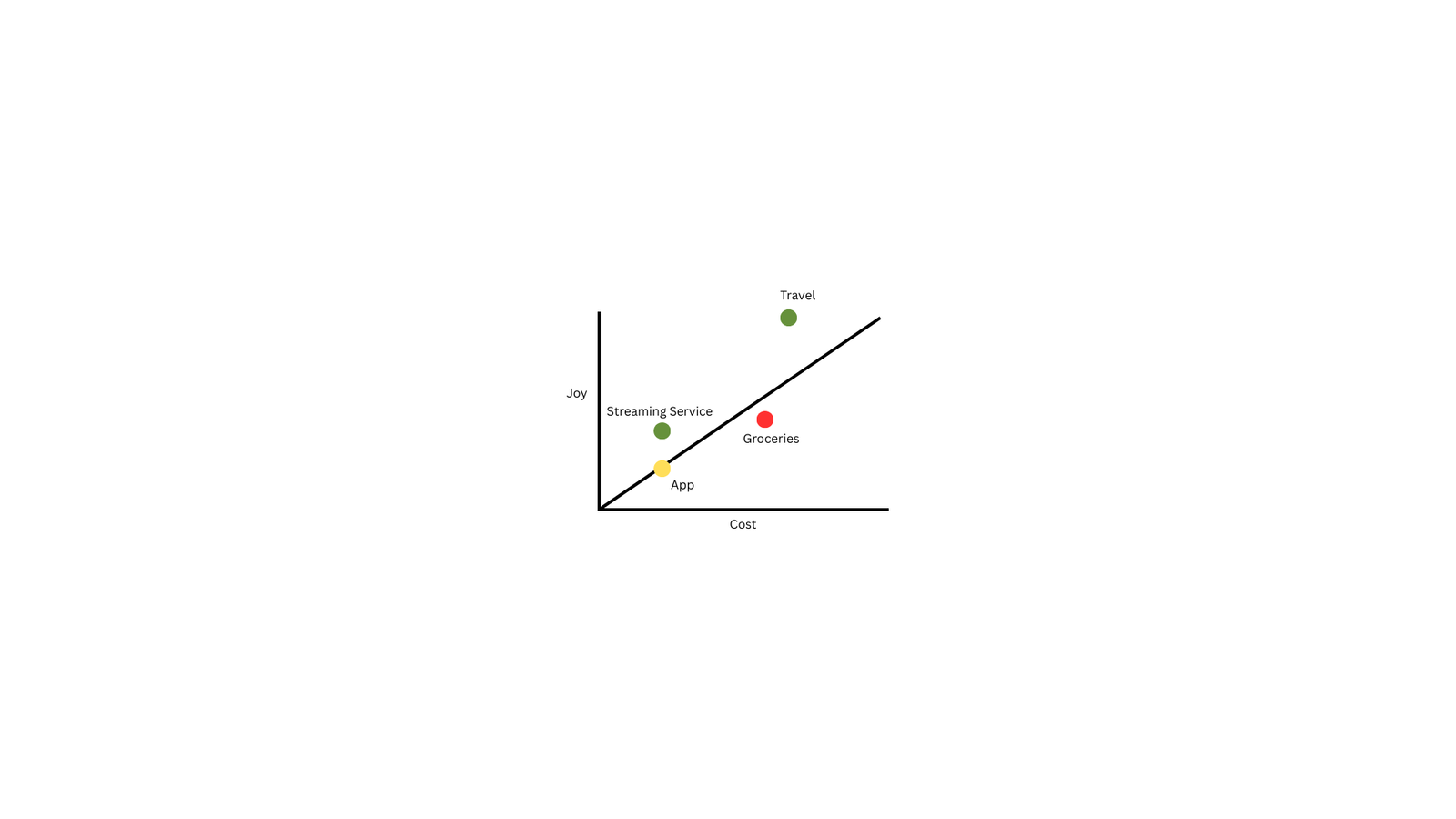
![](https://cdn.choosefi.com/local/5665e316-9ce3-4785-b4ad-b6a638bb9c5c.png)My favorite part of the episode was the final discussion on the cost/value matrix, I hadn't really had that idea directly related back to my expense audit before.



I did have a suggested addition to it though. Rather than just "high" to "no" joy, the cost per joy is what really gets at that value. So the matrix could incorporate this by having two axes - 1 for joy, 1 for cost. Budget items above the 1:1 line are keepers, on the line are "yellow flags" to keep an eye on, and below the line are opportunities for better aligning spending with joy. For example, I'm not liking how much I'm spending on groceries this year and last (shocking), so I'm working to improve my gardening this season in hopes of decreasing our spending on high-quality produce (a high-value joy for us!).
1
AshleyL 1 month ago
I really liked the episode! I think it was so funny how you guys kept calling it "fun” to do an audit. Need alert!

I'm not being paid to advertise, but I love YNAB. I have been using it since 2018, and I was actually able to pull up data from 2018 with my phone.

My oldest was 13, so we had no young drivers, and our car insurance has quintupled with five drivers, three being under the age of 20. We were also able to get away with 600 for groceries, and now it's at least double that. The only people that had cell phones were two adults, so the cell phone bill was about half of what it is now.

On the other hand, my kids all drive themselves and are expected to hold part time jobs and are expected to pay their own gas, so in some ways it is easier.

Also, they choose to use their income to eat fast food all the time, and my husband and I both eat very healthy, so they know healthy food is at home, but we don't feel the need to eat as much fast food.

Our lifestyle has definitely creeped, and we have seen it more than anything in the taxes that we pay each year. In fact, I was planning on doing an audit anyway to try to figure out how much more we could defer so we didn't have to give so much to Uncle Sam this time of year. Anyway, just wanted to say hi! I hope I was able to help someone with my information.
2
Waneta Viray 1 month ago
Really loved this episode and the call to action. It felt very tactical like in the first couple years of ChooseFI. The concept of having an apples to apples comparison of what other FI community members are spending is exciting!

I just filled in the expense audit on this platform. I had been so excited to do it because I know all my expenses well as a YNAB user. BUT it was SO HARD! Categories are not universal at all. Like what was said on the podcast nuances like including household supplies under groceries (or not). And I don't track some expenses in the granularity that was spelled out on this audit - especially travel. I track total cost of each trip, but don't break them down by airfare, lodging, etc.

Plus, life is lumpy (as originally quoted on the podcast by Jesse Mecham, YNAB founder). No two months are the same. I took last year's annual expenses and divided by 12. This method makes much more sense to me than looking at one actual month of spending where I may have one annual fee, pay some partial amount for a future trip, spend more on groceries to stock up from a good sale, etc.

YNAB helps us be intentional with our spending all year long, but we also do an annual review of our spending to decide if we want to reduce, or possibly increase, spending in an area.
2
NDLifeAdventures 1 month ago
I did the same thing. I took last years expense and divided by 12 to populate the expense audit.
2
NDLifeAdventures 1 month ago
It may be worth noting how many amazing apps already help with expense tracking. I am a super fan of Monarch and find that the $99 annual fee is complete worth it. I typically find expenses that need to be cancelled/reduced which over the course of a year save me much more than the app costs. If you use this referral link you receive 50% off your first year:

[You're invited to join Monarch with 50% off your first year.](https://monarch.com/referral/43ff7tqsd1?r_source=copy.)
Waneta Viray 1 month ago
I agree that there's so many great apps! I'm a YNAB super fan, but hope some folks get value from your referral link. Thanks for sharing!
1
AnotherControlsEngineer 1 month ago (edited)
Wanted to throw the categories that we came up with a few years ago that have worked for us to categorize 95% of our expenses (no kids). For the expenses that don't fit we can usually stick it in a category that is close enough. Also, we have been using Copilot Money (not the microsoft ai) which is a $95/yr fee but has worked really well for us.

- Home
- Pets
- Travel and Vacation
- Shops (Amazon purchases go here unless I feel like manually splitting them)
- Restaurants (Any eating out or drinking except when traveling)
- Groceries
- Car (Gas, maintenance, not insurance)
- Clothing
- Utilities (Phone, internet, home utilities)
- Entertainment
- Gifts
- Healthcare
- Fees
- Education
- Fun Money (One of the catch all buckets, hobbies, etc)
- Insurance
- Other
- Personal Care
- Reimbursed (excluded from normal expenses)
- Work Expenses (excluded category since also reimbursed)
1
wforbes 1 month ago
Thanks, that's a good list. My two cents, the way I think about how to categorize a budget (or any type of data) is to think about what you want to do with the data after collecting it. For example, I may want to see how my electricity bill varies per month or year so I'll break up the utilities (water, electric, natural gas, etc) to capture that. Going the other way to simplify expenses, say you prefer a total housing cost with everything bundled. To accomplish that you sum rent/mortgage, HOA fees, landscaping, etc.

The other thought is sort everything into the smallest category that will give you maximum analytical possibilities, but may also lead to the most work.

-Wes
JoeQ17 1 month ago
I posted this last month but fits perfect for this episode. My wife has led tracking our expenses for the past 15 years, link below for shared template. Yes it takes maybe 15min a week, but with two huge benefits. By writing down our expenses each week, it has kept us grounded and aware of what we spend. This has ensured expenses like services don't get out of hand as well as provides positive reminders of spending on things we value. Now as we transition to retirement at 45, we have so much confidence in what our life costs as well as our personnel inflation rate in different categories. While apps and automation are great, sometimes simple brings so much value. Highly recommend monthly tracking and with it quarterly or yearly audits.

[Budget Example.xlsx](https://docs.google.com/spreadsheets/d/1RD45_y-c42_4a9f1dnw1rfQHbjxsfZx-/edit?usp=sharing&ouid=111448422358278930778&rtpof=true&sd=true)
2
8thWonder 1 month ago
I love the nuance that different people bring to these expense tracking exercises. So I really enjoy the idea that the podcast would collect data and have an average spend for certain categories.

I am similar to Brad and how he runs housing, every recurring bill related to living in a home (electric, water, waste, internet) gets counted as **housing** for me - I love having that Birds Eye view of what it costs monthly!

Then I keep a separate expense just called “home” that’s for home upgrades, furniture, and bigger expenses not truly related to the housing itself.
1 1
Fierymillennials 1 month ago
That is an interesting way to look at housing expenses and to be able to compare different situations on an equitable plane. Rent might seem high, but homeownership has a ton of hidden expenses that aren't always readily apparent. For us, that would mean gathering our mortgage payment, utilities, renovations, yard work and property taxes all under one umbrella. Hmm
1
Kayleigh Coughlin-Jacobs 1 month ago
I don’t think Jonathan is right when he says YNAB double counts credit cards. YNAB treats credit cards exactly as Brad describes here. The expense happens the moment the charge hits the card, not when the card is paid off later. Paying off the card is essentially the same impact as moving money between accounts when you’re paying them on time and in full, which is the way YNAB pushes you to handle them.
4
Jonathan Mendonsa 1 month ago
98% of the time they get it right - but I've seen it get confused , which is why they often will let you true up or make adjustments... they have really good logic in place. but ynab and all of those require significant attention to detail.. if you are trying to go back and clean things up months later - good luck - which is why they have the option to fresh slate or start a new budget

and editor note - not a criticism of YNAB - I really Like that software... just an observation about the trickiness of navigating debt vs expenses via credit card
Jonathan Mendonsa 1 month ago
and i'm not the only one to experience that (courtesy of google) ![6995fdff-a381-45a5-b052-f159f673e51a.png](https://cdn.choosefi.com/local/6995fdff-a381-45a5-b052-f159f673e51a.png)

and they have ways to reconcile and move on , but you have to pay attention to it
2
Nate Meharg 1 month ago
You are correct. There is a setting where it just treats like another money account that you pay off at the end of month. When I look at my spending breakdown it doesn't include my credit card payments. Just the expenses I charged on my credit card.
2
Waneta Viray 1 month ago
I got so stuck on this comment too! Thanks for the YNAB defense from a fellow fan.
2
Josh_Schmitt 1 month ago
With generative AI's ability to write code and create a website quickly, you could reasonably create a full finance-tracking online utility yourselves. Believe it!
7 1

Want to join the discussion? Head to the community to share your thoughts.

Join the Conversation

Create an account or sign in to post a comment.

Username
Email

No password needed. We'll send a verification email.

Email
Password

Join ChooseFI

Start your financial independence journey

  • Access to the ChooseFI community
  • Exclusive FI resources and tools
  • Weekly actionable insights
or

Already have an account? Log in

Try searching for

⌘K to open anytime