Login
Financial Independence

Savings rate, FI number, and the path to freedom.

Retirement Strategies

Withdrawal plans, Roth ladders, and early access.

Investing

Index funds, asset allocation, and real estate.

Tax Strategies

Roth conversions, capital gains, and FI tax planning.

Earning More

Career growth, side hustles, and entrepreneurship.

Money Mindset

Beliefs, purpose, and financial psychology.

Health & Fitness

Exercise, nutrition, and mental wellness.

20 Things to Do Before You Retire | Fritz Gilbert
FI Fundamentals
Ep. 623 · · 1h 3m 20s

20 Things to Do Before You Retire | Fritz Gilbert

Preparing for financial independence isn't just about hitting your number. Fritz Gilbert's 20-step blueprint for your last three years of work focuses on making your numbers real, experimenting with y...

Hosted by Brad Barrett · Guest: Fritz Gilbert
0:00 / --:--

ChooseFI has partnered with CardRatings for our coverage of credit card products. ChooseFI and CardRatings may earn compensation from card issuers when a customer clicks on a link, when an application is approved, or when an account is opened. Opinions, reviews, analyses & recommendations are the author's alone, and have not been reviewed, endorsed or approved by any of these entities. American Express is a ChooseFI advertiser.

Most people treat retirement as a numbers game. Hit your target, claim victory, and coast into the sunset. But 85% of retirees crash into a wall of disorientation two years in—not because they ran out of money, but because they never planned for what comes after the paycheck stops: identity, purpose, structure, relationships. The spreadsheet can't solve those problems.

Key Topics

Make Your Numbers Real (3 Years Out) Track every dollar for a full year to capture one-off expenses spreadsheets miss. Project retirement costs with granularity—model RV trips, healthcare scenarios, travel frequency. Build cash flow projections to age 95, not just to retirement day. The goal: eliminate guesswork and replace fear with data.

Start to Experiment (3 Years Out) Test potential retirement activities now. Don't wait until you retire to discover what you actually enjoy versus what sounds good in theory. Experimentation builds identity beyond work before the structure disappears. Most retirees skip this step and pay the price in phase two disorientation.

Prepare for Withdrawals (2 Years Out) The psychological shift from accumulation to spending is brutal after decades of saving. Build liquidity buckets to handle sequence of return risk. Develop a drawdown strategy that accounts for market volatility. Practice spending before you retire—buy the RV or boat while you still have paycheck confidence.

Schedule a Mini-Retirement and Build Your Dream (2 Years Out) Take a week-long break with your partner to envision retirement together. Discuss "he time, she time, we time"—how much individual versus shared activity each person wants. Align expectations before conflicts arise. This conversation prevents the retirement disappointment that ends marriages.

Pursue Your Four C's (1 Year Out) Dan Hallett's framework: Contribution (being needed), Creation (making things instead of consuming), Curiosity (exploring and learning), Connection (relationships). These four pillars replace what work provided beyond money. Retirees who nail the Four C's thrive; those who don't struggle.

Build a Life Outside of Work (1 Year Out) Work gives you 60+ hours of weekly structure. When that disappears, what fills the void? Design your post-work life intentionally—hobbies, volunteering, learning, relationships. The transition only works if you've built something to transition to.

How Close Are You to Financial Independence?

Free calculators, a personalized FI roadmap, and a community of 25K+ on the same journey.

Fill Your Activity Jar (1 Year Out) A practical exercise: each week, both partners write one retirement activity idea on an index card. After a year, you have 100 things to do in retirement. Planning is half the joy. The jar becomes a tangible reminder that retirement is abundance, not void.

Enjoy Crossing the Starting Line Retirement isn't the finish line—it's the starting line. Savor your final month of work. Express gratitude to colleagues. View retirement as the beginning of your best years, not the end of your productive ones.

Notable Quotes

Fritz Gilbert: "Only five of the twenty steps are financially related. The other fifteen are about everything the spreadsheets cannot solve."

Fritz Gilbert: "Retirement isn't the finish line—it's the starting line."

Fritz Gilbert: "My two favorite words in retirement are curiosity and experiment."

Fritz Gilbert: "Both physical fitness and FI get you more years of freedom."

Top Travel Card

Ready to unlock a world of free travel? Start with the Chase Sapphire Preferred® Card

$95 annual fee | Earn 75,000 bonus points
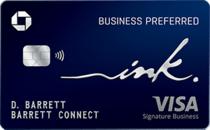
Best Card for Side Hustlers and Business Owners

Side hustlers! With the Ink Business Preferred® Credit Card you can earn free travel from your business expenses.

$95 annual fee | Earn 100,000 bonus points

Most Flexible Travel Card

The Capital One Venture Rewards Credit Card can be used to offset almost any travel expense.

$95 annual fee | Earn more than $1,000 in Travel Bonuses with a limited-time $300 Capital One Travel stays credit, plus earn 75,000 bonus miles once you spend $4,000 on purchases within the first 3 months of account opening—that's more than $1,000 in travel value

ChooseFI has partnered with CardRatings for our coverage of credit card products. ChooseFI and CardRatings may receive a commission from card issuers.

Fritz Gilbert: "Eighty-five percent of retirees go through phase two—loss and disorientation—because they haven't thought about replacing what work gave them beyond a paycheck."

Brad Barrett: "Much of FI success is psychological, not mathematical. Conservative estimate stacking often stems from fear rather than necessity."

Key Takeaways

  • Track a full year of spending three years before retirement to understand actual costs and project expenses accurately
  • Start experimenting with potential retirement activities now—don't wait until you retire to discover what you enjoy
  • Schedule a mini-retirement with your partner to envision your future life and discuss expectations around individual versus shared time
  • Develop a retirement withdrawal strategy two years out, including liquidity buckets and plans for sequence of return risk
  • Create an activity jar with your partner: each week, write one thing you want to do in retirement (100 total ideas over a year)
  • Write your personal "Ten Commandments of Retirement"—your North Star principles for how you want to live
  • Update your estate plan and move all personal items (contacts, files, subscriptions) off work systems before you retire
  • Purchase retirement toys (RV, boat, etc.) before retiring while you still have paycheck confidence and cushion for overspending
Loading transcript...

Comments (6)

Your comment will be posted after signing in
ethanalexander 1 week ago

Just finished this on my morning run with the dog! Awesome topic to dive into that probably needs even more attention!

Question for Brad or Fritz or anyone in the audience here - any suggestions on helping facilitate this discussion or thinking for someone else?

My parents are in their late 50s/early 60s and one is thinking about retiring in the next few years if he can sell his business, while the other might stay on and work an additional couple years. I want to help them envision that post-retirement life and build it with intention so they can accomplish all their goals and really enjoy it rather than getting stuck with analysis paralysis or phase 2 as Fritz would say.

Any thoughts or suggestions? I’ve been thinking about having Gemini work up a couple of discussion templates/interview scripts to use to get the conversation started.

1
BostonFI 1 week ago

You might take a look at the AI prompt for the Tuesday Project that Brad shared in the October 6 newsletter.

2
roberto - 1 week ago

I recommend buying your parents Fritz's book. I bought it for a relative that was approaching retirement and it was received well.

pop77 2 weeks ago

Great episode- I always love how Fritz systematically breaks down problems and has practical steps to deal with them. Brad as usual is great with his summary and counter points. One thing I will implore this type A crowd to think about it is a 'change in perspective' we often try to apply our type A behavior that brought us this far, to retirement. We often think 'keeping busy' a good thing but this time it is for what we love and is on our terms so that is a good thing. Yes, this is better than being mindless or being without a plan but puts us in a trap of 'we should be doing something useful' - instead we should think about getting pleasure and happiness in simplicity, taking it slow and in 'being' . Here is a great episode from a podcast with Henry Shukman. Hopefully it changes our perspective to 'being' than 'doing'

3
LivingTheFIghLife 2 weeks ago

Lots of great stuff in this episode, but I disagree with the advice that we must practice what we want to do in retirement while still working or we are somehow doomed to some form of depression or "loss." I offer a different perspective: that most FI people don't need a specific plan for retirement before they retire. I don't buy into the fear-mongering that I’ll somehow find myself with nothing going on and I’ll get depressed or just sit around eating Cheetos on the sofa. As I suspect most FI'ers are, I was a doer and goal achiever before retirement, so letting my job go doesn't mean I'll suddenly lose my ability to figure out the next step.

Spending time before retirement when I was physically and mentally exhausted working long-hours at my job and fitting in my every-day life chores around that, was not the right time to try out new hobbies or make new retirement friends. Forcing a new hobby into my already busy life, particularly one that would benefit from daytime hours and my full energy, would have added to my burnout and risk me resenting the new endeavor that I might otherwise enjoy. It is completely OK to not know what you want to do in retirement. Leaving work frees up an enormous amount of time and mental energy to explore and try out new things and meet new people. When I retired, I went to graduate school to study history for a year, then I pursued personal financial consulting, then I worked my dream job but quit after a year to travel full time (and this will eventually change again). I learned an enormous amount about myself after retirement because I had the time and resources to do so. I became a minimalist, started writing, and improved my Spanish. The key is that we don’t have to have it all figured out in advance. We can experiment with what we want to do during the first part of retirement a lot easier than while we are working. Protect what little white space we have in our life when we are working and know that early retirement will provide ample time to decide what to do next. YMMV.

9 2
RetirementManifesto 2 weeks ago

LTFL, no offense taken. That's the beauty of "Personal" Finance. There are no wrong answers, just sharing what I'm learning (from personal experience and 8 years of research) to try to help folks figure it out. There's nothing wrong with waiting until retirement, as your case clearly proves. Research does show, however, that the odds of entering Phase II increase significantly as a result. Not "fear-mongering," just sharing the facts. Thanks for the comment, and congrats for figuring it all out!

2
roberto - 2 weeks ago

I think that Fritz's perspective perhaps grates against you because you and he are working with different mental models of "retirement". Fritz followed something that more closely resembles the "start working when young, continue working until old, then no more working" path that became the firmly established norm in industrial and post-industrial America. Whereas you, LFTL, don't seem to approach "retirement" with the idea of it being "the permanent end of work for the rest of my life." Rather, you seem to be coming at it from a perspective like Jillian Johnsrud's mini-retirement/retire often, or the Donegans' mini-experiment, or the second or third brother from Doc G's parable of the 3 brothers.

I would argue that you have already done what Fritz is recommending, in a way. You have looked at the future and decided something like, "I want to leave my current work and do something different (not previously experienced, largely unknown, etc) with the full knowledge that my future trajectory may take me back to working." Based on your comment you seem to have done this already more than once.

By my scorecard, that means you're winning the game.

travisleffel 2 weeks ago

Why is it usually 2, 3, 5 years out when it is recommended to think about and build the assets for the withdrawal strategy? Why wouldn't you be thinking about that much sooner during accumulation when you have the ability to let compounding help you get to your target amounts?

If there is no target age/date to FIRE and instead the target is ASAP, how do you determine it is time to start making the moves so that your plan can be actionable when you get there?

JDFI 2 weeks ago

Why is it usually 2, 3, 5 years out when it is recommended to think about and build the assets for the withdrawal strategy? Why wouldn't you be thinking about that much sooner during accumulation when you have the ability to let compounding help you get to your target amounts?

Because of Sequence of Returns Risk (SORR). During accumulation, dollar cost averaging your regular retirement contributions lowers your average cost of investing.

During decumulation, the reverse happens. Withdrawing when the market is down in the few years before and after switching to decumulation amplifies your risk of running out. This period is called "the retirement red zone."

By targetting a retirement allocation too early, you would reduce your expected progress towards that goal. You do have to consider tax implications of shifting your asset allocation, but any shift you can do in tax deferred or post tax (e.g. Roth) accounts would be tax neutral when you shift asset allocations within them.

So as you approach retirement (decumulation), it is prudent to derisk your portfolio from the higher volatility which helps you during accumulation. A few years after starting decumulation, you can increase your portfolio volatility at much lower SORR. An example of this approach is called a "rising equity glidepath" or a "bond tent."

If there is no target age/date to FIRE and instead the target is ASAP, how do you determine it is time to start making the moves so that your plan can be actionable when you get there?

Estimate when you are likely to get to RE and start shifting portfolio up to ~5 years before that. That might delay your FIRE date a bit, but it also reduces the risk of your FIRE date being suddenly delayed by a major market crash shortly before you were ready to FIRE.

1 1
BostonFI 2 weeks ago

I haven't listened to the episode yet so don't know what it suggests, but when to start building the assets for a withdrawal strategy depends largely on what the withdrawal strategy is.

If the withdrawal strategy is to create a large pile of cash then 2-5 years out is probably adequate to start hoarding cash. If the withdrawal strategy is to live off a taxable account to keep income low for Roth IRA conversions, that will need to be started many years earlier. There are lots of other approaches. The most flexible approach is to have savings in each of pre-tax, taxable and tax-sheltered accounts so you can draw from multiple account types to control your tax bracket each year—a strategy called tax diversification.

The book Tax Planning To and Through Early Retirement by @Cody Garrett, CFP® and "FI Tax Guy" Sean Mullaney is a great resource for thinking about this. I also recommend listening to episode 253 of the Risk Parity Radio podcast for a walkthrough of an article by the CFA Institute on six withdrawal strategies.

2
RetirementManifesto 2 weeks ago

Great to chat with you today, Brad. Always fun to share tips for a successful FI journey. Thanks for having me on the show, always a good time!

6 1
roberto - 2 weeks ago

I really appreciate your insights in the video. The "20 things" might seem like a lot to many people, but I believe that they are genuinely useful. Most people in our society today seem to let life happen to them. When the main things that impose requirements on daily life (raising a family and working a job) are no longer there, it is very easy to just be aimless. Your list provides the guideposts/milestones for avoiding that aimlessness.

I especially liked the point that you made about how a person can put in the work up front (i.e., pre-retirement) in order to avoid ending up in a situation of discouragement/depression/etc and then still having to do the work in order to have a life with sufficient structure and purpose that it makes for an enjoyable retirement experience.

AA40 2 weeks ago (edited)

I've been noticing more and more people in the FIRE community saying that FIRE can be more work than simply continuing to work, and after hearing a podcast like this one, I can understand why. The financial side of FIRE is what genuinely excites me: investing, building wealth, tracking progress, and reaching financial independence. But everything else—figuring out how to fill my days, finding purpose outside of work, planning activities, and making sure retirement is fulfilling—honestly feels like a chore rather than something I look forward to. It has made me rethink the whole idea of FIRE. Maybe I don't necessarily want to retire early; maybe what I really want is the financial freedom to work when I want. I'm starting to think that financial independence, without the pressure to actually retire and having to figure all this out, might be a better fit for me.

2
roberto - 2 weeks ago

The reality is a bit nuanced. There is a spectrum between "every aspect of life is determine by factors which have been imposed from outside" and "complete autonomy to determine every aspect without any concern for any external factors." For many people, work is an external factor, and it is a big factor that takes up the majority of waking hours, mental energy, etc.,

If someone starts with a clear idea of what would replace work if that time and energy were no longer consumed by work, then FIRE is "easy" because the trajectory is towards a "known" outcome. However, if someone is in the position of "work bad, want to do something different" without some sort of clear idea where the trajectory should go, then that is when FIRE can be "hard" because of all of the work that it takes to figure out what that trajectory should be and where it should be going.

RetirementManifesto 2 weeks ago

AA, glad to see you thinking about the things that matter while you're still on the journey to FI. Kudo's for thinking through what you really want out of life. That said, my post-FI years have been the best of my life, and all my post-FI friends feel the same. Yes, it's a big change, but by taking these 20 steps while you're still working, you'll make huge strides toward a smooth transition. Best of luck on your journey.

2
Join the Conversation

Create an account or sign in to post a comment.

Track Your Progress to Financial Independence

Get your personalized FI number and track how close you are to reaching your milestones. Most members are closer than they think.

Personalized FI number calculation

Track progress to Coast FI & full FI

Live dashboard updates as you hit milestones

or

100% free — no credit card required

Account created! Redirecting...

Try searching for

⌘K to open anytime

Where Are You on the Path to FI?

1/3

Step 1 of 3

Which of these sounds most like you?

Scan to get the app

Point your phone camera at the QR code