Login
Financial Independence

Savings rate, FI number, and the path to freedom.

Retirement Strategies

Withdrawal plans, Roth ladders, and early access.

Investing

Index funds, asset allocation, and real estate.

Tax Strategies

Roth conversions, capital gains, and FI tax planning.

Earning More

Career growth, side hustles, and entrepreneurship.

Money Mindset

Beliefs, purpose, and financial psychology.

Health & Fitness

Exercise, nutrition, and mental wellness.

You Learned How to Save. Now Learn How to Spend | Jesse Mecham
Money Mindset
Ep. 618 · · 50m 18s

You Learned How to Save. Now Learn How to Spend | Jesse Mecham

What happens when you've mastered saving but never learned to spend? Jesse Mecham explores the transition from accumulation to actually using money to build the life you wanted all along.

Hosted by Brad Barrett · Guest: Jesse Mecham
0:00 / --:--

ChooseFI has partnered with CardRatings for our coverage of credit card products. ChooseFI and CardRatings may earn compensation from card issuers when a customer clicks on a link, when an application is approved, or when an account is opened. Opinions, reviews, analyses & recommendations are the author's alone, and have not been reviewed, endorsed or approved by any of these entities. All information about the card(s) on this page has been collected independently by ChooseFI. American Express is a ChooseFI advertiser.

Every dollar you save is just money you're planning to spend later—so why does no one talk about the skill of spending well? Jesse Mecham, founder of YNAB, couldn't justify buying a fifty-cent donut despite being objectively "good at money," and that moment of extreme frugality sparked a crisis that would reshape how he thinks about every financial decision.

Key Topics Discussed

What's Money For? Jesse explains why the fundamental question "What is this money for?" is more important than any budgeting technique, and why "for investing" isn't a sufficient answer.

The Fifty Cent Donut Story The pivotal moment when Jesse couldn't justify buying a donut despite financial stability, revealing how extreme frugality becomes suffocating and leads to a financial crisis of meaning.

The Evolution of YNAB Twenty years from selling a spreadsheet for $9.95 to building a comprehensive budgeting philosophy, including key business decisions and inflection points.

The Skill of Spending Why spending is actually the core skill with money, not saving, and how to develop intentionality around spending decisions through naming what money is for.

Breaking the Paycheck to Paycheck Cycle The concept of asymmetric stress and how creating breathing room between earning and spending can eliminate the unnecessary financial anxiety that 80% of Americans carry.

What Is Enough? Brad and Jesse explore the definition of "enough" from both minimalist and abundance perspectives, discussing health, safety, comfort, and the role of external possessions in happiness.

How Close Are You to Financial Independence?

Free calculators, a personalized FI roadmap, and a community of 25K+ on the same journey.

Extravagances and the Tuesday Project Jesse shares his current extravagances including building a wood shop and creating outdoor sanctuaries, while Brad discusses his minimalist experiment and the concept of building a remarkable Tuesday.

Advice to Your Younger Self Jesse reflects on what he would tell his 25-year-old self, praising his willingness to take risks while offering grace around parenting and being less judgmental about money decisions.

Processing Financial Worry Jesse's process for responding to financial worry when it appears, even when you have enough, by returning to the fundamental question: what is this money for?

Notable Quotes

Jesse Mecham: "Saving money isn't inherently virtuous. It isn't, because ultimately every dollar you save is simply money you're planning to spend later."

Jesse Mecham: "When you're bad at money, inconveniences are emergencies. And when you're good at money, emergencies are inconveniences."

Brad Barrett: "It's for buying your freedom with every single one of those dollars."

Top Travel Card

Ready to unlock a world of free travel? Start with the Chase Sapphire Preferred® Card

$95 annual fee | Earn 75,000 bonus points
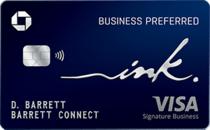
Best Card for Side Hustlers and Business Owners

Side hustlers! With the Ink Business Preferred® Credit Card you can earn free travel from your business expenses.

$95 annual fee | Earn 100,000 bonus points

Most Flexible Travel Card

The Capital One Venture Rewards Credit Card can be used to offset almost any travel expense.

$95 annual fee | Earn more than $1,000 in Travel Bonuses with a limited-time $300 Capital One Travel stays credit, plus earn 75,000 bonus miles once you spend $4,000 on purchases within the first 3 months of account opening—that's more than $1,000 in travel value

ChooseFI has partnered with CardRatings for our coverage of credit card products. ChooseFI and CardRatings may receive a commission from card issuers.

Jesse Mecham: "The one thing money is meant to do at the end of the day is to be spent, and we're really bad at doing the one thing money is meant to do."

Brad Barrett: "Nothing good in life comes from the easy path. You have to have a little bit of effort, you have to have a little bit of hardship."

Key Takeaways

  • Ask yourself "What is this money for?" and label your savings with specific, meaningful purposes rather than generic categories
  • Create breathing room between earning and spending by saving enough to cover all bills if they landed on the same day
  • Design your ideal Tuesday—envision your perfect average day and identify what you can do to make it happen
  • Review your spending without judgment, looking for alignment with your values rather than simply trying to spend less
  • If you've reached financial independence, practice the skill of spending by naming specific ways you want to use your money
  • Eliminate asymmetric stress by building a financial buffer so inconveniences don't become emergencies
  • When financial worry appears, return to the fundamental question and review what your money is specifically for
Loading transcript...

Comments (2)

Your comment will be posted after signing in
wandereranthony 3 weeks ago

So glad we are talking more about the spending side of FI. YNAB transformed our family finances and is a key part of our FI journey. Knowing why you spend is just as important as knowing why you save.

2
roberto - 3 weeks ago

There's a line in one of Isaac Asimov's stories (I have this vague recollection of it being in "I, Robot") where something goes wrong and one of the characters says, "we were so busy asking if we could that nobody stopped to ask if we should."

In a way, I see that as a form of the saving/spending dilemma that we often face in the FI world. Especially in the past, there was a tremendous emphasis on metrics like savings rate and returns (the "what") and very little on the "why". "We were so busy asking how high we could get our savings rate/returns that nobody stopped to ask what the end goal was" might be a way to apply the same concept to us in the FI world.

ChooseFI has been instrumental in helping to change that, especially as Brad and Jonathan both often talk about "the why of FI". And it neat to see other voices in the community (MMM, Mr. 1500, Doc G, among others) also shifting in that direction.

dbmindful 3 weeks ago

Very cool episode. Had never heard of the guest before but had heard of YNAB. The two resonating ideas for me were the idea that there is no saving, only money to be spent later. As someone with no kids and no big legacy plans, that was an interesting reframing.

Also, naming what the money is for. That also resonated with me, especially because it's easy for my partner to feel like we never have enough. Perhaps naming what it's for can help with the emotional fear of never enough.

2
roberto - 3 weeks ago

It's quite interesting to see how Jesse's views have evolved over time. If I'm not mistaken, I think this is his 3rd or 4th on ChooseFI. If you listen to the earlier episodes with him you'd notice a remarkable difference (in a very positive way, to be sure).

1
UncleFrank 3 weeks ago

Yes, the question or framing you want to be asking is "How can we best use our resources to improve our well-being?" Money is just one of those resources and, as with most things, spending it or deploying it to improve well-being is a skill to be developed.

But in order to do that we need to disabuse ourselves of the notion or sticking point that "money can't buy happiness so I'm just going to sit on it because the best I can do with it is keep accumulating it as a form of anxiety medication." Followed by "somebody said something about 70,000 dollars once that must be true for all people and all times." (It was actually a poorly done study that has been superseded by better work.)

Money in fact CAN buy happiness if you know how to use it and are willing to make an effort to learn. Start with the book "The Soul of Wealth" by Daniel Crosby and the chapter aptly entitled entitled, "Money Can Buy Happiness When You Spend It Correctly." Yes, it applies to you, me and everyone else.

Even those who claim they are "special" and "couldn't possibly derive any additional joy in life by spending one cent more than they already do." All that really means is that they are not trying very hard.

2
Join the Conversation

Create an account or sign in to post a comment.

How Close Are You to Financial Independence?

Find out in 60 seconds — free calculators, community, and a personalized FI roadmap.

FI calculators and planning tools

Community of 25K+ on the same journey

750+ episodes of proven strategies

or

Free forever. No credit card required.

Account created! Redirecting...

Try searching for

⌘K to open anytime

Where Are You on the Path to FI?

1/3

Step 1 of 3

Which of these sounds most like you?

Scan to get the app

Point your phone camera at the QR code