
Key Takeaways
- You do not need to spend money to have a great time — the most fulfilling at-home activities cost little or nothing.
- Staying home more often naturally boosts your savings rate, accelerating your FI timeline.
- Productive fun (learning new skills, DIY projects, meal prep) combines entertainment with FI-building habits.
- The key is variety — rotate between active, creative, social, and relaxing activities to avoid boredom.
What's your FI number? Calculate it in 60 seconds
The one number that changes everything
Fun Things to Do at Home
One of the most underrated FI skills is learning to genuinely enjoy time at home. Not as a sacrifice — as a lifestyle upgrade.
The average American household spends over $3,500 per year on entertainment outside the home. That is not inherently bad, but much of it goes toward activities that are not particularly memorable. Meanwhile, some of the most satisfying experiences — cooking a new recipe, building something with your hands, having a real conversation with friends — happen at home for free.
Here are ideas organized by category, whether you are solo, with a partner, with kids, or hosting friends. All of them cost under $20, and most are free.
The Economics of Staying Home
How at-home entertainment affects your FI math
Find Your FI Number
See where you stand and model your path to financial independence with our free calculator.

You're in!
Check your email to get started with your FI Number.
Activity Categories
Mix these up to keep things fresh
Active & Physical
Home workouts, yoga, dance parties, backyard sports, and garden projects.
Creative & Craft
Drawing, writing, music, DIY projects, and learning new skills on YouTube.
Social & Games
Board games, card games, video calls, dinner parties, and trivia nights.
Learn & Grow
Online courses, podcasts, reading, language learning, and skill development.
Fun Things to Do at Home Alone
1. Start a reading habit. Your local library gives you access to thousands of books, audiobooks, and e-books for free. Libby and Hoopla apps let you borrow digital titles from your phone. Set a goal of one book per month.
2. Learn a new skill on YouTube. Guitar, cooking techniques, home repair, photography, coding — YouTube has free tutorials for everything. Pick one skill and dedicate 30 minutes a day for a month.
3. Start a side project. Write a blog, build a piece of furniture, start a garden, or create a small online business. Side projects that generate income are the ultimate FI-friendly hobby.
4. Home workout routine. YouTube channels like Fitness Blender, DAREBEE, and Yoga With Adriene offer hundreds of free workouts. No gym membership required. Savings: $30-60/month.
5. Declutter and sell. Go room by room and list unused items on Facebook Marketplace, eBay, or Poshmark. You clear space and earn money — a double win.
6. Meal prep and recipe experimentation. Pick a cuisine you have never tried and make it from scratch. Cooking at home versus eating out saves the average person $2,000-3,000 per year.
7. Listen to podcasts and audiobooks. While you clean, cook, or exercise. The ChooseFI podcast has hundreds of episodes on financial independence, travel rewards, and life optimization.
Build Your FI Plan
Map your path to financial independence with personalized calculators and milestone tracking.
- Save your progress
- Get personalized next steps
- Access calculators and resources
You're in!
Check your email to get started with your FI Plan.
Fun Things to Do at Home with Your Partner
8. Cooking challenge. Each person picks a recipe the other has never made. Cook simultaneously and rate the results. Cost: $10-15.
9. Board game or card game tournament. Set up a multi-round tournament with a small prize for the winner (loser does dishes for a week).
10. Build something together. A raised garden bed, a bookshelf, or a piece of furniture. YouTube has step-by-step plans for every skill level.
11. Movie marathon with a theme. Pick a director, a decade, or a genre. Make themed snacks to match.
12. FI planning session. Review your net worth, update your FI number, set quarterly goals. Pair it with a homemade dinner. The couples who plan together stay aligned.
Fun Things to Do at Home with Kids
13. Science experiments. Baking soda volcanoes, invisible ink, growing crystals — YouTube and Pinterest have hundreds of easy experiments using household ingredients.
14. Family game night. Rotate between board games, card games, and charades. Let kids take turns choosing the game.
15. Backyard camping. Set up a tent, make s'mores, tell stories, and sleep outside (or retreat to beds when the novelty wears off). Kids love it.
16. Cooking together. Teach kids to make simple meals. This builds life skills and creates lasting memories.
17. Art studio. Lay out paper, paint, markers, and let everyone create. Frame the results and rotate a home gallery wall.
What's your FI number? Calculate it in 60 seconds
The one number that changes everything
Fun Things to Do at Home with Friends
18. Potluck dinner party. Everyone brings a dish. You get variety without any one person bearing the cost. Cost per person: $5-10.
19. Trivia night. Use free trivia apps or websites to host your own trivia competition. Form teams, keep score, award ridiculous prizes.
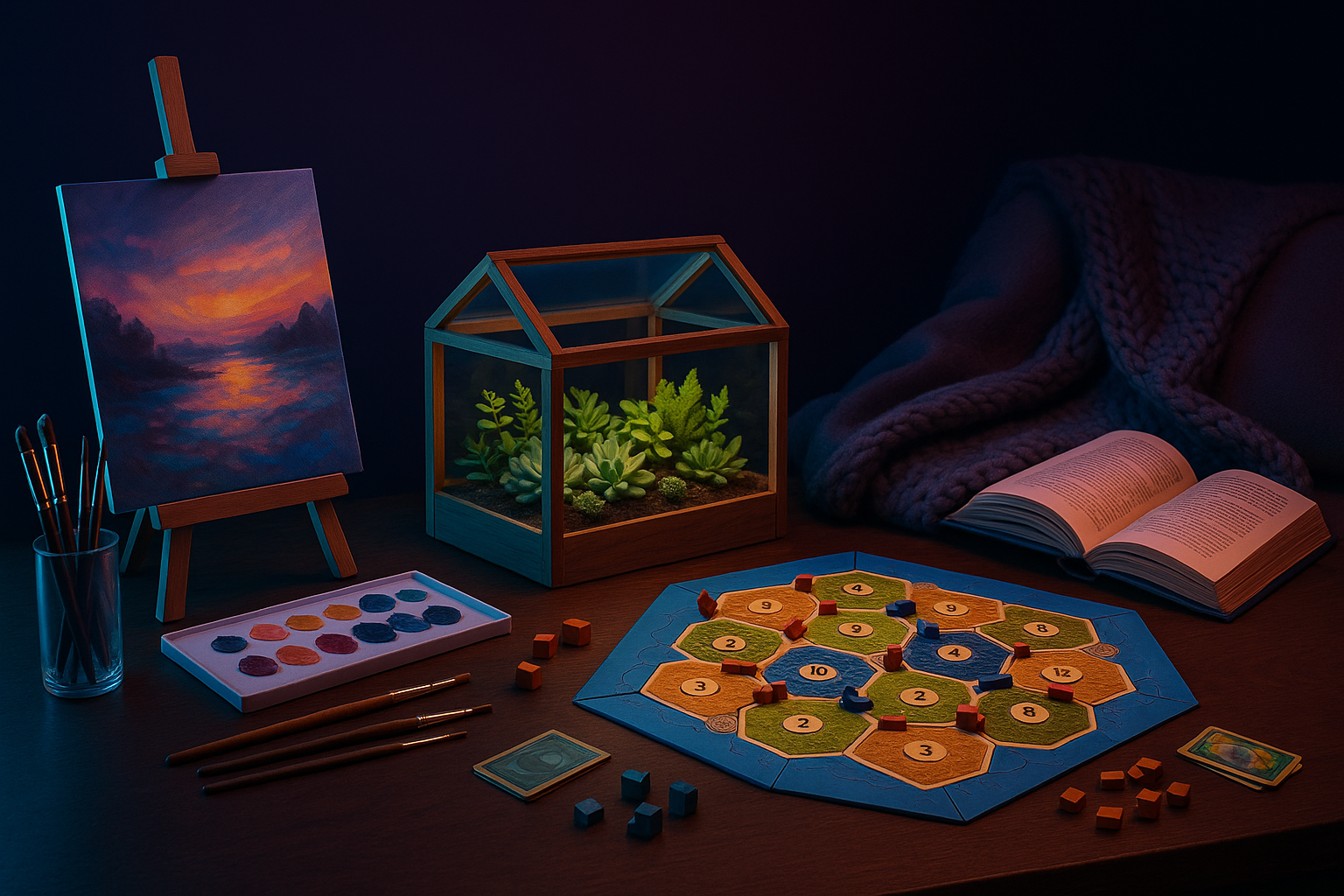
20. Game night. Board games, card games, or video games. Codenames, Ticket to Ride, Settlers of Catan, and Jackbox Party Packs are consistently great.
21. Watch party. Pick a series everyone has been meaning to watch. Assign snack duty to each guest.
22. Skills swap. Each friend teaches something they know — guitar basics, a recipe, basic car maintenance, a yoga flow. Everyone leaves with a new skill.
Productive Fun (Build Your FI While Having Fun)
23. Start a garden. A small vegetable garden can produce $200-500 worth of produce per season for minimal upfront cost. It is also genuinely relaxing.
24. DIY home improvement. Paint a room, install shelving, refinish furniture. YouTube tutorials make most projects accessible. You save labor costs and increase your home value.
25. Learn a marketable skill. Free platforms like freeCodeCamp, Khan Academy, and Coursera offer courses in coding, finance, marketing, and more. A new skill can lead to a raise, a side hustle, or a career pivot.
Build an At-Home Entertainment System
Audit your subscriptions
List every streaming service, app, and subscription you pay for. Cancel anything you have not used in the past month. Most households can cut $20-50/month here.
Get a library card
Your library card gives you free access to books, audiobooks (Libby), movies, magazines, museum passes, and even streaming services like Kanopy. This is the single best free entertainment resource available.
Create an activity list
Write down 20+ things you enjoy doing at home. Post it on the fridge. When boredom hits, check the list instead of defaulting to scrolling or spending.
Schedule variety
Rotate between active, creative, social, and relaxing activities throughout the week. Variety prevents the rut that drives people to spend money out of boredom.
Curious about your financial independence number?
These tools can help you estimate your FI target and plan your next milestone.
At-Home vs. Going-Out Entertainment
- Dramatically lower cost — most at-home activities are free or under $10
- No commute time, parking, or waiting in lines
- More flexibility — start, stop, or change activities any time
- Productive options (cooking, DIY, gardening) build skills and save money simultaneously
- Requires intentionality — easy to default to mindless screen time
- Some experiences (live music, sporting events, travel) cannot be replicated at home
- Social isolation risk if you never go out — balance is important
Start Your FI Journey Today
Free calculators, a personalized FI roadmap, and a community of 25K+ on the same journey.
Create a free account to get started
Frequently Asked Questions
Boredom usually comes from defaulting to passive activities (scrolling, watching TV). Create an activity list of 20+ things you enjoy and post it somewhere visible. When boredom hits, pick something from the list. Variety is the key — alternate between active, creative, social, and relaxing activities.
Reading (library books or e-books), home workouts (YouTube), cooking new recipes, board games, decluttering and selling items, learning skills on YouTube, gardening, and listening to podcasts. All completely free.
Every dollar you do not spend on entertainment is a dollar that can be invested. If you save $200/month by shifting to at-home activities and invest it at 7%, you will have $60,000+ in 15 years. Plus, productive at-home activities (cooking, DIY, gardening) generate additional savings.
Have a dance party, rearrange your furniture, try a new workout on YouTube, start journaling, organize a room, call a friend you have not talked to in a while, play cards, or explore your neighborhood on foot. Zero cost, genuine fun.
Set the atmosphere — light candles, play music, make a special drink. Treat at-home nights with the same intentionality as going out. The difference between a boring night in and a great one is usually just 5 minutes of setup.
The Bottom Line
Learning to love time at home is one of the most valuable FI skills you can develop. It naturally reduces spending, creates space for productive hobbies, and often leads to deeper connections with the people you live with. The key is intentionality — create a list, rotate categories, and treat at-home time as something you choose, not something you settle for. Your future self (and your investment portfolio) will thank you.