What's your FI number? Calculate it in 60 seconds
The one number that changes everything
Why direct deposit is the foundation of automated wealth building
It's not just convenience — it's the first step in a system that runs without willpower.
Faster access to your money
Direct deposit typically clears 1–2 days faster than paper checks. Many banks offer early access, getting you paid up to 2 days sooner.
Enables split deposits
Send a percentage directly to savings, investments, or multiple accounts automatically. This is the "pay yourself first" principle on autopilot.
Unlocks bank bonuses
Many high-yield savings accounts and bank sign-up bonuses require direct deposit. It's often the key to earning the best APY rates.
Eliminates check-cashing fees
No trips to the bank, no hold periods, no risk of lost or stolen checks. One less friction point between you and your financial system.
Find your hidden savings in 10 minutes
Our expense audit reveals exactly where your money goes — no budgeting required.
FI Calculator
Travel Tools
Podcast
Local Groups
Forums
Book Club
Value Matrix
Debt Payoff
Workout Logger
Events
FI Calculator
Travel Tools
Podcast
Local Groups
Forums
Book Club
Value Matrix
Debt Payoff
Workout Logger
Events
FI Calculator
Travel Tools
Podcast
Local Groups
Forums
Book Club
Value Matrix
Debt Payoff
Workout Logger
Events
FI Calculator
Travel Tools
Podcast
Local Groups
Forums
Book Club
Value Matrix
Debt Payoff
Workout Logger
Events
Free FI Planning Tools + Community
FI calculator, expense audit, Coast FI tracker, local groups, and 750+ podcast episodes.
No password needed. Free forever.
Are You Leaving Money on the Table?
You could earn more per year with a high-yield savings account.
Compare Best HYSA RatesBased on 5.00% APY vs 0.45% national average. Rates vary.
What Is Direct Deposit? A Simple Definition
Direct deposit is an electronic payment method that transfers money directly into your bank account — no paper check required. Instead of receiving a physical check you have to cash or deposit yourself, the funds arrive automatically on payday, often before you even wake up.
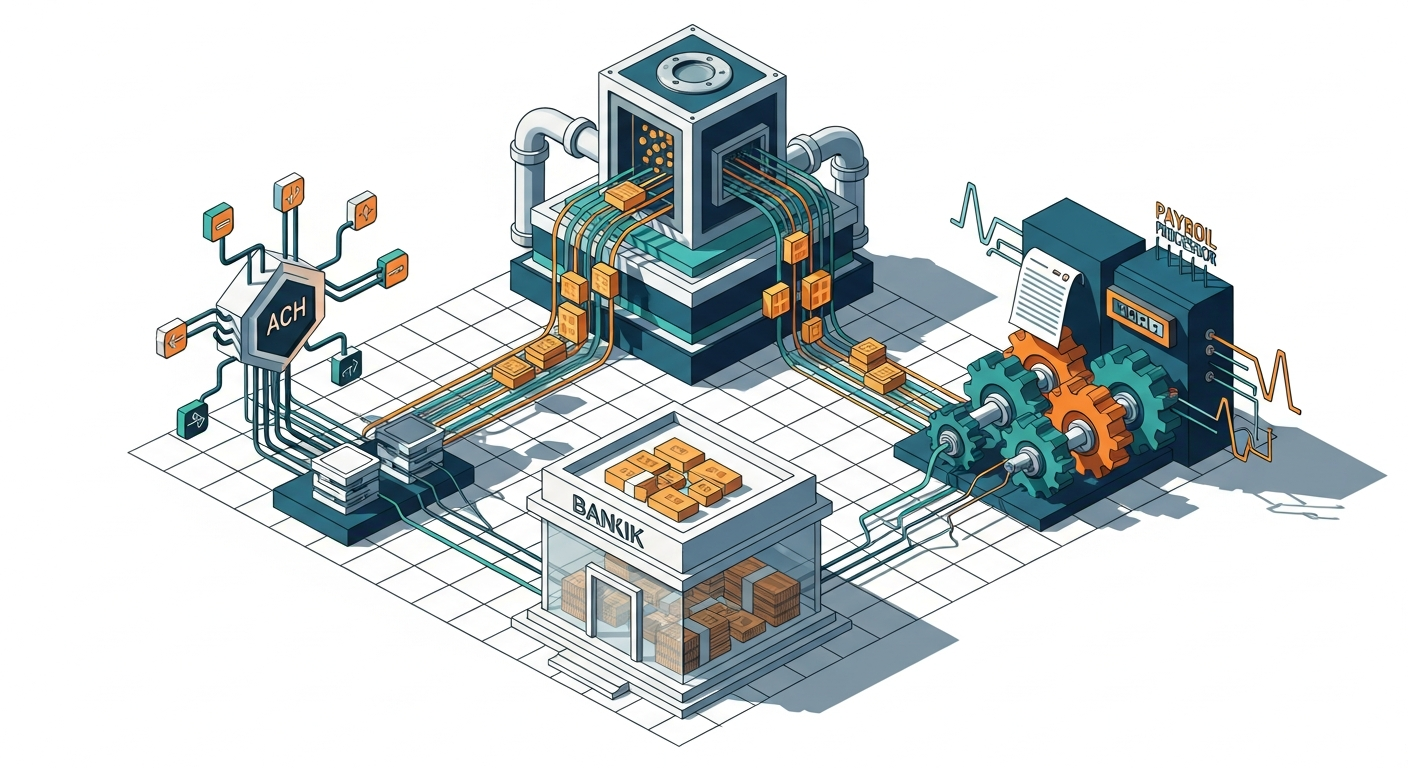
The technical backbone behind direct deposit is the ACH network (Automated Clearing House), a secure system that processes electronic transfers between financial institutions across the U.S. When your employer sets up direct deposit, they work with a payroll provider (like ADP or Gusto) to send your net pay electronically. That payment is routed to your bank using two key pieces of information:
- Routing number — a 9-digit code that identifies your specific bank or credit union
- Account number — the unique number tied to your individual checking or savings account
How It Differs from a Paper Check
With a paper check, your employer prints and hands you a physical document that you then bring to a bank or ATM to deposit. That deposit can take one to three business days to clear. With direct deposit, funds are typically available the same morning they're processed — sometimes even a day or two early depending on your bank.
Direct deposit has been around since the 1970s, when the ACH network was first established. Today, more than 93% of American workers receive their pay this way, making it the standard for modern payroll.
How Does Direct Deposit Work?
From your employer's payroll system to your bank account — here's what happens behind the scenes on every payday.
You Share Your Bank Details
When you start a new job or switch banks, you provide your employer with your bank's routing number and your account number. This is usually done through an HR portal or a paper direct deposit form. Some employers also accept a voided check.
Your Employer Submits a Payroll File
On payroll processing day, your employer's payroll system bundles payment instructions for all employees into a single ACH (Automated Clearing House) file and sends it to their bank. ACH is the electronic network that moves money between U.S. bank accounts.
The ACH Network Routes the Funds
Your employer's bank forwards the ACH batch to a clearing house — either the Federal Reserve or a private operator like The Clearing House. The clearing house sorts the transactions and sends your payment instructions to your bank.
Funds Arrive in Your Account
Your bank receives the payment and credits your account. For most employers, this happens on your scheduled payday. Some banks and fintechs — including Chime, SoFi, and Ally — offer early direct deposit, releasing funds 1–2 days before the official pay date once they receive the pending ACH transaction from the clearing house.
First Deposit Takes a Bit Longer
When you set up direct deposit for the first time, expect 1–2 full pay cycles before the first deposit lands. Your employer needs to verify your account details and submit your information before the next payroll run. After that, deposits arrive on a consistent, predictable schedule.
You Share Your Bank Details
When you start a new job or switch banks, you provide your employer with your bank's routing number and your account number. This is usually done through an HR portal or a paper direct deposit form. Some employers also accept a voided check.
Your Employer Submits a Payroll File
On payroll processing day, your employer's payroll system bundles payment instructions for all employees into a single ACH (Automated Clearing House) file and sends it to their bank. ACH is the electronic network that moves money between U.S. bank accounts.
The ACH Network Routes the Funds
Your employer's bank forwards the ACH batch to a clearing house — either the Federal Reserve or a private operator like The Clearing House. The clearing house sorts the transactions and sends your payment instructions to your bank.
Funds Arrive in Your Account
Your bank receives the payment and credits your account. For most employers, this happens on your scheduled payday. Some banks and fintechs — including Chime, SoFi, and Ally — offer early direct deposit, releasing funds 1–2 days before the official pay date once they receive the pending ACH transaction from the clearing house.
First Deposit Takes a Bit Longer
When you set up direct deposit for the first time, expect 1–2 full pay cycles before the first deposit lands. Your employer needs to verify your account details and submit your information before the next payroll run. After that, deposits arrive on a consistent, predictable schedule.
Direct Deposit vs. Wire Transfer vs. ACH vs. Paper Check
A side-by-side look at the four main ways money moves — so you can see why direct deposit is the default choice for automating your finances
|
Direct Deposit (ACH) |
Wire Transfer |
ACH Transfer |
Paper Check |
|
|---|---|---|---|---|
| Speed | 1–2 business days | Same day (if sent early) | 1–3 business days | 1–5 days to clear |
| Cost to Sender | Free | $15–$50 per transfer | Free–$3 | Cost of postage/check |
| Cost to Receiver | Free | Free–$15 (bank dependent) | Free | Free to receive |
| Best For | Recurring payroll & automation | Large one-time payments (e.g., real estate closing) | Bank-to-bank transfers between personal accounts | Situations without a bank account |
| Setup Required | Employer must support it; one-time routing setup | Minimal — initiated per transaction | Minimal — initiated through your bank or app | None |
| Automation Friendly | ✓ Yes — set once, runs every pay period | ✗ No — manual each time | ✓ Partial — can schedule recurring transfers | ✗ No — fully manual |
| Risk Level | Very low — encrypted, NACHA-regulated | Low, but irreversible once sent | Low — reversible in most fraud cases | Higher — can be lost, stolen, or altered |
| FI Use Case | Primary: automates savings, investing, and bill pay from day one | Occasional: large transfers like a down payment or brokerage funding | Regular: moving money between a checking account and a high-yield savings account | Rare: last resort when electronic options aren't available |
Direct Deposit (ACH)
Wire Transfer
ACH Transfer
Paper Check
Why Direct Deposit Works in Your Favor
Understanding what is direct deposit goes beyond the basics of getting paid electronically. The real value shows up in three areas that matter for building financial independence.
Speed and Reliability
With direct deposit, your pay lands in your account on payday — no waiting for a check to arrive in the mail, no trip to the bank, no hold periods on deposited funds. Many banks and credit unions post funds a day or two before the official payday, which means you gain access to your money faster without doing anything differently. There are no weather delays, no postal errors, and no 'the check is in the mail' situations to manage.
Security
Paper checks are physical objects that can be lost, stolen, or altered. Direct deposit eliminates that risk entirely. Your pay moves through the ACH (Automated Clearing House) network — an encrypted electronic system that processes billions of transfers each year. There is no paper document to intercept, no signature to forge, and no account number printed on a check for someone else to see. For most people, this is a meaningful security upgrade over traditional payroll checks.
The FI Advantage: Automation Starts Here
This is where direct deposit becomes more than a convenience feature. When your paycheck arrives electronically, you can split it — sending fixed amounts to different accounts automatically before you ever see the money in your checking account. Savings, investments, emergency funds — all funded on payday without manual transfers or willpower.
Automation is one of the most reliable tools for building wealth consistently. Direct deposit is the on-ramp that makes it possible. In the next section, we cover exactly how to set up a split deposit strategy so your money moves where it needs to go from day one.
How to Set Up Direct Deposit: Step-by-Step Guide
Follow these steps to get your pay deposited automatically — and positioned to work harder for you from day one.
Gather Your Banking Information
Before you fill out anything, collect the details you'll need: your routing number (found on the bottom-left of a paper check, inside your bank's mobile app, or on its website), your account number (bottom-center of a check), and your bank's name and address. Some employer forms require all four. Take a photo of a voided check or screenshot your app — you'll reference these details more than once.
Get the Direct Deposit Form
Ask your HR department or log into your employer's payroll portal — most companies use systems like ADP, Gusto, or Paychex that let you add direct deposit online in minutes. Some employers still accept a voided check in place of a formal authorization form. Either way, make sure you're using an official form — never send banking details over personal email without encryption.
Fill Out the Form — Single or Split Deposit
For a single account, just enter your routing and account numbers and you're done. For a split deposit, you specify how much — by dollar amount or percentage — goes to each account. This is where a real FI strategy takes shape: route a fixed percentage directly to your savings account, Roth IRA contribution fund, or emergency fund so the money is allocated before you ever see it. What you don't see, you don't spend.
Submit and Verify
Hand in or submit the form and expect 1–2 pay cycles before direct deposit activates — your first paycheck may still arrive by paper check or manual transfer. Once live, compare your first direct deposit amount against your pay stub to confirm everything landed correctly. Save a copy of the completed form for your records in case you need to troubleshoot with HR later.
Setting Up Direct Deposit Without a Traditional Employer
Freelancers and gig workers can designate a receiving bank account inside platforms like PayPal, Stripe, or their invoicing tool of choice — most let you auto-transfer earnings on a set schedule. For government benefits like Social Security, tax refunds, or veterans benefits, you provide your banking details directly through the relevant federal portal (SSA.gov or IRS Direct Pay). If you run a side hustle, set up an automatic transfer from your business account to your savings on payday to replicate the same hands-off automation that makes direct deposit so effective.
Gather Your Banking Information
Before you fill out anything, collect the details you'll need: your routing number (found on the bottom-left of a paper check, inside your bank's mobile app, or on its website), your account number (bottom-center of a check), and your bank's name and address. Some employer forms require all four. Take a photo of a voided check or screenshot your app — you'll reference these details more than once.
Get the Direct Deposit Form
Ask your HR department or log into your employer's payroll portal — most companies use systems like ADP, Gusto, or Paychex that let you add direct deposit online in minutes. Some employers still accept a voided check in place of a formal authorization form. Either way, make sure you're using an official form — never send banking details over personal email without encryption.
Fill Out the Form — Single or Split Deposit
For a single account, just enter your routing and account numbers and you're done. For a split deposit, you specify how much — by dollar amount or percentage — goes to each account. This is where a real FI strategy takes shape: route a fixed percentage directly to your savings account, Roth IRA contribution fund, or emergency fund so the money is allocated before you ever see it. What you don't see, you don't spend.
Submit and Verify
Hand in or submit the form and expect 1–2 pay cycles before direct deposit activates — your first paycheck may still arrive by paper check or manual transfer. Once live, compare your first direct deposit amount against your pay stub to confirm everything landed correctly. Save a copy of the completed form for your records in case you need to troubleshoot with HR later.
Setting Up Direct Deposit Without a Traditional Employer
Freelancers and gig workers can designate a receiving bank account inside platforms like PayPal, Stripe, or their invoicing tool of choice — most let you auto-transfer earnings on a set schedule. For government benefits like Social Security, tax refunds, or veterans benefits, you provide your banking details directly through the relevant federal portal (SSA.gov or IRS Direct Pay). If you run a side hustle, set up an automatic transfer from your business account to your savings on payday to replicate the same hands-off automation that makes direct deposit so effective.
The Split Direct Deposit Strategy: Pay Yourself First on Autopilot
If you've ever told yourself you'll save whatever is left over at the end of the month, you already know how that story ends. Split direct deposit flips the script by moving money to savings and investments before you ever see it in your checking account.
What Is a Split Direct Deposit?
A split direct deposit means directing portions of your paycheck into multiple bank accounts automatically — no manual transfers, no willpower required. Instead of your full paycheck landing in one place, your employer's payroll system distributes it according to rules you set once.
Most employers allow two to five account splits. You can typically split by:
- Dollar amount — send a fixed dollar figure to specific accounts each pay period
- Percentage — allocate a set share of each paycheck to each account
- Remainder — designate one account to receive whatever is left after other splits are funded
This is the mechanical foundation of the "pay yourself first" principle that underlies most FI strategies.
The Three-Account Split for Beginners
If you're setting this up for the first time, three accounts is the right starting point.
**Account 1 — Checking (fixed amount for bills + spending)**This account covers your monthly fixed expenses — rent, utilities, insurance, subscriptions — plus a small buffer for discretionary spending. Fund it with exactly what you need, not more. Surplus money here tends to disappear.
**Account 2 — High-Yield Savings (emergency fund / goals)**Direct a set amount here until your emergency fund is fully funded (three to six months of expenses is the standard target). Once that's in place, redirect this split toward specific savings goals — a home down payment, a travel fund, or a career transition cushion. A Wealthfront Cash Management Account is worth considering here for its competitive yield and built-in automation features.
Account 3 — Brokerage or Investment AccountThis is where the real long-term wealth-building happens. Automate contributions to low-cost index funds so that investing becomes a background process, not a monthly decision. This is "pay yourself first" in its purest form — your future self gets paid before your present self can spend that money.
The FI Automation Pyramid
Each level depends on the one below it. Build from the bottom up.
Level 1: Direct Deposit
Your paycheck arrives automatically, already split according to your instructions. This is the foundation.
Pro tip: Most employers allow 2-5 account splits by dollar amount, percentage, or remainder.
Level 2: Auto-Save
Your HYSA and emergency fund receive their designated portions without any action on your part.
Pro tip: Build the emergency fund first (3-6 months of expenses) before scaling up investments.
Level 3: Auto-Invest
Your brokerage account receives its split and automatically purchases index funds on a set schedule.
Pro tip: Low-cost index funds keep investing simple and minimize decision fatigue.
Level 4: FI
The system runs on its own. You review it periodically, but it no longer requires active management.
Pro tip: Review your splits quarterly — raises and paid-off debts are triggers to rebalance.
Direct deposit is the non-negotiable base. Without it, nothing above it works automatically. You can learn more about building this system in our guide to automating your budget savings.
How to Calculate Your Split Amounts
Start with your savings rate target. If you're not sure where you stand, use our savings rate calculator to get a baseline number.
Here's a concrete example for someone earning $5,000 per month gross (adjust for your take-home after taxes):
| Account | Amount | Purpose |
|---|---|---|
| Checking | $2,500 | Fixed bills + discretionary spending |
| High-Yield Savings | $1,000 | Emergency fund first, then goals |
| Brokerage | $500 | Index fund auto-contributions |
| Payroll Default | Remainder | Adjusts as income or expenses shift |
This example targets a 30% savings rate — a meaningful milestone on the path to FI.
A few practical notes:
- Start where you are, not where you think you should be. Even a $100/month auto-invest split is better than nothing.
- Review your splits quarterly. A raise, a paid-off debt, or a change in fixed expenses is a good trigger to rebalance.
- Build the emergency fund first before scaling up brokerage contributions. A fully funded emergency fund is what keeps you from liquidating investments in a crisis.
Not sure how to figure out your monthly numbers in the first place? Our guide on how to make your first budget walks through the process step by step.
The automation advantage
What happens when you automate your savings via split direct deposit
Direct Deposit and Bank Bonuses: A Free Money Strategy
If you have a direct deposit set up through your employer, you already have access to one of the simplest ways to earn a few hundred dollars a year with minimal effort. Bank sign-up bonuses are a legitimate, low-effort strategy that fits neatly alongside other FI fundamentals — and understanding how they work starts with knowing what direct deposit actually is.
How Bank Sign-Up Bonuses Work
Many banks offer cash bonuses ranging from $200 to $500 or more for opening a new checking or savings account and meeting a short list of requirements. The most common qualifying condition is setting up direct deposit within a specified window — usually 60 to 90 days after account opening.
Once you meet the requirements, the bonus is typically deposited into your account within 60–90 days of qualification. The math is straightforward: open an account, route a paycheck (or qualifying payment) to it, and collect the bonus. That's it.
What Counts as a Direct Deposit for Bonus Purposes?
This is where most people get tripped up — and where knowing the details gives you real flexibility.
- Employer payroll: Always qualifies. This is the gold standard and what banks are primarily looking for.
- Government payments: Social Security benefits, tax refunds, and other federal or state payments usually qualify.
- ACH transfers from another bank: Sometimes qualifies — this is bank-dependent and worth checking the fine print before relying on it.
- Peer-to-peer payments (Venmo, Zelle, Cash App): Rarely qualifies. Most banks specifically exclude these.
Why does this matter? Because if you know that a small government payment or an ACH transfer from your existing bank qualifies, you may be able to earn the bonus without changing your primary payroll setup at all. Always confirm with the specific bank's terms before assuming.
A Responsible Approach to Bank Bonuses
This strategy works best when treated as a supplement to your existing financial plan — not a system to game or a primary income source.
A few principles worth keeping in mind:
- Keep your primary banking simple. Use one or two accounts as your financial hub and layer bonuses on top.
- Track requirements carefully. Minimum balance thresholds, monthly fees, and direct deposit minimums can eat into your bonus if ignored.
- Treat the bonus as found money to invest. Routing a $300 bonus into your Roth IRA or brokerage account compounds its value over time.
From a ChooseFI perspective, bank bonuses represent real money — customer acquisition costs that banks are voluntarily offering. They won't replace your savings rate or investment strategy, but as a small, repeatable accelerant toward FI, they're worth taking seriously.
Is Direct Deposit Safe? Security and Fraud Prevention
For most people, direct deposit is one of the safest ways to receive money. Understanding why — and how to protect yourself — gives you confidence that your paycheck lands exactly where it should.
How Direct Deposit Is Protected
Direct deposit runs through the ACH (Automated Clearing House) network, which uses encryption and strict federal oversight to move money between financial institutions. Funds deposited into your bank or credit union account are also covered by FDIC or NCUA insurance up to $250,000, so your money is protected even if your institution fails.
One underappreciated advantage: there's no physical document involved. Paper checks can be lost in the mail, stolen from a mailbox, or forged. Check fraud has grown significantly in recent years — the American Bankers Association reported it as one of the fastest-rising forms of financial fraud. With direct deposit, that entire category of risk disappears.
Protecting Your Banking Information
Your routing and account numbers are the keys to your bank account. Treat them accordingly:
- Never share them via email or text — these channels aren't secure and can be intercepted
- Use your employer's secure payroll portal to enter direct deposit details, rather than handing over a paper form that could be misplaced
- Monitor your accounts regularly for unauthorized ACH debits — anyone who has your account numbers could attempt a withdrawal
- Set up transaction alerts through your bank's app or website so you're notified of every deposit and withdrawal in real time
These habits take about five minutes to set up and can catch problems before they become serious.
What to Do If Something Goes Wrong
Problems with direct deposit are rare, but here's how to handle the most common ones:
- Incorrect deposit amount: Contact your payroll or HR department first — this is usually an administrative error they can resolve quickly
- Deposit sent to the wrong account: Call your bank immediately and ask to file an ACH dispute; time matters here
- Suspected fraud: Freeze your account through your bank's app, contact the bank's fraud department directly, and file a report at reportfraud.ftc.gov
Knowing what is direct deposit and how its protections work means you're not just receiving money efficiently — you're doing it securely.
Set up direct deposit in 15 minutes
Automate your paycheck and never think about it again.
Get your bank details
You need your bank's routing number and your account number. Both are on the bottom of a check or in your bank's app under "Direct Deposit" or "Account Details."
Fill out your employer's direct deposit form
Most employers have an online portal (ADP, Gusto, Workday) or a paper form. Enter your routing number, account number, and choose "Checking" or "Savings."
Set up split deposits
This is the key FI move. Send a fixed dollar amount (e.g., $500/paycheck) to a high-yield savings or brokerage account. Send the remainder to checking for expenses. You'll never miss money you never see.
Pro tip: Start with 20% of your paycheck to savings. Increase by 1% each month until you feel the squeeze, then hold.
Verify the first deposit
Your first direct deposit typically takes 1–2 pay cycles to process. Confirm amounts hit the right accounts, then set it and forget it.
Frequently Asked Questions
Direct deposit is an electronic payment method where money — like your paycheck, tax refund, or government benefit — is sent straight into your bank account without a paper check. Your employer or a paying agency transfers the funds digitally on payday, so the money is available immediately or first thing in the morning.
Setup typically takes 5–10 minutes of your time, but the first deposit can take one to two pay cycles to kick in. Your employer's payroll processor needs to verify your banking details before routing funds. Submit your form as early as possible so you don't miss a pay period.
Yes — most employers allow you to split your paycheck across two or more accounts. You can usually designate a fixed dollar amount or a percentage to go to each account. A common FI strategy is routing a set amount directly to a savings or investment account before it ever touches your checking account.
You'll need your bank's routing number (a 9-digit number that identifies the bank) and your personal account number. Both appear at the bottom of a paper check or inside your bank's mobile app. Some employers also ask for your account type — checking or savings — and your bank's name and address.
Direct deposit runs on the ACH (Automated Clearing House) network, but they aren't identical. ACH is the broader payment rail used for many electronic transfers, including bill payments and peer-to-peer transfers. Direct deposit specifically refers to credits — money coming into your account — processed over that ACH network.
Yes. Prepaid debit cards and many financial apps — like Cash App or Chime — offer routing and account numbers that accept direct deposit. This is useful if you're unbanked or in the process of opening a traditional account. Just confirm the card or app supports payroll deposits before submitting the details.
Your old account stays active for incoming deposits until you submit updated banking information to your employer. Update your direct deposit form as soon as you open the new account, and keep the old account open with a small balance until at least one full pay cycle clears successfully.
Often yes, but the definition varies by bank. Some banks require payroll or government benefit deposits specifically, while others accept any ACH credit as qualifying. Before opening an account for a cash bonus, read the fine print carefully — a standard bank transfer from another personal account usually does not qualify.
Direct Deposit Is Just the Beginning
Understanding what is direct deposit is a solid first step — but the real opportunity is in what you build on top of it.
At its core, direct deposit is a payroll feature. Your employer sends your paycheck electronically to your bank, and the money shows up on payday without you lifting a finger. Simple, reliable, and faster than a paper check.
But for anyone working toward financial independence, direct deposit is something more fundamental: it is Step Zero. It is the infrastructure that makes everything else possible.
Once your income flows automatically into your accounts, you can layer on systems that move your money before you have a chance to spend it:
- Split deposits — route a fixed amount directly into savings, separate from your spending account
- Automatic savings transfers — schedule weekly or monthly moves into an emergency fund or sinking funds
- Automatic investing — set contributions to flow straight into a 401(k), Roth IRA, or brokerage account on payday
This is how people build wealth consistently — not through willpower, but through systems that run without daily effort.
If you are new to all of this, start here: Getting Started with Financial Independence and Banking 101: The Ultimate Guide to Banking Basics will walk you through the foundational steps.
Ready to take it further? Thousands of people in the ChooseFI community are optimizing their financial systems right now — and they are happy to share what is working.
Want practical strategies delivered weekly? Subscribe to the ChooseFI newsletter and get actionable FI content straight to your inbox.
For the full picture on automating your finances, explore our expense tracking guide.
The Bottom Line
Direct deposit is boring — and that's exactly why it works. The real power isn't getting your paycheck faster; it's using split deposits to automate your entire savings system. When savings happen before you see the money, willpower becomes irrelevant. Set up split deposits once, and you've automated the most important financial habit for the rest of your career.
Time to set up
15 min
Speed advantage over checks
1–2 days
Recommended auto-save rate
20%+
Find Your Hidden Savings in 10 Minutes
Free tools to audit your spending, model your FI timeline, and optimize every dollar.
Explore Tools