
Key Takeaways
- Kin Insurance is best for: Homeowners in hurricane and disaster-prone states who want competitive rates from a tech-forward carrier.
- Average annual cost: $2880/year ($240/month).
- AM Best rating: Not rated by AM Best (reinsurance-backed).
- Always compare at least 4-5 carriers before buying insurance.
What's your FI number? Calculate it in 60 seconds
The one number that changes everything
Kin Insurance at a Glance
Home insurance for catastrophe-prone states, powered by technology
Kin Insurance Overview
Kin Insurance is a venture-backed insurtech that launched in 2016 with a specific mission: provide affordable homeowners insurance in states where catastrophe risk makes coverage expensive and hard to find. The company uses proprietary technology, satellite imagery, and data analytics to underwrite properties more accurately than traditional carriers, which often rely on broad geographic risk pools.
Kin operates as a direct-to-consumer carrier — you buy directly from kin.com without an agent. This eliminates agent commissions (typically 10%-15% of premium), and Kin passes those savings to policyholders. The company currently writes homeowners policies in Florida, Louisiana, Mississippi, Alabama, South Carolina, Virginia, Arizona, and California, with plans to expand into additional catastrophe-exposed states.
The technology-first approach means Kin can offer quotes in minutes using public data (satellite imagery, property records, building permits) rather than requiring lengthy applications and inspections. For homeowners in Florida and the Gulf Coast especially, Kin has become a compelling alternative to Citizens (Florida's insurer of last resort) and legacy carriers that have been raising rates or exiting the market entirely. The trade-off is that Kin is a newer carrier without decades of claims history or an AM Best rating — their financial stability comes from reinsurance partnerships rather than their own balance sheet.
Kin Insurance Coverage Options
What coverage is available.
| Available | Details | |
|---|---|---|
| Homeowners (HO-3) | Yes | Open-peril dwelling, named-peril personal property |
| Wind/Hurricane | Yes | Percentage-based hurricane deductible (2%-10%) |
| Flood Insurance | Yes | Private flood available in select states |
| Personal Property | Yes | Replacement cost available |
| Loss of Use | Yes | Additional living expenses during repairs |
| Ordinance/Law | Yes | 10%-25% of dwelling coverage |
| Equipment Breakdown | Optional | HVAC, appliance, electrical system coverage |
| Identity Theft | Optional | Identity recovery and expense coverage |
| Water Backup | Optional | Sewer and drain backup coverage |
| Scheduled Personal Property | Optional | For high-value items like jewelry and art |
Available
Details
Where Is Your Money Going?
Our free Expense Audit tool breaks down your spending by category and reveals exactly where you can save more. Create a free account to start.
- Category-by-category spending breakdown with visual charts
- Savings potential analysis — see where you can cut without pain
- Track spending month over month and celebrate wins
Free forever — no credit card required
Monthly Spending
$4,180
Potential savings: $620/mo identified
Spending by Category
$4,180
Spending
$620
Can Save
$7,440
Per Year
Preview — create free account to use
Pros and Cons
Pros
- Competitive rates in catastrophe-prone states — often 10%-30% below legacy carriers and Citizens
- Direct-to-consumer model eliminates agent commissions, passing savings to policyholders
- Fast, technology-driven quoting — get a quote in minutes using satellite imagery and public data
- Strong focus on states where coverage is hardest to find (FL, LA, MS, AL, SC)
Cons
- No AM Best rating — financial stability depends on reinsurance partnerships rather than own balance sheet
- Limited operating history — founded 2016 with no track record through a major catastrophe payout event
- No agent support — direct-to-consumer only, which means no local advisor to help with coverage decisions
Who Should Choose Kin Insurance?
- **Florida homeowners paying too much with Citizens or legacy carriers:** Kin's technology-driven underwriting and no-agent model frequently produce rates 10%-30% below Citizens and traditional Florida carriers. If you are on Citizens, you should get a Kin quote.
- **Homeowners in hurricane-prone Gulf Coast states:** Kin operates specifically in states where insurance is hardest to find — Florida, Louisiana, Mississippi, Alabama, South Carolina. They are not trying to insure safe Iowa farmhouses — their entire model is built for catastrophe-exposed properties.
- **Tech-comfortable homeowners who prefer self-service:** Kin's entire experience is digital — quoting, purchasing, managing your policy, and filing claims. If you prefer handling insurance online without agent calls, Kin's platform is well-designed.
- **Homeowners with newer roofs and wind mitigation features:** Kin's technology can quickly verify roof age and mitigation features from satellite imagery, and they reward these investments with significant premium reductions.
Start Your FI Journey Today
Free calculators, a personalized FI roadmap, and a community of 25K+ on the same journey.
Create a free account to get started
Claims Process
Kin handles claims through their digital platform:
- File online through the Kin app or kin.com — or call their claims line
- Photo documentation — upload photos and video of damage through the app
- Adjuster assignment — Kin uses both staff adjusters and independent adjusting firms
- Virtual or in-person inspection — minor claims may be handled via video inspection; major claims get in-person field adjusters
- Estimate and payment — direct deposit payment after approval
Kin has not yet been tested by a true major catastrophe season where they are paying out billions in claims. Their reinsurance program is designed to handle large-scale events, but no amount of reinsurance modeling replaces the confidence that comes from watching a carrier successfully pay claims after a Category 5 hurricane. For routine claims (roof leaks, water damage, theft), Kin's digital process is efficient and well-reviewed. The open question is how they perform when a major hurricane produces tens of thousands of simultaneous claims.
Insurance in Ohio
Coverage guides and savings tips for your state.
How to Evaluate Kin Insurance
Follow these steps before buying.
Check Financial Strength Ratings
5 minutesLook up Kin's AM Best and S&P ratings to assess their ability to pay claims. A rating of A- or better indicates strong financial stability.
Pro tip: Check AM Best's website for the most current rating — carriers can be upgraded or downgraded quarterly.
Compare Coverage Options
15 minutesReview Kin's available coverage types, limits, and endorsements. Compare their standard policy against competitors to identify gaps or advantages.
Pro tip: Ask about bundling discounts — Kin may offer better rates when combining home and auto policies.
Get Multiple Quotes
20 minutesRequest a quote from Kin and at least two other carriers for the same coverage levels. Compare premiums, deductibles, and included features side by side.
Pro tip: Use the same coverage limits and deductibles across all quotes to make an apples-to-apples comparison.
Review Discounts Available
10 minutesCheck which discounts Kin offers — common ones include multi-policy bundling, claims-free history, home security systems, and loyalty credits.
Pro tip: Ask your agent specifically about lesser-known discounts. Kin may have professional or alumni affiliations that qualify for savings.
Build Your FI Plan
Map your path to financial independence with personalized calculators and milestone tracking.
- Save your progress
- Get personalized next steps
- Access calculators and resources
You're in!
Check your email to get started with your FI Plan.
Kin Coverage Options Explained
Kin Insurance is a direct-to-consumer insurtech that has carved out a significant position in the coastal homeowners insurance market, particularly in hurricane-prone states like Florida, Louisiana, and Texas. By using technology and data analytics to underwrite properties that many traditional carriers avoid, Kin offers competitive rates in markets where options are increasingly limited.
Kin provides standard homeowners (HO-3) coverage including dwelling protection, other structures, personal property, loss of use, and liability. Their policies are specifically designed for the coastal market, with built-in hurricane and windstorm coverage that some Florida carriers exclude or charge separately for. They also offer condo (HO-6), landlord (DP-3), and mobile home policies.
What makes Kin's approach different is their proprietary data platform that evaluates over 10,000 data points per property — including roof age, construction materials, elevation, proximity to coast, historical claims data, and neighborhood risk patterns. This granular underwriting allows them to price risk more accurately than carriers using broader geographic rating, which often means better prices for well-maintained homes in moderate-risk areas.
For homeowners pursuing financial independence in coastal states, Kin addresses a critical pain point. Florida's home insurance crisis has seen average premiums exceed $3,600 with many carriers exiting the state entirely. Kin's willingness to write in these markets — often at rates 20-30% below Citizens Property Insurance — provides meaningful savings. Their direct-to-consumer model also eliminates agent commissions, which they pass along as lower premiums. The entirely digital experience from quote to claims means faster processing and less friction.
How Kin Compares to Competitors
Kin competes primarily with regional carriers like Tower Hill, Universal Property, and Heritage Insurance, plus the state-backed Citizens Property Insurance in Florida. Against these competitors, Kin's technology-driven approach creates clear advantages in pricing accuracy and customer experience, though with some tradeoffs.
Compared to Citizens Property Insurance — the default option for many Florida homeowners — Kin typically offers lower premiums with broader coverage options. Citizens is the insurer of last resort with standardized pricing, while Kin's granular underwriting rewards well-maintained homes with competitive rates. If your property qualifies for Kin, it is almost always a better deal than Citizens.
Against established regional carriers like Tower Hill, Kin trades brand longevity for technological innovation. Tower Hill has been in Florida since 1972, while Kin launched in 2016. However, Kin's direct-to-consumer model eliminates the agent middleman, which can result in premiums 10-20% lower than agent-sold policies with identical coverage. The tradeoff is losing the personalized guidance of a local agent.
Your savings rate in high-premium states is directly impacted by insurance carrier selection. In Florida, the difference between Citizens at $4,200/year and Kin at $3,200/year is $1,000 annually. Over a 15-year FI timeline at 7% returns, that $1,000/year savings compounds to over $25,000.
Kin's main risks are typical of insurtechs: a shorter track record means less data on how they handle major catastrophe seasons. They survived Hurricane Ian in 2022, which was a positive signal, but they have not yet been tested through multiple consecutive active hurricane seasons. Their AM Best rating and reinsurance program should provide confidence, but established carriers offer decades of proven resilience.
What's your FI number? Calculate it in 60 seconds
The one number that changes everything
Getting the Best Value From Kin
Kin's direct-to-consumer model means you get the best price by going directly to their website — there are no agents to negotiate through. Start by getting an online quote, which takes about 10 minutes. Kin will pull property data automatically and provide an instant quote for most homes. If your property needs additional review, they will follow up within a few days.
To get the lowest possible rate, invest in wind mitigation features before quoting. Kin offers significant discounts for impact-resistant roofing, hurricane shutters, hip roofs, and secondary water resistance barriers. A wind mitigation inspection report documenting these features can reduce your premium by 20-40%. If your roof is over 15 years old, replacing it before seeking coverage can drop your rate dramatically.
Additional savings opportunities include multi-policy discounts (Kin partners with auto carriers), claims-free history credits, newer home discounts, and paying your annual premium upfront rather than monthly. The combination of these discounts with Kin's already-competitive base pricing can result in substantial savings.
Calculate how these savings contribute to your FI number. In states where home insurance runs $3,000-$5,000 annually, optimizing your carrier and coverage is one of the highest-impact moves you can make. Reducing your annual insurance spend by $800 means you need $20,000 less in your FI nest egg at a 4% withdrawal rate.
Incorporate your insurance review into your annual budgeting process. Kin's renewal pricing may change based on updated property data and market conditions. Set a reminder 45 days before renewal to review your coverage levels, check for new discount opportunities, and compare Kin's renewal offer against competitors. Coastal insurance markets move fast, and annual reviews ensure you always have the best available option.
Find Your FI Number
See where you stand and model your path to financial independence with our free calculator.

You're in!
Check your email to get started with your FI Number.
Check Kin Availability in Your State
Invest in Wind Mitigation Before Quoting
Get a Direct Quote and Compare
Review Coverage at Each Renewal
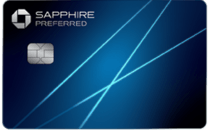
Top Travel Card
Ready to unlock a world of free travel? Start with the Chase Sapphire Preferred® Card
$95 annual fee | Earn 75,000 bonus points
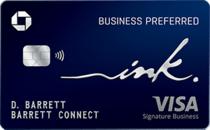
Best Card for Side Hustlers and Business Owners
Side hustlers! With the Ink Business Preferred® Credit Card you can earn free travel from your business expenses.
$95 annual fee | Earn 100,000 bonus points

Most Flexible Travel Card
The Capital One Venture Rewards Credit Card can be used to offset almost any travel expense.
$95 annual fee | Earn more than $1,000 in Travel Bonuses with a limited-time $300 Capital One Travel stays credit, plus earn 75,000 bonus miles once you spend $4,000 on purchases within the first 3 months of account opening—that's more than $1,000 in travel value
ChooseFI has partnered with CardRatings for our coverage of credit card products. ChooseFI and CardRatings may receive a commission from card issuers.
How Kin Uses Technology to Lower Your Premiums
Kin built its entire business model around eliminating the traditional insurance overhead that inflates premiums. Instead of relying on local agents and manual underwriting, Kin uses AI-powered risk assessment and satellite imagery to evaluate properties in minutes rather than days. For homeowners pursuing financial independence, this direct-to-consumer approach translates into real savings — Kin reports premiums averaging twenty to thirty percent below traditional carriers in comparable markets.
The technology advantage extends beyond pricing. Kin pulls public data on roof age, building materials, proximity to fire stations, and historical claims to generate quotes without requiring a home inspection in most cases. This speed matters when you are shopping multiple carriers to optimize your savings rate — fewer delays mean faster decisions and less time spent on administrative tasks that do not move you closer to your FI number.
For Florida homeowners in particular, where premiums have skyrocketed due to carrier exits and reinsurance costs, Kin remains one of the few technology-first options actively writing new policies. Their reciprocal exchange structure means policyholders share in underwriting profits when claims are low, creating a built-in incentive alignment. Channel every dollar in premium savings toward your emergency fund or investment accounts — in 2026, optimizing fixed expenses like insurance is one of the highest-leverage moves on the path to financial independence. Review your coverage annually alongside your net worth to confirm your dwelling limit still reflects current rebuild costs.
Frequently Asked Questions
Kin has an AM Best rating of Not rated and specializes in Home insurance. They are best suited for Coastal homeowners. Compare their rates against 2-3 competitors for your specific needs.
Kin focuses on Home insurance. This specialization means they understand the unique risks and pricing for their target market, which can translate to better coverage and competitive rates for the right customer.
Kin operates in select states. Check their website or contact an agent for current availability in your area. Regional carriers often provide more competitive rates in their operating states.
Claims can be filed online, by phone, or through your agent. Response times vary but most claims are acknowledged within 24-48 hours. Check recent customer reviews for current claims satisfaction ratings.
Yes. Kin offers standard discounts including multi-policy, claims-free, and automatic payment. Contact them directly for a full list of available discounts in your state.
The Bottom Line
Kin Insurance is a compelling option for homeowners in catastrophe-prone states who are frustrated with high rates and limited options from legacy carriers. Their technology-driven approach and direct-to-consumer model deliver genuinely competitive pricing. The risk trade-off is a newer carrier without a long claims-paying track record — weigh that against the premium savings and decide what matters more to your family.
Best for
Coastal homeowners
AM Best rating
Not rated
Specialty
Home insurance