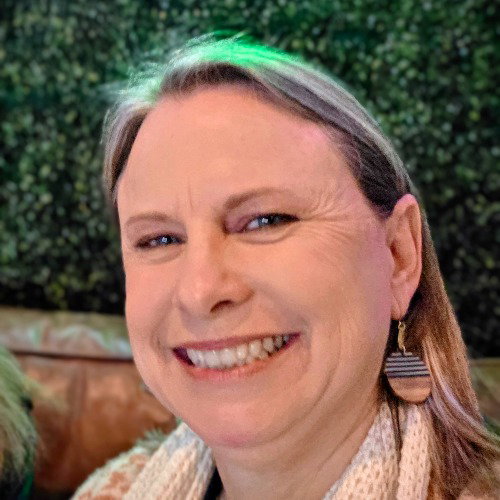
At 21, Cody Berman appeared on ChooseFI as a college student discovering financial independence. Three years later, he retired at 26. Now 30 with a $5 million net worth, he's back to reveal exactly how he compressed a decades-long journey into a three-year sprint—and why the same principles work whether you're 25 or 55.
The Journey from 22 to FI at 26
00:05:30
Cody's path to financial independence was methodical and aggressive. Between ages 22 and 25, he experimented with over 20 side hustles, scaling his income from $96K to more than $400K annually. The key? He kept expenses locked at just $24K per year—creating a massive gap of $625K over three years.
That gap fueled three wealth-building engines:
- $500K in stock market investments (VOO, VTSAX, VTI)
- 13 rental properties generating $3,700/month in passive income
- Digital products businesses producing $10K/month
By his 26th birthday, Cody had achieved "cashflow FI"—his passive income streams covered living expenses without touching his investment portfolio.
The Psychology of Financial Independence
00:18:00
Brad and Cody explore why some people achieve FI while others with similar incomes stay stuck. The answer isn't math—it's psychology and awareness.
Cody attributes his success to having a clear destination. When you know exactly where you're going and why it matters, spending $100 on something that doesn't serve that destination becomes harder than saying no. The infamous "second marshmallow" experiment demonstrates this: delaying gratification becomes easier when you're aware of what you're trading for.
As Cody puts it: "Earn more, spend less, invest the gap. Very simple. That is financial independence in a nutshell."
Passive Income Reality Check
00:28:00
Let's demolish the myth of truly passive income. Cody manages 13 rental properties—but spends just 4-5 hours per month on them. This represents the spectrum of passive income: not zero effort, but minimal effort relative to the returns.
The secret? Working in seasons rather than constant hustle mode. Some months require more attention (tenant turnover, maintenance issues), while others are nearly hands-off. Cody's businesses also follow this pattern—periods of intense development followed by relative autopilot.
Brad reinforces this with math: "Every $100 a month you can cut out of your budget is $30,000 less you need in your FI number." Over 20 years, that $100/month compounds to $60K invested. That's a $90K swing from a single optimization.
Designing the Perfect Tuesday
00:42:00
Forget exotic vacations—FI is about winning on a random Tuesday. Cody and Lauren's ideal weekday reveals what financial independence actually looks like:
How Close Are You to Financial Independence?
Free calculators, a personalized FI roadmap, and a community of 25K+ on the same journey.
Morning: Wake naturally, coffee together, workout (him: gym; her: Pilates), shower, work on creative projects they enjoy
Midday: Lunch together, afternoon walk in their neighborhood, separate time for individual pursuits
Evening: Dinner together, reading, quality time before bed
Nothing dramatic. No yachts. Just complete autonomy over every hour of a normal day.
They maintain this through monthly alignment meetings—typically at a restaurant over a nice meal—covering:
- Money and real estate
- Health and fitness
- Travel plans
- Relationships (with a safe space to address concerns)
- Friends and family
- A rotating category
- Goals for the next month
Ready to take the next step?
Put what you heard into action with these tools and community.
They also record an annual video reviewing the year, creating a time capsule of their journey.
Post-FI Life and the Book
00:58:00
What actually happens when you achieve FI? Cody shares the uncomfortable truth: "Anything that you say that you want to do and that you don't do is a Cody problem. Before FI, you can blame things on time. You can blame things on money."
When those excuses disappear, you're left facing yourself. That can be liberating and terrifying.
His new book, Retire by Thirty, addresses this and more. Like Tim Ferriss's The Four Hour Workweek, the title is provocative but the principles are universal. Whether you compress your FI journey from 50-55, 33-36, or any timeframe, the core concepts remain the same: maximize the gap, invest intelligently, build passive income streams, and design a life aligned with your values.
Late Starters and Practical Advice
01:12:00
Brad poses the critical question: What if you're 50 and just discovering FI?
Cody's answer: Hit expenses first. Housing is typically the biggest expense—and the most flexible. House hacking isn't just for 22-year-olds. Could you take in a roommate? Build an ADU? Downsize temporarily? The path to FI is littered with people who said "I can't do that." Those who achieve it ask instead: "How can I do that?"
As Brad observes: "You should switch your I can't into how can I and then listen to podcasts like this, find people who are actually doing it."

Top Travel Card
Ready to unlock a world of free travel? Start with the Chase Sapphire Preferred® Card
$95 annual fee | Earn 75,000 bonus points

Best Card for Side Hustlers and Business Owners
Side hustlers! With the Ink Business Preferred® Credit Card you can earn free travel from your business expenses.
$95 annual fee | Earn 100,000 bonus points

Most Flexible Travel Card
The Capital One Venture Rewards Credit Card can be used to offset almost any travel expense.
$95 annual fee | Earn more than $1,000 in Travel Bonuses with a limited-time $300 Capital One Travel stays credit, plus earn 75,000 bonus miles once you spend $4,000 on purchases within the first 3 months of account opening—that's more than $1,000 in travel value
ChooseFI has partnered with CardRatings for our coverage of credit card products. ChooseFI and CardRatings may receive a commission from card issuers.
The excuse of "I can't because I have kids" or "I can't because of my age" falls apart when you find role models with your exact constraints who succeeded anyway. Roger Bannister didn't break the four-minute mile because he was superhuman—he broke it because he believed it was possible. Once he did, dozens followed within months.
Key Takeaways
- Map out your top 10 values independently with your partner, then compare to ensure you're living in alignment with what truly matters
- Schedule monthly review meetings covering money, health, travel, relationships, and goals—make it special over a nice meal
- Calculate your gap: subtract monthly expenses from income and identify ways to increase this by 10-20% in the next 90 days
- Identify one housing optimization (house hack, downsize, roommate, ADU rental) that could reduce housing costs without sacrificing quality of life
- Start ONE side hustle this month—give yourself permission to experiment and fail, knowing most end up in the "side hustle graveyard" but one might change everything
- Design your perfect Tuesday: write out your ideal weekday schedule hour by hour, then identify 2-3 small changes you can implement this month
- Find your FI role model: identify someone with a similar background who achieved FI and study exactly what they did
Notable Quotes
"The path to FI is littered with people who said, I can't do that. And Cody turned around and said, how can I do that?" — Brad Barrett
"Earn more, spend less, invest the gap. Very simple. That is financial independence in a nutshell." — Cody Berman
"You should switch your I can't into how can I and then listen to podcasts like this, find people who are actually doing it." — Cody Berman
"Anything that you say that you want to do and that you don't do is a Cody problem. Before FI, you can blame things on time. You can blame things on money." — Cody Berman
"Every $100 a month you can cut out of your budget is $30,000 less you need in your FI number." — Brad Barrett
Resources and Links
Cody's Work:
Mentioned:
- The Four-Hour Work Week by Tim Ferriss
- Mr. Money Mustache blog
- Camp FI events
- Vanguard, Fidelity, Schwab (investment platforms)
- VOO, VTSAX, VTI (index funds/ETFs)