Login
Financial Independence

Savings rate, FI number, and the path to freedom.

Retirement Strategies

Withdrawal plans, Roth ladders, and early access.

Investing

Index funds, asset allocation, and real estate.

Tax Strategies

Roth conversions, capital gains, and FI tax planning.

Earning More

Career growth, side hustles, and entrepreneurship.

Money Mindset

Beliefs, purpose, and financial psychology.

Health & Fitness

Exercise, nutrition, and mental wellness.

Asset Transition Nearing FI (jumping off the moving train)

Asset Transition Nearing FI (jumping off the moving train)

dmcdonou
dmcdonou 307 XP · · 16 replies

The FI number is near, about 10% to go and well within the 5-year critical period. But, the portfolio is still riding at max-accumulation, max-risk levels of equity. I'm working out the best way to shift the allocation to acknowledge the nearness of FI but without pushing that timeline back too much – safely stepping off the moving train, as it were. Then I read Big ERN's article the other day about reverse glide paths and wanted to get the wisdom of the community.

Assuming the above stats:

  • 90% to FI number
  • Portfolio overall is 90% stocks, 8% bonds, 2% cash equivalents
  • Long early retirement window (early 40s)

Should I snap the allocation to a new balance now, while the market is riding high? Or begin to move equities into bonds at a steady rate, trying to capture more equity upside over the next year or so?


Share
Share on Facebook
Share on X
Share on Reddit
Share via Email
Copy link

How close are you to financial independence?

Use our free calculator to find your target number and see how your withdrawal strategy stacks up.

Calculate Your FI Number

Replies (16)

ByeBaiwork

ByeBaiwork

38 XP

2 months ago

I think making the shift while the market is close to all time highs make sense. You want to shift the tax deferred and tax free accounts first. I'm also looking at quitting work in January and achieving FI. I think at least a couple years of cash for living will help you during down years and allow you to invest more aggressively for growth. I'm also in my early 40s and I have worked in Investment industry for nearly 20 years.

RichBarnson

RichBarnson

2 months ago

Simple option- switch all/ most of your future retirement investments for the next 5 years to fixed income- bonds, CD, MYGA etc. or if you have a 401K / IRA you could switch some of those funds too income. Congrats to him

tinatina

tinatina

119 XP

1 month ago

From what I have read, we need to keep 60% of total assets in the stock market to keep up with inflation long term.

Matt M

Matt M

188 XP

2 months ago

The most difficult strategic decision will be with your taxable account. Depending on your current asset location the taxable account will likely fund your bridge years. I'm in a very similar situation and I'm doing a few things with my taxable account to adjust my asset allocation there with the aim to generate a cash and fixed income bucket. How you adjust your risk profile doesn't matter here; I chose fixed income to sleep well at night. But the things I'm doing apply to you as well as you can redirect into different assets. First turn dividend reinvestment off so that you can methodically choose your investments. Second, you can stop automatically investing new income into equities. Third thing you can do is start to "dollar cost average" in the reverse order in selling your equities; The reason for this is to avoid a huge capital gains hit all at once and not try to time the market. Good luck on the rest of your journey!

tinatina

tinatina

119 XP

2 months ago

Shifting the portfolio in the 5 years preceding retirement balances between growth and protection. If you don't do that and the market plummets 3 years before retirement or at retirement, would you just work longer?

JoeQ17

JoeQ17

2,161 XP

2 months ago

Congrats! I was in your place two years ago and made the transition (to a modified golden ratio due to 401k limitations) and now after leaving corporate am full GR. The transition to risk parity helped me sleep well during the tariff and Iran war drops. And even though straight equities have since outperformed, I have less ulcers which I’ll take.

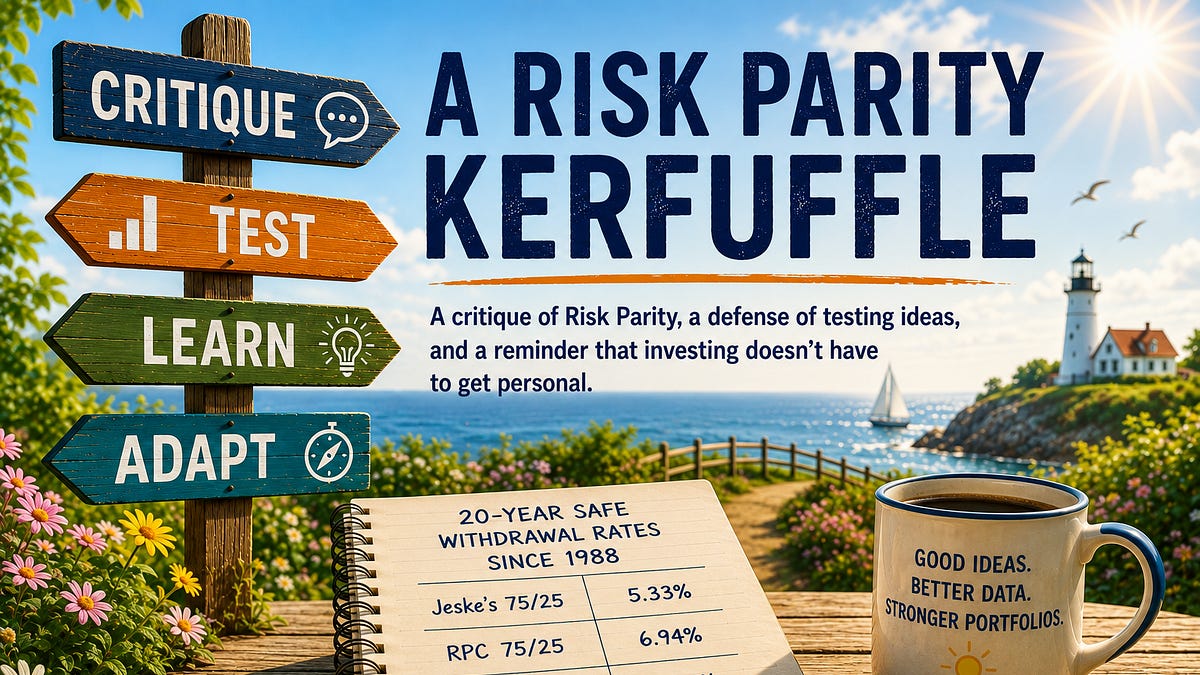
Check out this article from risk parity chronicles (and suggest checking out a few of his recent ones on variable allocations) in which he does a comparison of Big Ern proposed 75/25 vs a risk parity approach. I myself am at 52 equities using strips and gold/mf for alt. And plan to increase equities over time but reduce sequence of returns risk at the start.

JDFI

JDFI

5,388 XP

3 months ago

Great question. I recommend taking a step back (I do not mean delay very long though as you are correct that this is the time to transition your portfolio allocation) and making sure you've locked in your target retirement financial plan from a couple perspectives.

  • First, figure out your preferred retirement income sourcing preference:

Retirement income sourcing preferences / biases

Retirement income sourcing preferences / biasesDiscussion

I mention this, because often "total returns" is assumed by most advisors and most investors, but it is not the best match for most retirees - only about ⅓ actually have a preference for total returns.

  • Second, determine both your at retirement (lower risk) and likely long term target allocation (higher expected return) - though you could change your mind about this later, since your initial transition is only to the lower end of the rising equity glidepath.

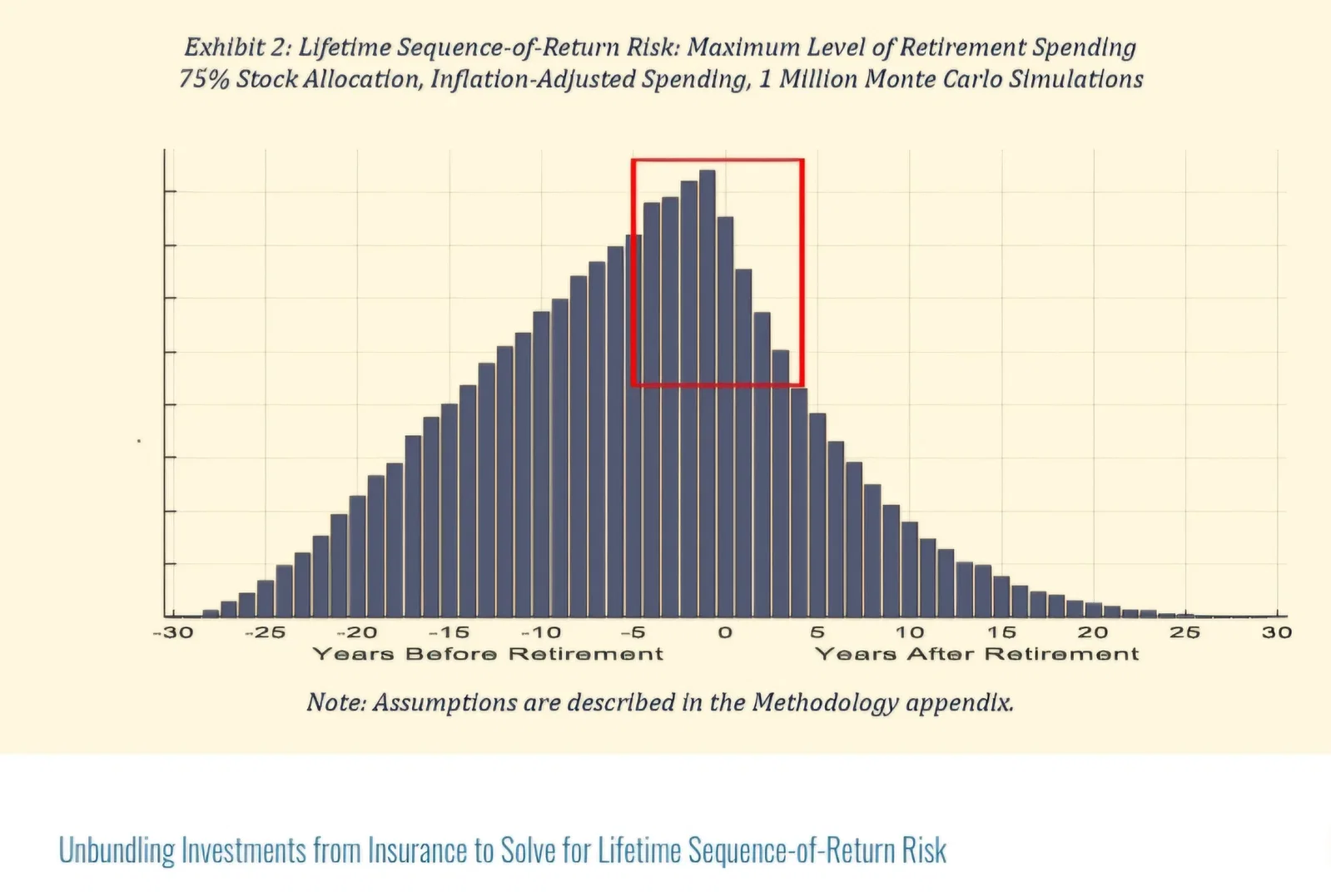
If you want an intuitive sense of how sequence of returns risk changes over time around retirement - see the whitepaper linked at:

  • especially this graph:

At this point you would be ready to execute the transition you are asking about.

etravels16

etravels16

490 XP

3 months ago

Following this as well. We are in your same position and we've done some adjusting to our largest account already, 403b, and wondering if we should adjust our Roths and Brokerage too. Especially with the current high.

BostonFI

BostonFI

5,926 XP

3 months ago

In tax-deferred and tax-sheltered accounts where rebalancing comes with no tax consequences, you should rebalance all at once since you're very close to your finish line and the market is near all-time highs. Maybe that by itself gets you to the overall asset allocation you're aiming for and there will be no need to rebalance in taxable accounts. If changes in taxable accounts are needed, do keep in mind the tax consequences of selling.

8% bonds (short, intermediate, long?) and 2% cash isn't going to provide much ballast if your 90% equities experience a severe drawdown so you may want to move into your target retirement portfolio sooner rather than later.

dmcdonou

dmcdonou

307 XP

3 months ago

Right, I would be looking to change the 90/8/2 allocation to something recognizable for the decumulation phase. Not sure if I'll go to a Risk Parity balance or choose a more conventional stock/bond balance. The main question is whether to leap there or crawl there.

BostonFI

BostonFI

5,926 XP

3 months ago

My suggestion is to leap. (A) the market is at all-time highs so it's a good time to make the transition, and (B) you're taking on more risk than necessary at this stage if your present allocation to equities is significantly higher than your target retirement allocation.

Since you're undecided between two very different strategies, my suggestion is to identify the features of each that you're already reasonably sure of and move into those positions soon. For example, maybe you like the simplicity of Big ERN's 75% LCB but you agree with risk parity that long-term bonds provide better diversification from equities than intermediate bonds. Maybe you agree with both Big ERN and risk parity that 10-15% gold improves SWR.

dmcdonou

dmcdonou

307 XP

3 months ago

I have run a small experiment using the Golden Butterfly portfolio with a small slice of my Roth, and I like the performance so far but ofc it's been favorable market conditions for the most part.

What is Big ERN's favored approach?

BostonFI

BostonFI

5,926 XP

3 months ago

Big ERN favors 75% LCB (e.g., S&P500) and 25% intermediate bonds. Although his own research in 2020 found 10-15% gold improves SWR, he didn't adjust his 75/25 recommendation. This suggests to me he prioritizes simplicity above other considerations.

JDFI

JDFI

5,388 XP

3 months ago

What is Big ERN's favored approach?

Use his SWR toolkit spreadsheet to establish a tailored SWR to your specific allocation, cash flow, and planning horizon.

For portfolio: 75% Total US market passive index fund (or S&P 500, as it performs almost the same) and 25% intermediate term bonds.

He says 60% stock is fine for 30 year planning horizons, but doesn't have sufficient growth to protect against long FIRE planning horizons like 50 and 60 year.

He has also said direct real estate (not REITs) and 10%-15% gold (taken from the equity allocation) can increase SWR. He has some real estate, but no gold himself.

seanna

seanna

481 XP

3 months ago

I personally use a 2 bucket strategy (bucket 1 is cash, bonds, CDs, HYSA and bucket 2 is equities). Bucket 1 has 10 years of fixed costs after reducing by guaranteed income. We started building up bucket 1 (to transition it from being emergency fund) around 2 years before retirement.

There is also the risk parity path, I don’t do it but it is becoming very popular.

https://www.riskparityradio.com

Both options reduce sequence of returns risks and manage inevitable volatility. I think the Bucket strategy may not be as optimized as risk parity portfolios, but the bucket strategy works best for our particular retirement goals and portfolio.

Patrick Gilbert

Patrick Gilbert

112 XP

3 months ago

This is me in a few years so very interested to follow this thread and hear the feedback!

Showing 10 of 16 replies

View all replies on Community

Comments

Your comment will be posted after signing in
Join the Conversation

Create an account or sign in to post a comment.

Retirement Withdrawal Strategies

You've reached Financial Independence—now what? This guide walks you through how to access your money efficiently in retirement. Explore withdrawal sequences, tax optimization, Roth conversions, and strategies to make your savings last a lifetime.

Retirement Withdrawal Strategies Guide
Retirement Withdrawal Strategies: The Guide

Read our complete guide to get up to speed.

From a Recent FI Weekly
“If you’re at Fidelity investing $500/month into a Vanguard mutual fund, you might be losing almost 10% of every contribution before it’s even invested.”

Plus more counterintuitive insights, real stories, and actionable strategies — every Tuesday.

Join 87,000+ people. Free. Unsubscribe anytime.

Track Your Progress to Financial Independence

Get your personalized FI number and track how close you are to reaching your milestones. Most members are closer than they think.

Personalized FI number calculation

Track progress to Coast FI & full FI

Live dashboard updates as you hit milestones

or

100% free — no credit card required

Account created! Redirecting...

Try searching for

⌘K to open anytime

Where Are You on the Path to FI?

1/3

Step 1 of 3

Which of these sounds most like you?

Scan to get the app

Point your phone camera at the QR code