Login
Financial Independence

Savings rate, FI number, and the path to freedom.

Retirement Strategies

Withdrawal plans, Roth ladders, and early access.

Investing

Index funds, asset allocation, and real estate.

Tax Strategies

Roth conversions, capital gains, and FI tax planning.

Earning More

Career growth, side hustles, and entrepreneurship.

Money Mindset

Beliefs, purpose, and financial psychology.

Health & Fitness

Exercise, nutrition, and mental wellness.

Is anyone doing FIRE without being optimal intentionally?

Is anyone doing FIRE without being optimal intentionally?

travisleffel
travisleffel 218 XP · · 21 replies

For some reason I always find myself seeking out the optimization discussions about the quickest or most efficient way to FIRE (I suppose the boring middle will do that do a person). It seems like there is a consensus among the smart people here that you max the tax advantaged accounts then put the rest in the brokerage, then you do the low or no tax 72(t) plus the low or no tax Roth Conversions, and you stay in the 0% LTCG area, and you manage income for ACA subsidies and all that good stuff.

Is everyone doing it like that? Surely no, right? Is it a majority like that? What are people actually doing? Why do I feel like if I deviate from that and do it less efficiently that I am making a mistake?

Share
Share on Facebook
Share on X
Share on Reddit
Share via Email
Copy link

How close are you to financial independence?

Use our free calculator to find your target number and see how your withdrawal strategy stacks up.

Calculate Your FI Number

Replies (21)

Rexaroo

Rexaroo

119 XP

1 month ago

Personally, I think the FI/RE community is overly zealous on Roth accounts. Taxable brokerage is, in my opinion, a much better account with significantly more flexibility while also offering $0 tax draw down strategies (through long term capital gains tax rates). It's also a better way to leave inheritance (step-up in cost basis, no immediate income tax, no required distributions, no mandatory 10 year rule).

I also really dislike the idea of using a Roth 401k account through work, think traditional tax advantaged 401k makes much more sense to significantly more people.

David Robinson

David Robinson

138 XP

1 month ago

Most people define "optimal" in this context as the fastest way to build up funds and hit FIRE. There are all sorts of optimizations, but a rough summary of the biggest levers would be: Max PreTaxAccts → Max RothAccts →Remainder in Brokerage

I did not do this. Most of my career I contributed 15% to my retirement accounts – initially to pre-tax 401k. Halfway through my career, they introduced the "Roth" 401k option. For me, I wanted to optimize for financial flexibility in retirement, so I switched all my contributions to the Roth (and this continued until I retired). From a financial accumulation perspective, this is the opposite of what you should do (Optimal would be to contribute to the Roth early in your career when wages are lower, and as you get into perhaps the 22% bracket, switch to traditional pre-tax for the rest of your career. That would give you optimal taxes and also flexibility.) I retired at age 56 with everything in my 401k (traditional + roth). Since my contributions never exceeded the max, my brokerage account was just a fraction of my total accumulation.

If I maxed out every year, I absolutely could have retired earlier. Would I do that differently if I started over? Perhaps. It's not clear to me. I believe we struck a good balance between living and saving.

Given the same circumstances, would I follow the "optimal" route of NOT switching to a Roth at the latter half of my career? Absolutely not – because my optimization was for later flexibility. If a Roth had be available at the start of my career, I definitely would have used this early and then switched to traditional later.

Now that I'm in deaccumulation, I'm really glad I wasn't "optimal" in my tax/accumulation strategy because having a nice mix of pre vs post tax funds allows me to engineer my taxable income each year to meet whatever goal I'm going after (ACA, Roth-Conversions, etc).

So, as many have already stated, it depends on how you define "optimal" in your view.

travisleffel

travisleffel

163 XP

1 month ago

Your definition of optimal is the one that matches the spirit of my post. Thank you

Anthony Bosio

Anthony Bosio

158 XP

1 month ago

I chose to ease into our increase in pre-tax savings (to get our overall savings rate from around 10% to 20% to 30% or ?) because I did not want to be stuck with the decision for a whole year - can only change employer plan contributions annually - if it was problematic.

So I increased it some and opened Roth IRAs for both of us. This is not 100% optimal but gave me the flexibility to max the Roth if possible, or not, or even take contributions back out if we get in a jam. (We also have a 6-month emergency fund in Fidelity Cash Management account SPAXX.)

My idea is to continue shifting the savings to pre-tax and continue contributing to the Roth accounts if it turns out to be possible when pre-tax is maxxed.

Matt Lammer

Matt Lammer

671 XP

2 months ago

In the Accumulation Phase, the best use of each next dollar is

https://www.bogleheads.org/wiki/Prioritizing_investments

or https://moneyguy.com/guide/foo/ .

When you get to FI, you just most efficiently draw from wherever your money ends up. In general, it's usually 1) excess cash, 2) turn off taxable brokerage reinvesting, 3) SEPP from rollover Traditional IRA, 4) HSA - the ultimate retirement account (before you die), then 5) Roth. But there might be some throttling in there, depending on what numbers you want to hit for various reasons.

I've been FIREd for over 5 years and still working on taxable brokerage. SEPP will probably be tapped while my 2 teens are in college. We're doing Roth Conversions up to our target tax rate, not for ACA, but long term taxes/ costs, which is beyond any ACA subsidy. Different households have different assets, goals, and values, and with that have some variations.

travisleffel

travisleffel

163 XP

2 months ago

So would you call yourself fully optimized?

Matt Lammer

Matt Lammer

671 XP

2 months ago

What does that even mean? Optimized for what? By what metric?

We've had an advice-only CFP for 7 years. We have a plan that considers everything and we're living within the plan. As you get FIRE for a while, you'll realize there's no one "right" or "best" thing… it's a whole vast array of options and just so long as you stay within a few boundaries, everything works out. But the flexibility is greater if your FI Number is realistic or sustainable… for YOU and your household. Not some poorly thought through "rice and beans" scenario that has no ability to survive stress.

No one falls out of FIRE because they didn't do Roth Conversions or such… that's a really small impact vs having just a poor plan and not really thinking through actual costs of retirement, etc.

Are we "suboptimal"?? Heck yeah. If it were up to me, our household would be perpetually traveling and always be doing awesome things… vs the "American standard plan" of fixed schooldays and such the ladies have opted to do. The "standard plan" is incredibly suboptimal. But is it "suboptimal" to be paying for travel expenses on top of that? Who knows, who cares? At Fat FI, I'm more bummed about my time/ life being wasted vs money. The question is simply "what are you optimizing for?" …. When you go out to eat, are you optimizing for "lowest cost", "healthiest", "tastiest", "least likely to be able to pull off at home", or what? You probably cannot do all or many. You choose to optimize for something and you select based on that. Forget the rest.

travisleffel

travisleffel

163 XP

2 months ago

I wasn’t trying to push your buttons with the question. I know there are a lot of deep thinkers in this audience so it makes sense you would interpret it as something more, but I was asking related to the accumulation and withdrawal responses you provided. You probably followed those accumulation resources very closely, and as you said, you make your withdrawal decisions based on detailed analysis. That sounds quite optimized to me and I was wondering if you yourself would also classify it like that? I do think some people would classify a lot of your first response as the expectation and not necessarily an optimization, would you agree?

Matt Lammer

Matt Lammer

671 XP

2 months ago

No buttons pushed here.

I'm still not understanding what you think is THE THING optimized or to be optimized? Or to be measured for how precisely it is optimized?

You form a good plan, have a competent 3rd party stress test it and check blindspots… none found, the plan is known to be good. You just follow the known good plan. Things work out well. It doesn't matter if any of it is optimized to the day or the dollar, no plan should ever be that sensitive. There's a spectrum of "life" that will happen and change what what you need/ want, the market/s do their things on their terms, laws change, etc etc. You cannot optimize for everything at all times, and you often shouldn't be fixated on optimizing for anything at all except for some joy.

travisleffel

travisleffel

163 XP

2 months ago

Forgive me if I am being obtuse, but I really think these questions don’t have to be taken beyond face value, and maybe that is our disconnect here. A little repeating myself, but the answers I am genuinely curious on:

Your first response described a plan that sounds quite optimized to me. You provided some accumulation resources that are described as highly likely to be your “best” method for accumulating. You mentioned a withdrawal plan using a SEPP and tailored taxable Roth conversions. Would you classify that accumulation and withdrawal together as optimized?

I do think some people would classify following that accumulation plan and doing a great withdrawal plan like yours as the expectation and not necessarily an optimization, would you agree?

We don’t have to keep at this if I am not being clear in how I am driving the discussion or if you aren’t interested in what I am talking about, apologies if either is the case.

Matt Lammer

Matt Lammer

671 XP

2 months ago

I think you'd benefit from relaxing on the need to "classify" opitimizing vs expected , etc. at all.

There are folk who execute FIRE tapping their Roth contributions 1st, either they have lack of taxable brokerage, lack of understanding of SEPP being available if so, or are just trying to hit some blend of numbers to hit ACA or whatever. That's a fair choice to them and I'm not going to yuck their yum or what they're optimizing for.

"Simplification" is a real thing worth optimizing for… but some folk put that as the main thing to optimize for, where I'm more of a "simplify as much as you can, but no further" kind of guy. Pretty much anyone investing from the US would do well to Fidelity DIY for everything, only adding Capital One 360 accounts for the missing cash deposit capability. But I'm not the kind of person to do the things to be an advanced options investor benefiting from Interactive Brokers as my investing platform (and the vast majority of FI/FIRE folk also aren't). Etc.

FI/FIRE generally doesn't happen by pure accident. Someone usually optimized for something along the way. But FI/FIRE is a spectrum, with near infinite paths and journeys. Not everything needs to be optimized, or optimized much, to work out.

https://www.mrmoneymustache.com/2012/01/13/the-shockingly-simple-math-behind-early-retirement/

Savings/Investing Rate takes care of 99% of the challenge of being FI.

travisleffel

travisleffel

163 XP

2 months ago

I’m not yucking anybody’s yum.

I am wondering how many people say “yea the 401k is the optimal choice based on the bogleheads thing, but I’m not doing it and here’s my reason”

“A SEPP up to the standard deduction would be quite efficient in terms of taxes for me when it’s withdrawal time, but I’m not doing it because of this”

The infinite ways of doing it and reasons for it are out there, yes! I would say that is directly part of the point of my original post; looking for people sharing more of what they do beyond the optimal accumulation thing you shared and the classic advisor withdrawal strategy. Simplification is an excellent reason to do it a different way, I agree with you. Lack of understanding isn’t quite what I am looking for examples of, but I won’t yuck yums!

I don’t care if you are optimized or not. You sound optimized. You are doing everything right and by the book! Your yum could not be yucked by anyone. Am I really looking for the wrong thing like you say or did I just not convey it like I should have?

Matt Lammer

Matt Lammer

671 XP

2 months ago

I got to FI largely not knowing at all about the FI/FIRE community, just don't what I thought was the right thing since I started investing in my teens… the family broker doing individual stock picking, etc. I only later of the FI community and related best practices when I finally came across MMM's Shockingly Simple Math piece and realized I was FI. I then ran some basic math that showed I could have easily retired at LEAST 5 years sooner with the same amount of the same year with SUBSTANTIALLY more if I'd simply DIY invested in passive index funds. So my Accumulation Phase was far from optimal… my higher Savings/Investing Rate just brute forced me to FI despite the broker sabotage.

I constantly deal with people who have a kid and immediately believe they should prioritize 529 over other actions in alignment with their own retirement due to poor guidance.

Bogleheads were smarter than average in the 1980s, but the devout followers of all Bogle saying haven't kept up with the data and best practices. Vanguard stopped being the #1 place to invest over a decade ago. ETFs have been the way to go for years. JL Collins only finally got around to thinking about adding International. Etc. There's a wide spectrum of "good enough" and most everyone is following what they believe is the logical thing for them to be doing for their situation. Few people would consciously know that one way was definitively significantly better yet decide, intentionally, to go some other significantly lesser path.

travisleffel

travisleffel

163 XP

2 months ago

I still can’t tell if we are on the same page tbh but it doesn’t matter. Thank you for sharing your experience and thoughts

wcschenk

wcschenk

2 months ago

The author of the Psychology of Money, Morgan Housel states that "no one is crazy, we are all just optimizing for different things".

I also agree with Frank Vasquez in that of you spend less than you earn and invest the rest….everything else is detail and has minor affects on your results.

However, lots of "minor affects" do have compounding effects on each other….so it's worth looking at a little.

In the end….as someone else pointed out….solve what you are optimizing for first, then second and third. Prioritize your top 3 optimizations AND why you chose them. Reprioritize everything else in your mond. That will clear up a lot of internal conflicts.

memphisyankee

memphisyankee

13 XP

2 months ago

I love this question, as I’ve struggled with similar questions in every season and finally started asking: “what am I optimizing for?” We so often assume it’s a number, but that’s not always the case.

For me, early on, it was get to the financial metrics - total FI target or savings %. These are simple but not easy - math has a gravity to it, even if the behaviors are difficult to implement.

Things like building a cash EF were a struggle until I changed how I was thinking about it - that money has a purpose which is inherently suboptimal on the whole, but it’s optimized for its assigned job.

Once the numerical thinking got me good momentum, the numbers stayed in the picture, but the focus shifted to more what do I value and what’s my Ramit Sethi inspired “Rich Life” so I intentionally spent more in a targeted way.

I expect my focus will shift again as the journey continues. But as long as I can answer - to myself - “what am I optimizing for?” And the answer is coherent, that is good for me.

Mia Hermine

Mia Hermine

288 XP

2 months ago

I was headed towards that path and then I backed off my savings by about $30k per year and put that all to meaningful life experience spend after reading Die with Zero. It's still optimization, but, as the author said on a podcast, it's not optimizing for money, "it's life, motherf***er!"

$30k can add a LOT to life!

2026

- Gave my nephew a $1-for-$1 "aunty match" towards his first car and he worked so hard towards the goal

- Started a trade school scholarship

- Did a front end rebuild on my classic car

- Taking my big sister on vacation to see her childhood bff in Seattle

- Taking me and my partner to Hawaii (in business class!!!) For our combined birthdays + anniversary

2027

- Renting an entire "glamping" vanue to throw a huge family reunion for my mom's 69th birthday themed, "Summer of 69". We've already had so much fun just dreaming and scouting venues and I'm so excited for the year of planning

2028

My big sister, her daughter and I are all going to study Japanese for a year and then ill take us to Japan (lie flat at least way).

I wouldn't have done most of these on my way to FI otherwise and I'm so grateful for how they have already enriched my life and given me so much to look forward to. And it affects my FI date by maybe 1 year (e.g., age 49 instead of 48)

Mia Hermine

Mia Hermine

288 XP

2 months ago

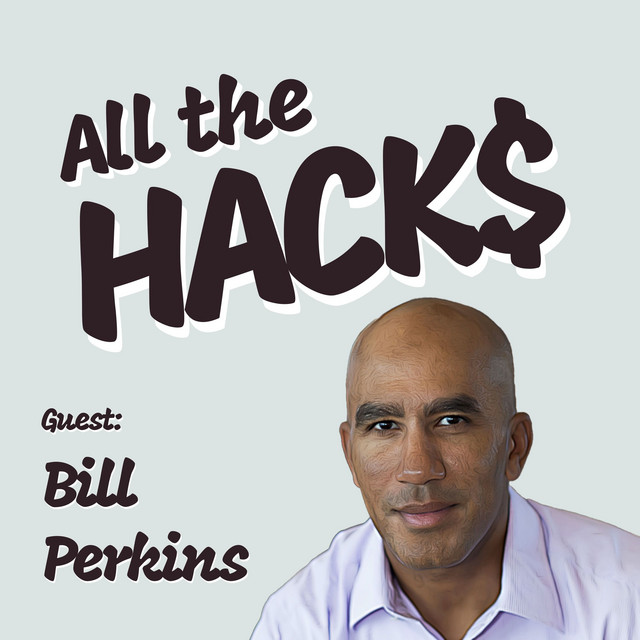
All the Hacks has a great episode interviewing the Die with Zero author

Die With Zero: Net Fulfillment Over Net Worth with Bill Perkins
Listen to this episode from All the Hacks: Money, Points & Life on Spotify. #91: Hedge fund manager and author, Bill Perkins, joins Chris to talk about what it actually means to die with zero. They discuss why you should focus on net fulfillment in each stage of life, what types of experiences to prioritize, banking memory dividends, questions to ask yourself in order to make the best choices about spending your money, solving for maximum fulfillment, and so much more.Bill Perkins (@billperkins) is a successful hedge fund manager and energy trader whose mission is to guide people to focus on living their richest lives now. His book is Die with Zero: Getting All You Can from Your Money and Your Life.Full show notes at: https://allthehacks.com/die-with-zero-bill-perkins Partner Deals Inside Tracker: 20% off personalized wellness & nutrition plans backed by scienceMasterClass: Learn from the world's best and buy one get one freeDaffy: Learn more about charitable tax savings with a special offerVuori: 20% off the most comfortable performance apparel I've ever wornFor all the deals, discounts and promo codes from our partners, go to: allthehacks.com/dealsResources MentionedAll the Hacks is a Signal Awards finalist: Vote NowConnect with Bill Perkins: Instagram | Website | Twitter Die With Zero: Getting All You Can from Your Money and Your Life Wealthfront Financial Utopia Number Calculate your biological age: Inside Tracker Full-body MRI Scan: Prenuvo Your Money or Your Life: 9 Steps to Transforming Your Relationship with Money and Achieving Financial Independence All the Hacks Newsletter Hacking Healthcare: Saving Money and Pushing Back All the Hacks Podcast #40: The Power of Regret, Motivation and Good Timing with Daniel Pink Bill Perkins’ Saint Barthélemy Recommendations Beaches: Flamands Beach | Grand Cul de Sac Beach | Gouverneur Beach | Saline Beach | Shell Beach Hotels: Eden Rock | Le Barthélemy Hotel & Spa Resturants: Nikki Beach | Shellona | Tamarin St. Barth Gustavia Shopping  Full Show Notes(00:00) Introduction to Bill Perkins(01:36) Target Audience of Bill’s Book(02:43) Defining Net Fulfillment(03:25) Common Misconceptions About Retirement and Spending(05:23) The Declining Utility of Money(09:28) Anti-Bucket List vs. Bucket List(11:59) Memory Dividend(18:38) Remembering Bucketing Experiences(20:11) Investing in Experiences Now(23:38) Ideal Timing for Experience Bucketing(26:12) Prioritizing Experiences for People in Their 20s and 30s(28:21) Avoiding the Hamster Wheel(33:14) Principles of Living an Optimized Life and the Five Whys(35:09) Career Upgrade Advice from Bill(38:55) Addressing Concerns About Future Finances(39:54) Aligning Efforts with Goals(42:07) Overcoming Fear of Failure(44:08) Reframing Mindset to Minimize Regrets(45:48) Embrace Bold Decisions(46:55) Valuing Time and Fulfillment(50:02) Navigating Spending: More or Less Money?(54:46) Estimating Savings Goals and Stopping Points(60:31) Present Actions for Future Benefits(1:00:52) The Coke/Pepsi Taste Testing Experiment(1:07:07) Exploring the FIRE Movement(1:12:09) Building a Model for Net Fulfillment(1:16:25) Overcoming Habits and Ego for Greater Opportunities(1:18:52) Regular Review and Adjustment of Net Worth Goal(1:22:20) Solving for Maximum Fulfillment(1:27:01) Extending Quality of Life Through Healthier Habits(1:30:39) Preventing Diseases Through Diagnostics(1:35:28) Bill Perkins’ Recommendations for Saint BarthélemyConnect with All the HacksAll the Hacks: Newsletter | Website | Membership | EmailChris Hutchins: Twitter | Instagram | Website | LinkedInEditor’s Note: The content on this page is accurate as of the posting date; however, some of our partner offers may have expired. Opinions expressed here are the author's alone, not those of any bank, credit card issuer, hotel, airline, or other entity. This content has not been reviewed, approved or otherwise endorsed by any of the entities included within the post. Learn more about your ad choices. Visit megaphone.fm/adchoices
Spotify
Charlotte

Charlotte

1,120 XP

2 months ago

Love this question. We hit FI earlier this year and left our W2's in May. We are now slow traveling and drawing down from our portfolio to fund our lifestyle. While in the accumulation phase, I tried to optimize EVERYTHING. I have 50 million spreadsheets and genuinely enjoyed learning more through books and podcasts. Looking back on that time, I realize that I was spending all that time on tweaks that didn't make much difference in the end- it just felt good because it felt like action.

UncleFrank

UncleFrank

1,315 XP

2 months ago

No, and its probably not good for your mental health to try to optimize everything. The truth is that if you spend less than you earn and invest the difference, the rest is just details. Many paths work if you are not trying to race against your peers.

What you should learn is the concept of "Satisficing", which means spending minimal effort on stuff you don't care about or are not really interested in doing. This will also help you in retirement. It's really one of the keys to living a happy life, because optimizing everything will drive you and everyone around you nuts.

George K

George K

136 XP

2 months ago

I optimize the big three: maxing out tax advantaged accounts every year, only invest in low cost diversified etfs/mutual funds, and I don’t try to time the market.

But I’ll own up to not fully optimizing for taxes. Why? Flexibility. I have prioritized saving into a taxable brokerage because it's always accessible. Even though I’ve been in my highest earning years I also save ~1/3 of my employer retirement account in Roth. I like the tax diversification, and I don’t think I’m going to regret it, even if I didn’t optimize every penny of tax arbitrage savings.

A few more things I don’t optimize:

  • I don’t chase credit card points (everything goes on a 2% cash back card)
  • I paid off my mortgage early even though the rate was relatively low. Because it felt great!
  • I’m not saving up receipts for HSA reimbursement. I mostly reimburse myself as I go and let the balance build.

Phew, feels good to get that off my chest!

Showing 10 of 21 replies

View all replies on Community

Comments

Your comment will be posted after signing in
Join the Conversation

Create an account or sign in to post a comment.

Retirement Withdrawal Strategies

You've reached Financial Independence—now what? This guide walks you through how to access your money efficiently in retirement. Explore withdrawal sequences, tax optimization, Roth conversions, and strategies to make your savings last a lifetime.

Retirement Withdrawal Strategies Guide
Retirement Withdrawal Strategies: The Guide

Read our complete guide to get up to speed.

From a Recent FI Weekly
“If you’re at Fidelity investing $500/month into a Vanguard mutual fund, you might be losing almost 10% of every contribution before it’s even invested.”

Plus more counterintuitive insights, real stories, and actionable strategies — every Tuesday.

Join 87,000+ people. Free. Unsubscribe anytime.

Your FI Toolkit,
All in One Place

Preview the calculators, trackers, and planning tools that help you see exactly where you are—and what comes next.

Calculate your FI number

Track progress and milestones

Compare paths to FI

or

100% free — no credit card required

Account created! Redirecting...

Try searching for

⌘K to open anytime

Where Are You on the Path to FI?

1/3

Step 1 of 3

Which of these sounds most like you?

Scan to get the app

Point your phone camera at the QR code